What Is Feng Shui? Exploring the Science Behind This Ancient Practice
Answer: Feng Shui, classically known as Kanyu (堪舆, kan yu — literally "watching the sky and examining the earth"), is an ancient Chinese discipline that studies the relationship between humans and the
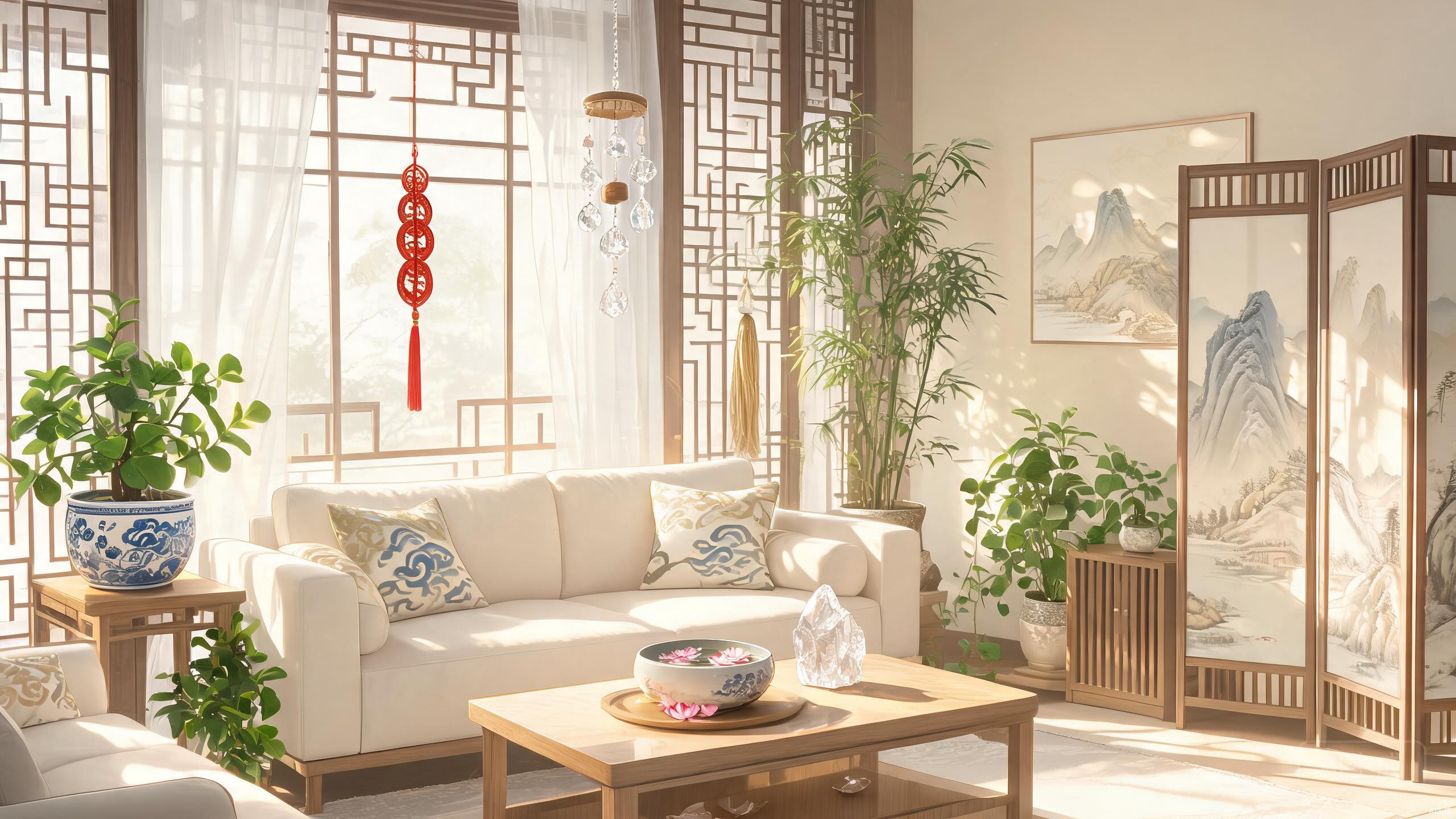
Question: What Is Feng Shui? What Is Its Core Philosophy?
Answer: Feng Shui, classically known as Kanyu (堪舆, kan yu — literally "watching the sky and examining the earth"), is an ancient Chinese discipline that studies the relationship between humans and their natural environment. "Feng" (wind) represents the cosmic Qi field and energy currents of the universe, while "Shui" (water) symbolizes the flowing water and "bloodlines" of the earth. The central philosophy of Feng Shui is Unity of Heaven and Humanity (天人合一) — through selecting, adjusting, and optimizing one's living environment, humans achieve harmony and oneness with nature, thereby attracting health, wealth, and happiness.
The theoretical foundation of Feng Shui rests on several core concepts:
First, Qi (气). Feng Shui holds that all things in the universe are composed of Qi (气, qì) — the fundamental life energy. A good Feng Shui environment gathers and absorbs Qi, providing its occupants with abundant vital energy. A poor Feng Shui environment causes Qi to scatter or stagnate, negatively affecting fortune and well-being.
Second, Yin and Yang Balance. Yin and Yang are the two opposing yet complementary forces underlying all existence. One of Feng Shui's core tasks is maintaining environmental Yin and Yang balance — neither too cold and dark, nor too hot and dry.
Third, Mutual Generation and Restriction of the Five Elements. Metal, Wood, Water, Fire, and Earth interact through cycles of generation and restriction. Feng Shui layout requires adjusting these Five Elements (五行, wǔ xíng) to achieve balance according to each specific environment.
Fourth, Storing Wind and Gathering Qi. This is the fundamental principle of Feng Shui site selection — choosing a geographical environment that shelters from harsh wind, gathers Qi, and accesses water, creating an ideal habitat for living.
Cultural Context: Feng Shui is not a "decorating trend" but a sophisticated worldview spanning over 3,000 years. While Western design often prioritizes aesthetics or function alone, Feng Shui integrates psychology, geography, architecture, and cosmology into a single system — believing that where you live directly shapes how you feel, think, and prosper.
Question: Does Feng Shui Have a Scientific Basis? How Does Modern Science Explain It?
Answer: This is a question well worth exploring. From the perspective of modern science, Feng Shui genuinely contains many reasonable factors related to environmental science, psychology, architecture, and physics.
The Environmental Psychology Perspective
Feng Shui principles such as "Back to Mountain Facing Water" (背山面水) and "Storing Wind and Gathering Qi" (藏风聚气) have direct equivalents in modern environmental psychology. Backing onto a mountain provides a sense of security, while an open body of water in front creates emotional ease — exactly aligning with what modern site selection calls "psychological safety" and "open visual fields." Studies have found that people living in environments with expansive views, abundant natural light, and good ventilation experience less psychological stress and report higher happiness levels.
Cultural Context: The concept that surroundings influence mental state dates back thousands of years in China — yet modern Western research on "biophilic design" (the human need to connect with nature) confirms the same truth: our environments shape our minds and bodies more powerfully than most people realize.
The Architectural Perspective
Many Feng Shui taboos find reasonable justification in modern architecture. For example:
- "Beam Pressure Sha" (梁压煞): From an architectural standpoint, the clear ceiling height beneath a beam is reduced, creating a sense of compression for anyone below. Long-term work or rest under such conditions genuinely affects psychological well-being.
- "Door Facing Door": Two doors directly aligned create a rushing airflow that destabilizes indoor temperature and compromises privacy.
- "Piercing Hall Sha" (穿堂煞): When doors and windows align directly, Qi moves too quickly through the space, making temperature regulation difficult while increasing energy consumption.
The Geomagnetic Perspective
Feng Shui directional theories — such as "Sitting North Facing South" (坐北朝南) — correlate closely with modern geomagnetism. Located in the Northern Hemisphere, China's homes benefit most from a north-sitting, south-facing orientation by maximizing sunlight exposure, keeping interiors warm in winter and cool in summer. Scientific research confirms that Earth's magnetic field does influence human physiology, and prolonged exposure to unfavorable magnetic environments may affect health.
The Electromagnetic Radiation Perspective
Feng Shui's avoidance of conditions like "Sharp Corner Sha" (尖角煞) and "Reverse Bow Sha" (反弓煞) can be interpreted through the lens of electromagnetic radiation. Sharp objects tend to concentrate electromagnetic fields, and long-term exposure to such environments may produce adverse health effects.
Question: How Should We Approach the Non-Scientific Elements of Feng Shui? What Attitude Should We Adopt?
Answer: This requires a rational perspective. As a discipline transmitted over several thousand years, Feng Shui contains both reasonable environmental science components and certain metaphysical elements that resist modern scientific verification.
Recommendations for a Rational Approach to Feng Shui
First, extract the essence, discard the dross. Actively absorb and apply those Feng Shui principles that align with modern science — such as site selection, natural lighting, ventilation, and sensible layout. For elements steeped in mysticism and difficult to verify, maintain an open yet discerning attitude.
Second, Feng Shui is the icing on the cake, not the cake itself. The true value of Feng Shui lies in optimizing your environment and enhancing quality of life — but it cannot replace personal effort and determination. A successful life depends far more on individual capability, mindset, and action than on any Feng Shui layout alone.
Third, maintain moderation and avoid superstition. Excessive fixation on Feng Shui can breed anxiety and dependency, and may even be exploited by unscrupulous practitioners. The wise approach is to understand Feng Shui principles, make informed decisions about your living environment based on actual needs, and never treat it as the sole determinant of your destiny.
Fourth, honor cultural tradition. Feng Shui forms an essential part of China's traditional culture, embodying the ancient Chinese wisdom of observing and reflecting upon the natural environment. Even if you do not fully believe in its effects, it deserves to be understood and respected as cultural heritage.
A Scientific Perspective in Summary
From a research standpoint, Feng Shui can be understood as: a comprehensive discipline studying the relationship between humans and their environment — integrating elements of geography, ecology, architecture, psychology, and aesthetics. Although certain specific claims lack rigorous scientific verification, its overarching philosophy — humanity living in harmony with the environment — aligns powerfully with modern sustainable development principles.
Therefore, the optimal approach to Feng Shui is: maintain an open mind, examine it scientifically, apply it rationally — neither blindly worshipping it nor dismissing it outright.
How to Apply Feng Shui Principles in Your Modern Home
You don't need a mountain or river to benefit from Feng Shui wisdom. Try these practical steps today:
- Maximize natural light: Open your south-facing curtains during the day to flood your home with sunlight — this boosts mood, regulates temperature, and activates positive Qi
- Create airflow without drafts: Ensure fresh air circulates gently throughout your home, but avoid direct door-to-door or window-to-window alignments that create rushing wind
- Check your ceiling heights: Notice any low beams or soffits over your bed, desk, or sofa — these create subconscious pressure that affects sleep and focus
- Position for psychological security: Arrange your bed and main seating with a solid wall behind you and a clear view of the room entrance — this taps into the same security principle as "Back to Mountain Facing Water"
- Keep your environment clean and flowing: Clutter blocks Qi. Maintain clear pathways, tidy corners, and living (not artificial) plants where possible
Quick Tips:
- South-facing windows are especially valuable in the Northern Hemisphere — they bring warmth in winter and cooling shade in summer
- A small indoor fountain or aquarium near your home's entrance can symbolically "gather wealth energy" while adding calming humidity to the Qi
- Avoid placing your bed directly in line with the bedroom door — this simple adjustment often improves sleep quality immediately
Related Articles
- [[../01-风水入门/18-风水中的藏风聚气.md|The Principle of "Storing Wind and Gathering Qi" in Feng Shui]]
- [[../01-风水入门/01-风水是什么.md|What Is Feng Shui? Origins, Definition, and Core Philosophy]]
- [[../06-风水文化与历史/29-风水与易经:易经八卦在风水中的核心应用.md|Feng Shui and the I Ching: Core Applications of Bagua and the Eight Trigrams]]
- [[../06-风水文化与历史/43-魏晋南北朝风水:玄学影响下的风水发展.md|Feng Shui in the Wei, Jin, and Northern and Southern Dynasties: Development Under Metaphysical Influence]]