What Is Seeking Dragon and Pointing Acupoint? Key Principles for Yin Dwelling Site Selection
Answer: Seeking Dragon and Pointing Acupoint (寻龙点穴, xún lóng diǎn xué) is one of the most important skills in Feng Shui. It refers to the process of finding a Dragon Vein (龙脉, lóng mài) and determinin
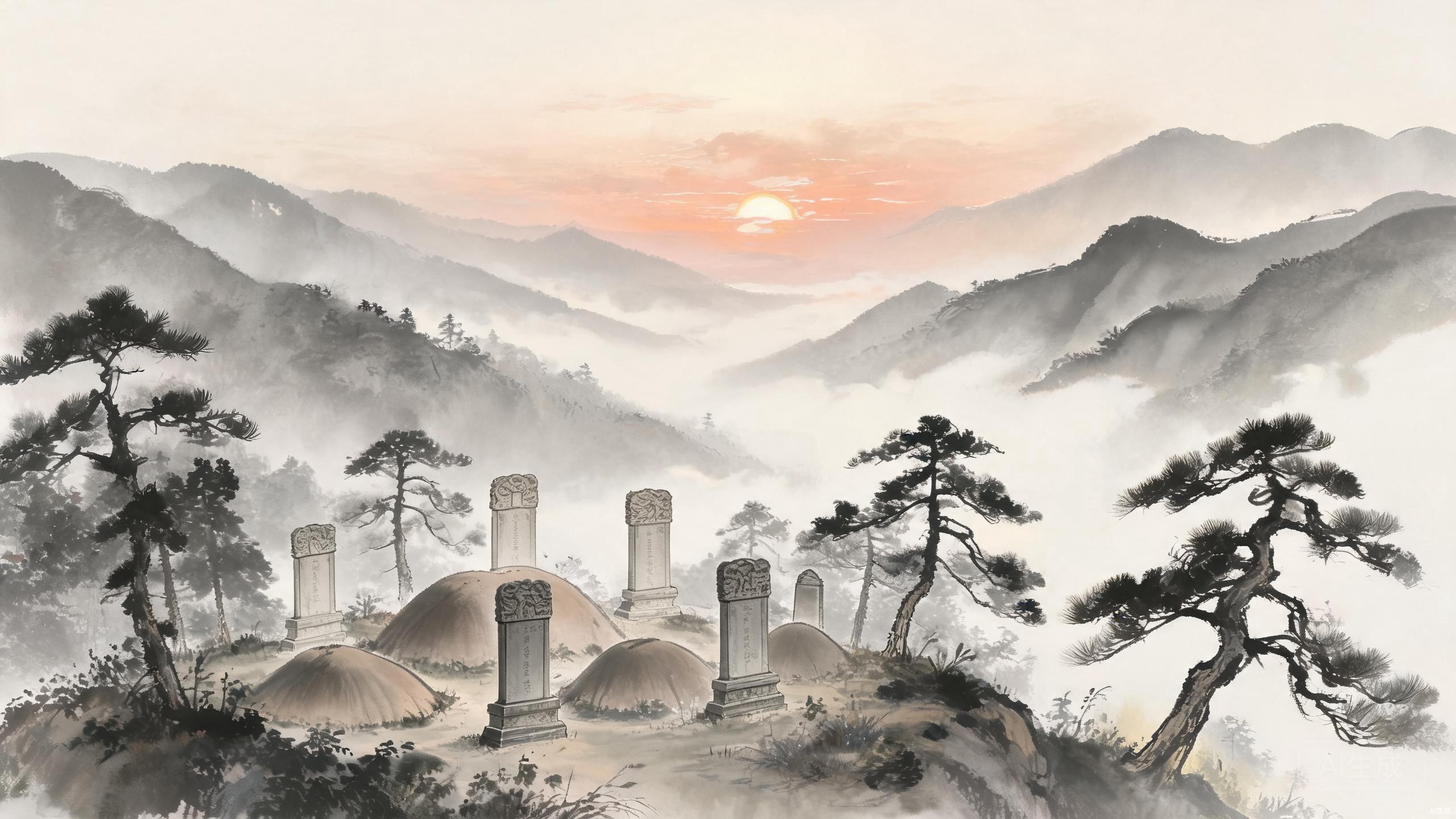
Question: What Is Seeking Dragon and Pointing Acupoint?
Answer: Seeking Dragon and Pointing Acupoint (寻龙点穴, xún lóng diǎn xué) is one of the most important skills in Feng Shui. It refers to the process of finding a Dragon Vein (龙脉, lóng mài) and determining the precise location of a Feng Shui Point (穴, xué).
Cultural Context: In traditional Feng Shui, mountains are considered "dragons" — living energy lines that channel Qi across the landscape. Finding the right spot where this energy gathers is the foundation of both ancestral grave placement and, historically, imperial city planning.
Seeking the Dragon
"Seeking the Dragon" means tracing the direction and momentum of mountain ranges to identify where the Dragon Vein runs. A strong, auspicious Dragon Vein displays these characteristics:
- Undulating rhythm: The mountains rise and fall in graceful, wave-like patterns
- Continuous flow: The range extends without abrupt breaks or sudden drops
- Rounded and full: The peaks appearfull and rounded, smooth, and gently shaped
- Lush vegetation: Dense, healthy plant life signals strong Vital Qi (生气, shēng qì)
Pointing the Acupoint
"Pointing the Acupoint" means identifying the optimal Feng Shui Point along the Dragon Vein — the specific location where Qi converges most powerfully. A good acupoint should be where energy naturally gathers and the atmosphere feels stable, balanced, and alive.
Quick Tips:
- A skilled Feng Shui master can spend days walking a single mountain range, sensing where Qi pools naturally
- The best acupoints are often found where smaller hills "embrace" a gentle depression in the terrain
Question: What Are the Principles for Yin Dwelling Site Selection?
Answer: Selecting a proper site for a Yin Dwelling (阴宅, yīn zhái) — an ancestral grave or tomb — follows these foundational principles:
Cultural Context: Yin Dwelling Feng Shui (阴宅风水) is based on the belief of Bloodline Resonance (血脉感应) — that the fortune of descendants is energetically connected to the resting place of their ancestors. Because of this, grave site selection has historically been treated with great care and reverence in Chinese culture.
1. The Dragon Vein Must Be Prosperous
Choose a location with a strong, flourishing Dragon Vein. The direction and momentum of the Dragon Vein determine the overall layout and fortune of the Yin Dwelling.
2. The Acupoint Must Be Precise
The Feng Shui Point must be located with exact precision — even a small error in placement can shift the entire energy dynamic. The acupoint is where Qi converges, so its position must be carefully calibrated.
3. Storing Wind and Gathering Qi
The surrounding terrain should form a natural embrace of mountains to block harsh winds and gather Qi (藏风聚气, cáng fēng jù qì). This creates a stable, protective energy field around the site.
4. Water Is Supreme
The site should be near a water source. Water represents wealth and vitality in Feng Shui, and flowing water brings continuous life-giving energy to the resting place.
5. Favorable Direction
The orientation of the tombstone and the overall grave must face an auspicious direction, following proper Feng Shui principles for Sitting and Facing (坐向, zuò xiàng).
6. Beautiful Environment
Choose a location with a peaceful, beautiful environment that inspires tranquility and harmony.
Question: What Are the Taboos for Yin Dwelling Site Selection?
Answer: When selecting a Yin Dwelling site, avoid these inauspicious conditions:
1. Avoid low-lying, waterlogged ground — Yin energy becomes excessive, creating an oppressive atmosphere.
2. Avoid a Lonely Peak Sha (孤峰煞) — A solitary, isolated peak provides no backing or protection, leaving the site exposed and unsupported.
3. Avoid direct Road Rushing Sha (路冲煞) — Roads pointing directly at the grave channel harsh Sha Qi (煞气) straight into the site.
4. Avoid proximity to high-voltage power lines — Electromagnetic radiation disrupts the natural Qi field.
5. Avoid proximity to pollution sources — Factories, dumps, or contaminated areas create poor Qi that harms the site's energy.
6. Avoid wind tunnels or exposed gaps between hills — Strong winds cause Qi to scatter rather than gather, undermining the fundamental principle of Storing Wind and Gathering Qi.
Remember: Feng Shui seeks to balance Yin and Yang energies — the dual forces that shape all existence.
How to Apply These Principles Today
While most readers today will not be selecting ancestral grave sites, understanding these principles deepens your grasp of Feng Shui fundamentals:
- Recognize good "Dragon" energy: Even in urban settings, look for undulating landscapes rather than flat, featureless terrain
- Identify gathering points: Notice where Qi naturally pools in outdoor spaces — these same principles apply to garden design and home placement
- Protect against harsh Sha: Avoid placing your home where roads, bridges, or power lines aim directly at your front door
- Honor water features: A nearby stream, fountain, or even a gently curving pathway brings wealth energy
- Respect natural protection: Choose locations with natural backing — hills, trees, or taller buildings behind you
Quick Tips:
- When visiting cemeteries, notice how traditional Chinese graves are positioned on hillsides with mountains behind and water below — these principles have guided placement for thousands of years
- The best grave sites, like the best home sites, feel sheltered, peaceful, and connected to the surrounding landscape
Summary: Seeking Dragon and Pointing Acupoint is the core skill of Yin Dwelling Feng Shui. By selecting a location with a prosperous Dragon Vein, Storing Wind and Gathering Qi, and favorable water access, you can bless future generations with harmonious fortune and lasting prosperity.
- Balance the Five Elements: Incorporate Wood, Fire, Earth, Metal, and Water in your décor for harmonious energy
Related Articles
- [[../04-商业风水/41-工厂site selection风水.md|Factory Site Selection Feng Shui]]
- [[../01-风水入门/20-风水中的龙穴砂水向五诀.md|The Five Essentials of Feng Shui: Dragon, Acupoint, Sand, Water, and Direction]]
- [[../01-风水入门/30-风水基础测试题100道.md|100 Feng Shui Basics Practice Questions]]
- [[../02-家居风水/33-阳台风水植物.md|Balcony Feng Shui Plants: Greenery and Lucky Plant Selections for Wealth and Sha Protection]]