What Is Sha Qi in Feng Shui? 20 Common Form Sha and How to Remedy Them
Answer: In Feng Shui, "Sha Qi" refers to harmful environmental energy or Qi fields that work against your wellbeing. It can be understood as "negative energy" or an "unfavorable atmosphere." The prese
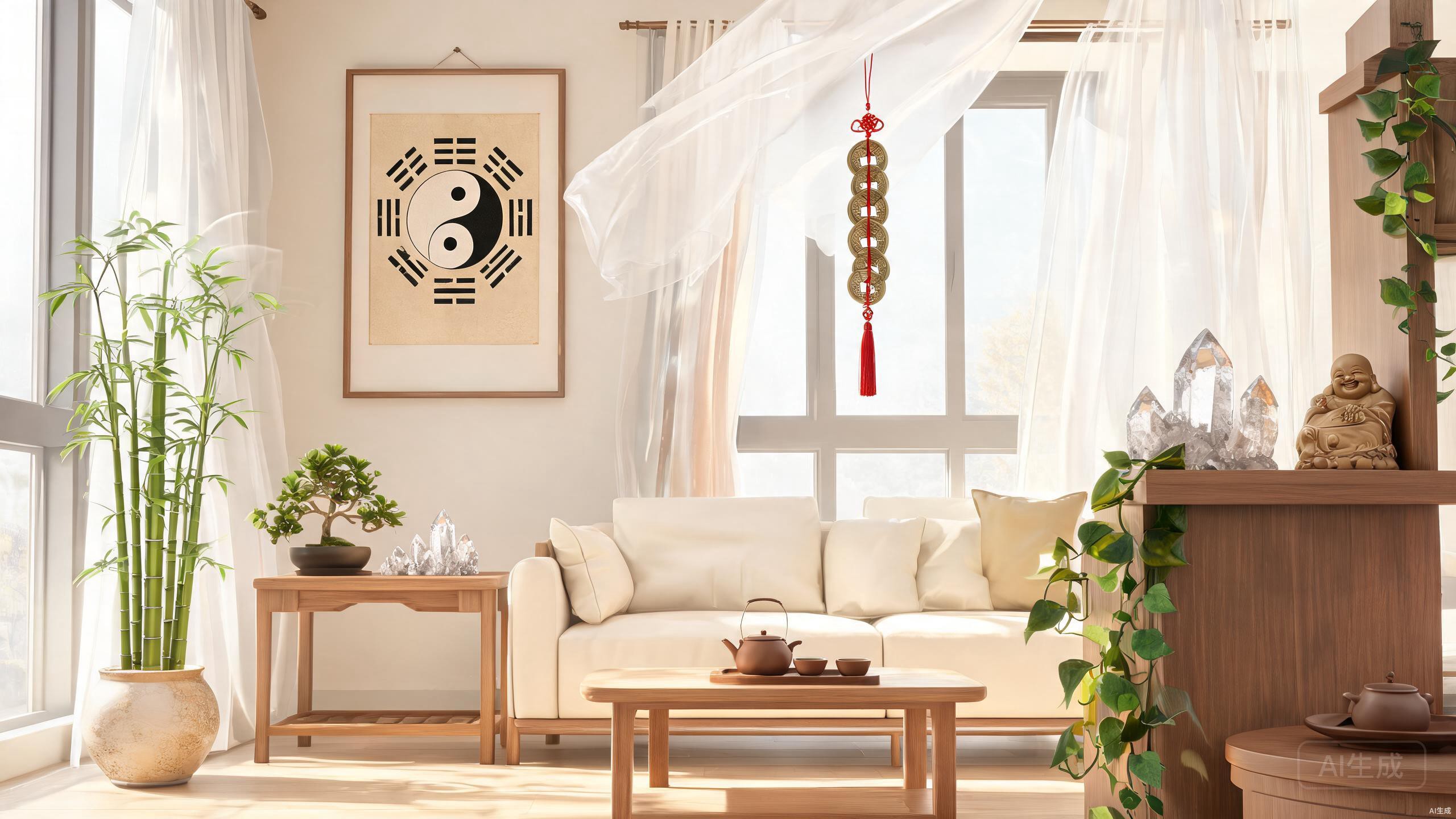
Question: What Is "Sha Qi" in Feng Shui?
Answer: In Feng Shui, "Sha Qi" refers to harmful environmental energy or Qi fields that work against your wellbeing. It can be understood as "negative energy" or an "unfavorable atmosphere." The presence of Sha Qi disrupts environmental harmony and can negatively impact your health, wealth, career, and relationships.
Cultural Context: In Feng Shui philosophy, every space carries Qi — a vibrational atmosphere that can either nourish or deplete the people within it. Sha Qi (煞气) is essentially "clashing" or "killing" energy that arises when environmental features create tension, sharp angles, rushing force, or stagnation. Think of it like an uncomfortable room temperature — too cold, too hot, or with harsh drafts that make you instinctively uneasy. The interplay of Yin and Yang — the dual forces of dark/light, passive/active — governs all Feng Shui applications.
Categories of Sha Qi
Feng Shui classifies harmful energy into six main categories:
1. Form Sha (形煞): Created by the shape, position, or structure of objects in the environment. This is the most common and easily recognizable category — including sharp corners, road rushes, and narrow gaps between buildings.
2. Qi Sha (气煞): Caused by odors, gases, or air quality issues — such as kitchen fumes, bathroom smells, or chemical pollution from renovations.
3. Light Sha (光煞): Generated by harsh lighting — including strong glare reflections, flashing neon signs, or excessive nighttime brightness.
4. Sound Sha (声煞): Created by noise pollution — such as traffic sounds, construction noise, or factory disturbances.
5. Magnetic Sha (磁煞): Caused by electromagnetic radiation — from high-voltage power lines, electrical substations, or signal towers.
6. Compass Sha (理气煞): Arising from time and space Qi fluctuations — such as the Five Yellow Sha (五黄煞) or the Two Black Illness Star.
Among these six categories, Form Sha is the most visible, most common, and easiest for ordinary people to identify and address.
Question: What Are Common Feng Shui Form Sha? How to Identify Them?
Answer: Below are the 20 most common Feng Shui Form Sha, along with identification methods and their effects:
1. Sharp Corner Sha (尖角煞)
Definition: When your home directly faces or sits near the sharp corners, wall edges, or roof points of neighboring buildings. How to Identify: Look outside your windows or door — is there a sharp corner of a building pointing directly at you? Impact: May cause headaches, eye problems, accidental injuries, and interpersonal conflicts.
2. Road Rushing Sha (路冲煞)
Definition: A road runs directly toward your front door or windows like an arrow. How to Identify: Your home faces a straight road that points at you like an arrow aimed at your entrance. Impact: May lead to accidents, health issues, and unstable financial fortune.
3. Reverse Bow Sha (反弓煞)
Definition: A road, river, or elevated highway curves away from your home like a reverse bow. How to Identify: Your home sits on the outer side of a curved road, with the curve bowing away from you. Impact: May cause wealth loss, career obstacles, and health problems.
4. Heaven Chopping Sha (天斩煞)
Definition: A narrow gap between two tall buildings points directly at your home. How to Identify: Looking out from your home, you see a narrow slit between two high-rises facing your window. Impact: May cause accidental injuries, lawsuits, and health issues.
5. Piercing Hall Sha (穿堂煞)
Definition: Your front door aligns directly with a back window, balcony door, or rear entrance, creating a straight line through your home. How to Identify: Standing at your front door, you can see straight through to a window or balcony — wind blows directly through. Impact: Wealth flows in and out too quickly, making it impossible to accumulate savings.
6. Beam Pressure Sha (横梁压顶)
Definition: A structural beam sits directly above frequently used furniture like sofas, beds, or desks. How to Identify: When sitting or lying in certain positions, you notice a beam directly overhead. Impact: May cause headaches, feelings of oppression, and career stagnation.
7. Scissors Sha (剪刀煞)
Definition: Your home sits at a Y-shaped intersection where two roads cross like scissors. How to Identify: Your home is located at the convergence angle of two roads. Impact: May lead to accidents and family conflicts.
8. Cutting Feet Sha (割脚煞)
Definition: A road or river runs very close to your building's foundation. How to Identify: A road or riverway is pressed tightly against your outer wall with minimal distance. Impact: May cause wealth loss and health problems.
9. Sickle Sha (镰刀煞)
Definition: A curved road or elevated highway arcs toward your home like a sickle. How to Identify: A curved roadway or overpass embraces your home in a sickle shape. Impact: May cause accidental injuries and financial loss.
10. Lonely Peak Sha (孤峰煞)
Definition: A standalone building with no surrounding structures or mountain support. How to Identify: A solitary house standing in an open area with no neighboring buildings or protective features. Impact: May lead to feelings of isolation, poor relationships, and lack of career support.
11. Concave Wind Sha (凹风煞)
Definition: Your home sits in a recessed area between two tall buildings, creating a wind tunnel effect. How to Identify: Your building is positioned in a low spot between two high-rises. Impact: May cause health issues and financial instability.
12. Heaven Blade Sha (天刀煞)
Definition: A large billboard, sign, or overhead structure creates a knife-like cutting energy above your home. How to Identify: A large sign or billboard faces your windows from above. Impact: May cause headaches and excessive mental stress.
13. Wall Blade Sha (壁刀煞)
Definition: The side wall of a neighboring building cuts toward your home like a blade. How to Identify: The side wall of a nearby building faces directly toward your windows. Impact: May cause accidental injuries and health issues.
14. Opening Sha (开口煞)
Definition: Your home directly faces an elevator door, stairway opening, or similar gap. How to Identify: Your front door faces an elevator door or stairwell entrance. Impact: May cause financial instability and health problems.
15. Peeping Sha (探头煞)
Definition: A protruding feature on a neighboring building juts out toward your home like a head peering over. How to Identify: Protruding balconies, air conditioning units, or architectural extensions from nearby buildings point at your home. Impact: May attract dishonest people and compromise your privacy.
16. Roof Ridge Sha (屋脊煞)
Definition: The roof ridge or pointed peak of a neighboring building points at your home. How to Identify: The sharp peak or ridge of a nearby house faces your doors or windows directly. Impact: May cause arguments, gossip conflicts, and health issues.
17. Centipede Sha (蜈蚣煞)
Definition: Dense clusters of pipes, wires, or drainage lines crawl along your building's exterior like a centipede. How to Identify: Your exterior wall is covered with numerous pipes or tangled wiring. Impact: May cause health problems and nervous tension.
18. Odor Sha (味煞)
Definition: Nearby facilities produce unpleasant smells — such as garbage stations, sewage treatment plants, or chemical factories. How to Identify: You frequently notice foul odors in your area. Impact: Affects health, mood, and overall fortune.
19. Light Sha (光煞)
Definition: Glass curtain walls on nearby buildings reflect harsh sunlight into your home. How to Identify: Strong reflected light enters your home during daytime hours. Impact: May cause nervous tension and eye discomfort.
20. Electromagnetic Sha (电磁煞)
Definition: Nearby electromagnetic radiation sources such as high-voltage power lines, substations, or signal towers. How to Identify: High-voltage lines, electrical substations, or cell towers are located near your home. Impact: Long-term exposure may affect health.
Question: How to Remedy These Form Sha? Universal Solutions
Answer: Don't panic when encountering Form Sha — most have effective remedies. Here are five universal strategies:
1. Blocking Method (遮挡法)
Using physical objects to block the source of harmful energy is the most direct and effective approach.
- Install curtains or blinds
- Add awnings or rain covers outside windows
- Plant tall trees or green hedges
- Place Folding Screens (屏风) or room dividers
2. Reflecting Method (反射法)
Use reflective objects to bounce Sha Qi back — but be careful not to harm neighbors.
- Hang a Bagua Mirror (八卦镜) (observe proper usage guidelines)
- Install convex mirrors to deflect energy
- Caution: Reflecting methods can create neighbor disputes — use with discretion
3. Dissolving Method (化解法)
Use Feng Shui objects or arrangements to neutralize Sha Qi.
- Place Five Emperor Coins (五帝钱) to dissolve harmful energy
- Hang crystal spheres to transform energy
- Position Shi Gan Dang (Stone Tablet, 石敢当) for household protection
- Use plants to soften harsh energy
4. Avoiding Method (避让法)
When you cannot dissolve Sha, simply avoid it.
- Rearrange furniture away from direct Sha energy lines
- Change which doors or windows you use most frequently
- Reconfigure room functions to minimize exposure
5. Improving Method (改善法)
Address the root cause by enhancing your environment.
- Increase lighting and improve natural daylight
- Strengthen ventilation and air quality
- Add sound insulation
- Introduce more greenery to purify the atmosphere
Quick Tips:
- Always follow the three-step principle: identify first, assess second, remedy third — never act blindly
- For complex Sha configurations, consult a professional Feng Shui practitioner
- Most importantly, maintain a peaceful mindset — psychological factors account for much of how Sha Qi affects us
Summary: Sha Qi is an important concept in Feng Shui, but there's no need to fear it. Most harmful energy patterns can be addressed through practical methods. The key is to identify first, assess second, remedy third — avoiding hasty action. For complex Sha situations, consulting a professional Feng Shui practitioner is recommended. Most importantly, maintain a peaceful state of mind — in many cases, the psychological impact of believing you're affected by Sha Qi is greater than the energy itself.
Related Articles
- [[../09-Yin Dwelling风水/20-Yin Dwellingsite selection中的常见形煞与化解.md|Common Form Sha in Yin Dwelling Site Selection and Remedies]]
- [[../01-风水入门/25-风水中的五黄煞与化解.md|The Five Yellow Sha in Feng Shui and Remedies]]
- [[../02-家居风水/11-风水形煞识别与化解.md|Feng Shui Form Sha Identification and Remedies: Common Types and Solutions]]
- [[../02-家居风水/51-租房风水指南.md|Rental Feng Shui Guide: Energy Adjustment and Remedies for Temporary Homes]]