Ancestral Grave Feng Shui and Marriage Luck: How Burial Energy Affects Descendants' Romantic Destiny
In Feng Shui, the energy configuration of ancestral graves is believed to be closely connected to the marriage fortunes of descendants. The ancients held that when ancestors are buried in a Feng Shui
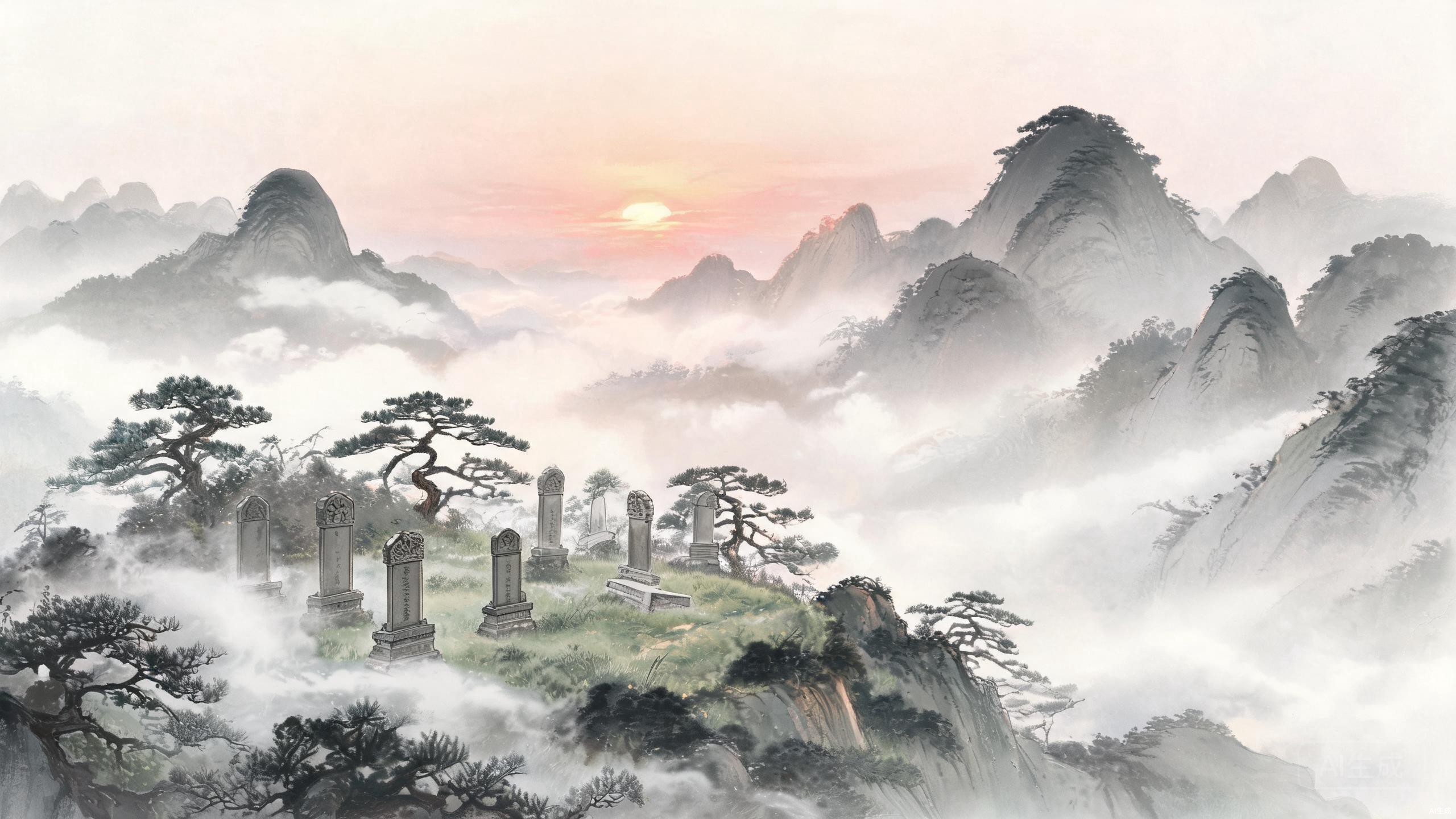
Ancestral Grave Feng Shui and Marriage: Traditional Beliefs
In Feng Shui, the energy configuration of ancestral graves is believed to be closely connected to the marriage fortunes of descendants. The ancients held that when ancestors are buried in a Feng Shui treasure site (a location with exceptional energy), their spirits can bless later generations with harmonious marriages and happy family lives. This belief has had a profound influence throughout Chinese traditional culture.
Feng Shui teaches that marital happiness and family harmony are intimately tied to the Qi field (气场) of ancestral graves. When ancestral grave Feng Shui is favorable, it can bring blessed romantic encounters to descendants, allowing them to enjoy fulfilling and harmonious married lives.
Cultural Context: In Chinese tradition, the concept of Bloodline Resonance (血脉感应) holds that descendants remain energetically connected to their ancestors. Just as a tree's roots nourish its branches, a well-sited grave is thought to channel positive energy upward through the family line — affecting health, wealth, and marriage across generations.
Feng Shui Elements and Their Connection to Marriage
Azure Dragon and White Tiger: The Balance of Marriage
In Feng Shui, the balance between the Azure Dragon (青龙, Qing Long) and the White Tiger (白虎, Bai Hu) is closely linked to marriage. The Azure Dragon represents the male energy, while the White Tiger represents the female energy. When the Dragon Sand and Tiger Sand are in harmonious balance, they symbolize a harmonious marital relationship.
If the Azure Dragon Sand on the left side of the ancestral grave is slightly higher than the White Tiger Sand on the right — with a moderate height difference — this suggests a harmonious marriage built on mutual respect. However, if the Dragon Sand is too low or the Tiger Sand is too high, it may indicate an imbalance in the relationship, leading to conflict and discord.
Water Sources and Marriage
The shape and quality of water sources near the grave also relate to marriage. Curving, embracing water symbolizes a loving couple and a harmonious family. In contrast, Reverse Bow Sha (反弓煞) — water that curves away like a bowstring — may indicate tension in the relationship and a tendency toward separation.
Clear, clean water symbolizes pure marital affection, while murky or polluted water suggests a complicated and troubled relationship.
Sitting Direction and Marriage
The Sitting and Facing direction (坐向) of the ancestral grave also influences marriage outcomes. The facing direction should be open and bright, symbolizing a promising future for marriage. It should avoid Form Sha (形煞) such as Sharp Corner Sha (尖角煞) and Reverse Bow Sha, as these negative configurations can adversely affect marital fortune.
Specific Effects of Ancestral Grave Feng Shui on Marriage
The benefits of favorable ancestral grave Feng Shui manifest in several ways: family members enjoy happy marriages filled with love; descendants encounter suitable partners and marry smoothly; married life is joyful and the household remains harmonious.
Conversely, unfavorable ancestral grave Feng Shui may manifest as: difficulty finding a suitable partner for a long time; strained marital relationships with frequent arguments; marital crises and even divorce.
How to Improve Ancestral Grave Feng Shui for Better Marriage Luck
If ancestral grave Feng Shui is unfavorable, the following methods can help improve marriage fortune:
Balance the Azure Dragon and White Tiger: Plant trees on the left side of the grave (the Azure Dragon position) to strengthen Dragon Sand; on the right side (the White Tiger position), modestly lower the height to balance the left-right relationship.
Improve the Water Source: Clear any debris from nearby water sources and enhance water quality. If the water shape is unfavorable, planting trees or adding landscape features can reshape the energy flow.
Adjust the Facing Direction: If conditions permit, adjust the grave's facing direction toward an auspicious orientation.
Increase Vital Qi: Plant flowers, shrubs, and trees around the grave to amplify Vital Qi (生气, Sheng Qi) and elevate the overall energy field.
How to Apply This in Practice
- Survey the site: Walk around the grave at different times of day, noting where Dragon and Tiger formations appear imbalanced
- Consult a practitioner: For significant adjustments, work with an experienced Feng Shui consultant who understands local terrain
- Make gradual changes: Introduce plantings and modifications slowly — avoid disruptive construction during sensitive periods
- Maintain regularly: Keep the area clean, tidy, and well-tended — neglect itself creates negative energy
Quick Tips:
- A pair of matching stone lions flanking the grave entrance symbolizes the union of complementary energies
- Avoid placing thorny plants directly on the grave — their piercing energy may create Sha Qi (harmful energy)
- Round-shaped flowers and ornaments promote harmony; sharp angles introduce tension
The Multifactorial Nature of Marriage
Although ancestral grave Feng Shui is believed to influence marriage, marital happiness depends far more on personal character, shared values, communication skills, and mutual understanding. Ancestral grave Feng Shui is only one contributing factor among many — not a determining one.
In real life, we should focus greater attention on self-cultivation and open communication with our partners, working together to nurture the marriage. At the same time, improving ancestral grave Feng Shui can provide psychological comfort and positive affirmation — and these mental benefits are not insignificant.
The relationship between ancestral grave Feng Shui and descendants' marriages is an important concept in Chinese traditional culture. It reflects people's heartfelt wishes for marital happiness and deep respect for ancestors. By improving ancestral grave Feng Shui, we can gain positive psychological support, but even more importantly, we must invest genuine care into our marriages in daily life.
Practical Considerations in Application
In actual Feng Shui practice, methods must be adapted to specific geographic environments and real-world conditions. Knowledge cannot be applied mechanically from textbooks, nor should one rely excessively on any single method. A skilled Feng Shui practitioner combines theory with practice, tradition with modernity.
During the application process, several principles should be observed: first, fully respect nature — never forcibly alter the natural environment; second, emphasize comprehensive judgment rather than deciding based on a single factor; third, consider practical feasibility — theoretical perfection does not always equal real-world viability.
A Modern Scientific Perspective
From the standpoint of modern science, many principles within traditional Feng Shui theory have reasonable scientific foundations. For example, selecting a location with Back to Mountain Facing Water (背山面水) uses mountain mass to block cold winds while leveraging water surfaces to moderate temperatures, creating a favorable microclimate. Choosing elevated ground with good drainage prevents moisture buildup and standing water, helping preserve the integrity of the burial site.
These Feng Shui principles are, in essence, the accumulated wisdom of generations observing and summarizing natural patterns — reflecting an understanding of harmonious coexistence between humanity and nature. In contemporary society, we should approach these traditional insights with a scientific attitude and carry them forward thoughtfully.
The Inheritance and Evolution of Feng Shui Culture
As a vital component of Chinese traditional culture, Feng Shui retains significant cultural value in modern society. It represents not only the ancients' understanding and synthesis of the natural environment but also the crystallized wisdom of Chinese civilization. Studying Feng Shui culture helps us better appreciate the essence of Chinese traditional thought.
While preserving Feng Shui culture, we must also evolve with the times — integrating the reasonable core of traditional Feng Shui with modern science, allowing this ancient wisdom to radiate fresh vitality in the new era.
Feng Shui Factors in Marriage
In Feng Shui theory, marriage fortune connects to the facing direction and surrounding environment of the burial site. A grave oriented toward an auspicious direction, surrounded by harmonious and beautiful scenery, is believed to benefit descendants' marital happiness.
The Sand and Water (砂水) configuration around the grave also relates to marriage. The balance between Dragon Sand and Tiger Sand symbolizes harmony between husband and wife. If either formation becomes too dominant, it disrupts the equilibrium of the marriage. Therefore, when selecting a burial site, attention must be paid to achieving Sand balance — striving for the harmonizing effect of Yin and Yang (阴阳).
Cultural Context: The Five Essentials — Dragon, Acupoint, Sand, Water, and Direction (龙穴砂水向) — form the foundation of traditional site evaluation. In grave selection, "Dragon" refers to the incoming mountain ridge, "Acupoint" to the exact burial spot, "Sand" to protective surrounding hills, "Water" to nearby streams, and "Direction" to the grave's facing orientation. Each must be assessed in relation to the others.
The Cultural Significance of Feng Shui's Transmission
Feng Shui culture carries the Chinese people's profound understanding of nature and life — a precious cultural heritage left by our ancestors. Although modern science and technology have advanced tremendously, the principles embedded in Feng Shui — respect for nature and the pursuit of harmony — remain deeply relevant today. By learning Feng Shui knowledge, we can better understand traditional culture while applying ancient wisdom in practice, bringing greater peace and security to our own lives and those of our families. When approaching Feng Shui, we should maintain a rational and scientific attitude — honoring tradition while moving forward with the times — so that Feng Shui culture continues to play a constructive role in modern society.
Related Articles
- [[../08-百科问答库/47-什么是Yin Dwelling风水?Yin Dwelling风水真的影响后代吗?.md|What Is Yin Dwelling Feng Shui? Does It Really Affect Descendants?]]
- [[../05-命理与运势/09-面相断Yin Dwelling风水.md|Face Reading for Yin Dwelling Feng Shui — Reading Graves Through the Nose]]
- [[../05-命理与运势/10-气色观风水.md|Reading Feng Shui Through Complexion — Facial Vitality and Ancestral Grave Energy]]
- [[../07-风水故事/58-风水与丧葬.md|Feng Shui and Burial Customs — The Ancient Tradition of Yin Dwelling Feng Shui]]