Ancestral Grave Feng Shui: How It Influences Family Luck and Destiny
In traditional Chinese culture, Ancestral Grave Feng Shui (祖坟风水) is believed to have a profound influence on a family's fortune and destiny. This belief is deeply rooted in the Chinese concepts of fam
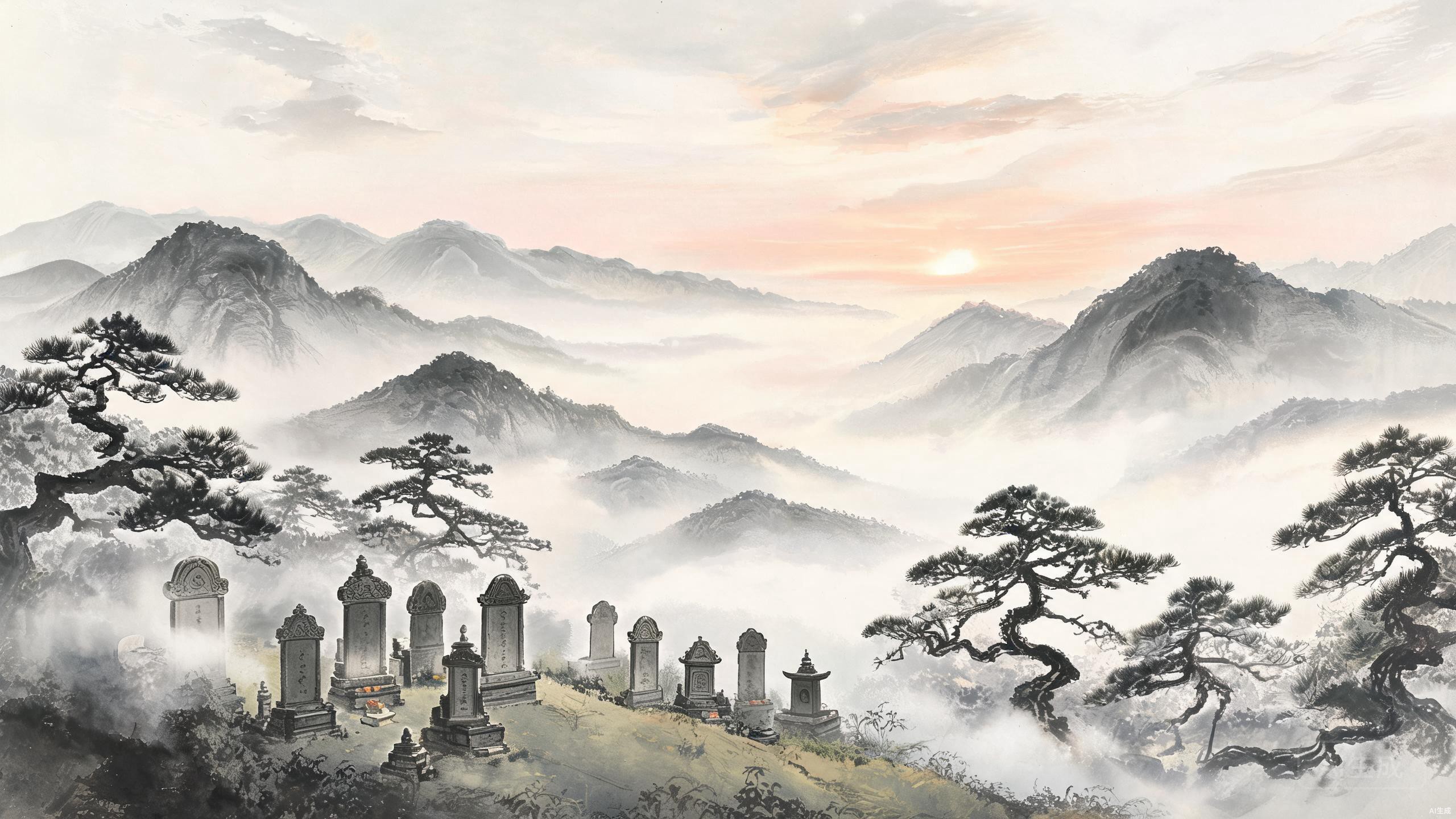
The Traditional Belief in Ancestral Grave Feng Shui
In traditional Chinese culture, Ancestral Grave Feng Shui (祖坟风水) is believed to have a profound influence on a family's fortune and destiny. This belief is deeply rooted in the Chinese concepts of family and ancestor veneration. The ancients believed that although ancestors had passed away, their spirits continued to exist and maintained a connection with their descendants. The quality of an ancestral grave's Feng Shui directly affects the quality and effectiveness of this connection.
Families with well-placed ancestral graves are considered to be blessed by their ancestors — thriving, prosperous, and producing generations of talented individuals. Conversely, families with poor ancestral grave Feng Shui may encounter various misfortunes, with members suffering repeated disasters and hardships.
How Ancestral Grave Feng Shui Influences Family Fortune
Transmission of Qi
According to Feng Shui principles, the ancestral grave is the root of a family's energy field. When ancestors are buried in an energetically favorable location (a "Feng Shui treasure site"), the grave can gather Vital Qi (Sheng Qi) from heaven and earth. This Vital Qi is then transmitted to descendants through the principle of Bloodline Resonance (血脉感应).
Cultural Context: Bloodline Resonance is a core concept in Chinese metaphysics — the idea that energy flows not only through physical spaces but also through family lines. Think of it as an energetic inheritance: just as you inherit physical traits from your ancestors, you also inherit the energetic imprint of their resting place.
A family with strong ancestral grave Feng Shui possesses a powerful energy field, providing positive support to family members in all aspects of life. A family with poor ancestral grave Feng Shui has a weakened energy field, making its members more vulnerable to negative influences.
Psychological Suggestion
The influence of ancestral grave Feng Shui also operates on a psychological level. When family members know their ancestral grave has good Feng Shui, they experience a sense of security and pride. This positive mental state enhances their self-confidence and ambition.
Conversely, if the ancestral grave has poor Feng Shui, family members may carry a psychological burden and anxiety that negatively affects their decision-making and actions.
Family Cohesion
Activities related to ancestral grave Feng Shui — such as selecting the site, maintaining the grave, and performing ancestral worship — naturally strengthen family bonds and transmit family values across generations. This powerful family cohesion plays a vital role in the development and prosperity of the family.
Specific Manifestations of Ancestral Grave Influence
Influence on Wealth Fortune
Ancestral grave Feng Shui is closely linked to a family's Wealth Fortune (财运). Good ancestral grave Feng Shui can bring sustained and stable wealth growth to the family. In Feng Shui theory, water represents wealth; a favorable water source near the ancestral grave symbolizes flourishing financial fortune for the family.
Influence on Career and Official Position
Ancestral grave Feng Shui is also associated with career advancement and official position. Good ancestral grave Feng Shui can help family members achieve professional success and elevated status. The flow of Dragon Veins (龙脉) and the embracing configuration of Sand (砂) symbolize career success and social standing.
Influence on Health
Ancestral grave Feng Shui also relates to the health of family members. Good ancestral grave Feng Shui can bring physical wellness and a sound mental state. In Feng Shui theory, the quality of Qi directly affects human health — just as breathing clean mountain air nourishes the body, high-quality Qi in a grave nourishes descendants.
Influence on Future Generations
The influence of ancestral grave Feng Shui on future generations is the most far-reaching. Good ancestral grave Feng Shui provides descendants with a favorable growth environment and opportunities. The ancients believed that families with strong ancestral grave Feng Shui would produce generations of talented individuals and enjoy enduring prosperity.
How to Judge the Quality of Ancestral Grave Feng Shui
Assessing the quality of ancestral grave Feng Shui requires comprehensive evaluation across multiple dimensions:
- Dragon Vein (龙脉) vitality: Is the mountain range's flow dynamic and powerful?
- Acupoint accuracy (穴位): Is the Feng Shui Point precisely identified?
- Sand embracing (砂): Are the surrounding protective hills complete?
- Water flow (水): Is the direction of water flow auspicious?
- Facing direction (向): Is the orientation correct?
You can also observe the natural environment around the grave: Is the vegetation lush? Is the water source clear? Is the Qi fresh? A healthy natural environment is often the outward expression of good Feng Shui.
Signs of Poor Ancestral Grave Feng Shui
Poor ancestral grave Feng Shui can manifest in many ways:
- Environmental deterioration: The surroundings of the grave are dilapidated, vegetation is sparse, and water sources are polluted
- Family difficulties: Family members frequently experience health problems, career setbacks, and financial misfortune
- Relationship breakdowns: Internal family conflicts increase and interpersonal relationships become strained
If these conditions appear, you may consider adjusting and improving the ancestral grave's Feng Shui, or relocating the grave if necessary.
Quick Tips:
- Inspect your ancestral grave at least once a year to assess its condition
- Keep the area clear of debris and overgrowth
- Note any environmental changes nearby — new construction, road alterations, or water flow changes
Maintaining Ancestral Grave Feng Shui
Maintaining ancestral grave Feng Shui is a long-term commitment. It requires regular cleaning and repair of the grave to keep the environment tidy and attractive. Regular ancestral worship expresses respect and remembrance for those who came before. Ongoing attention to environmental changes around the grave allows you to address emerging issues promptly.
The influence of ancestral grave Feng Shui on family fortune is an important concept in traditional Chinese culture. While modern science cannot directly verify this influence, as a cultural tradition and psychological anchor, it plays a positive role in strengthening family cohesion and supporting members' mental well-being.
Practical Considerations
In actual Feng Shui practice, you must adapt theory to specific geographic conditions and real-world situations. Avoid applying textbook knowledge rigidly, and don't rely excessively on any single method. A skilled Feng Shui practitioner combines theory with practice, tradition with modernity.
During consultation and implementation, keep these principles in mind:
- Respect nature: Do not forcibly alter the natural environment
- Make holistic judgments: Never base decisions on a single factor alone
- Consider practical feasibility: Theoretical perfection does not always equal practical viability
A Modern Scientific Perspective
From a modern scientific viewpoint, many traditional Feng Shui principles have reasonable empirical foundations. For example:
- Choosing a site "backed by mountains and facing water" (背山面水): Mountains block cold winds while water bodies moderate temperature, creating a favorable microclimate
- Selecting well-drained high ground: This prevents dampness and water pooling, protecting the integrity of the burial site
These Feng Shui principles represent the accumulated wisdom of centuries of careful observation of natural environments — embodying the ancient Chinese ideal of harmony between humanity and nature. In modern society, we should inherit and develop this traditional wisdom with a scientific attitude.
Cultural Context: While Western readers may associate grave placement primarily with practical concerns (drainage, accessibility, aesthetics), traditional Chinese Feng Shui adds layers of energetic and ancestral significance. Modern ecological studies actually validate many classical placement principles — hilly terrain does provide better drainage, wind protection, and temperature regulation than low-lying areas.
The Heritage and Evolution of Feng Shui Culture
As a vital component of traditional Chinese culture, Feng Shui retains significant cultural value in modern society. It is not only the ancients' understanding and synthesis of the natural environment — it is a crystallization of Chinese civilizational wisdom. Studying Feng Shui culture helps us better grasp the essence of traditional Chinese thought.
As we pass down Feng Shui culture, we must also move with the times — combining the reasonable core of traditional Feng Shui with modern science, allowing Feng Shui culture to radiate new vitality in our era.
Related Articles
- [[../08-百科问答库/27-什么叫山管人丁水管财?.md|What Does "Mountains Govern People, Water Governs Wealth" Mean?]]
- [[../08-百科问答库/47-什么是Yin Dwelling风水?Yin Dwelling风水真的影响后代吗?.md|What Is Yin Dwelling Feng Shui? Does It Really Affect Descendants?]]
- [[../01-风水入门/18-风水中的藏风聚气.md|The Principle of "Storing Wind and Gathering Qi" in Feng Shui]]
- [[../05-命理与运势/09-面相断Yin Dwelling风水.md|Reading Yin Dwelling Feng Shui Through Face Analysis — Nose and Burial Site Correspondences]]