Ancestral Grave Feng Shui: How It Influences Your Career Luck and Success
In traditional Chinese culture, Ancestral Grave Feng Shui (祖坟风水, zǔ fén fēng shuǐ) is believed to have a profound connection with the career luck (官运, guān yùn) of descendants. The ancients held that
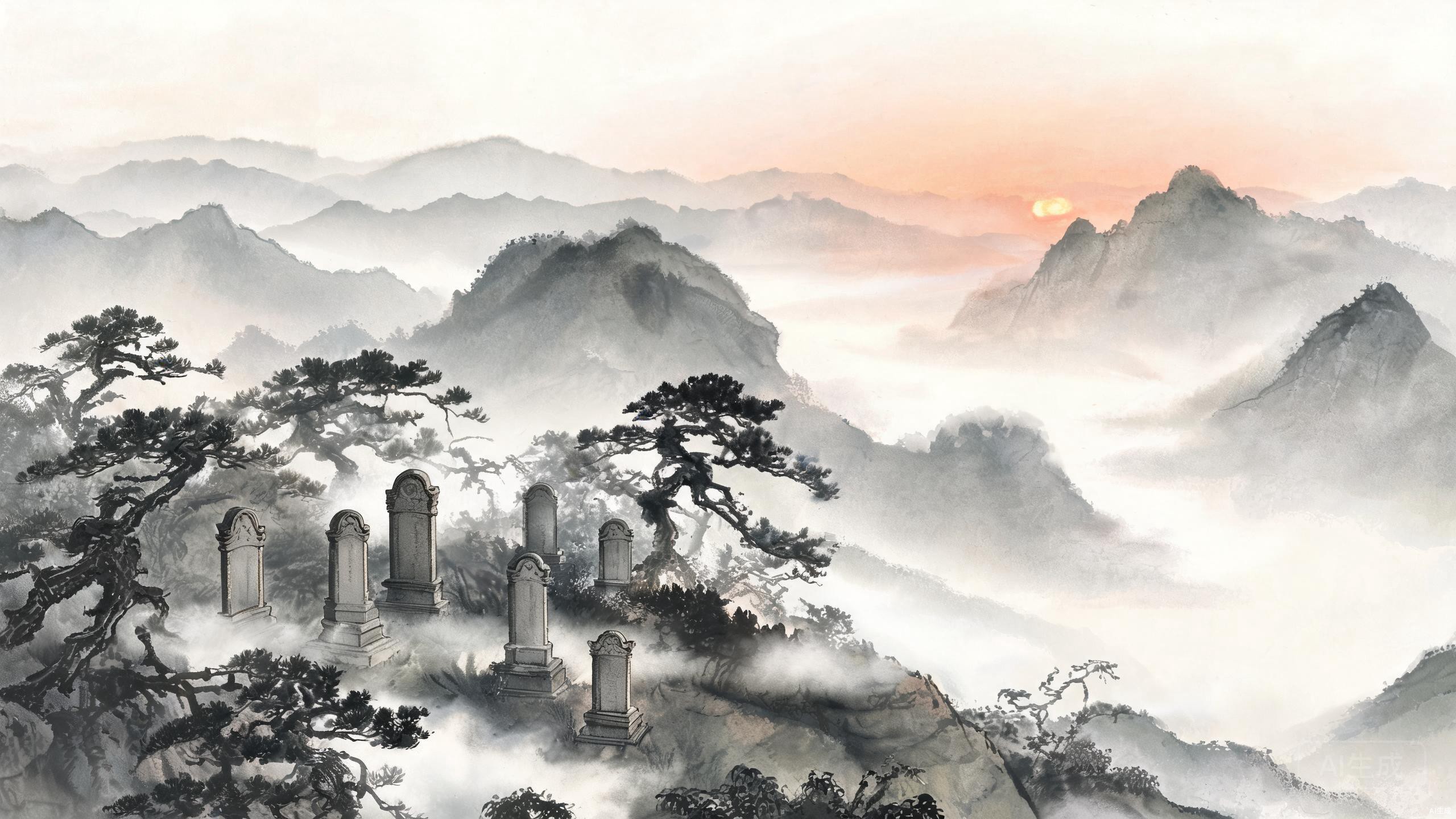
Ancestral Grave Feng Shui and the Traditional View of Career Luck
In traditional Chinese culture, Ancestral Grave Feng Shui (祖坟风水, zǔ fén fēng shuǐ) is believed to have a profound connection with the career luck (官运, guān yùn) of descendants. The ancients held that when ancestors are buried in an auspicious Feng Shui location, their spirits can bless future generations with smooth political careers, high office, and great wealth. This belief has echoed through history — many high-ranking officials and nobles placed enormous importance on the Feng Shui of their ancestral tombs.
According to Feng Shui theory, career luck is most closely linked to the Dragon Vein (龙脉, lóng mài). A strong Dragon Vein can attract helpful mentors and bring professional success, allowing descendants to rise steadily through the ranks.
Cultural Context: In Chinese metaphysics, the Dragon Vein represents the vital energy channels running through mountain ranges and the earth itself. Just as blood vessels carry life through the body, Dragon Veins channel Qi (气) — the fundamental life force — through the landscape. A powerful Dragon Vein is considered the foundation of all lasting fortune.
How Dragon Veins Influence Career Luck
In Feng Shui, the course and condition of a Dragon Vein directly determine the strength of career luck. An excellent Dragon Vein should appear majestic and undulating — rising and falling in a powerful rhythm that symbolizes steady advancement and rising status.
The three hallmarks of a career-strengthening Dragon Vein:
- Higher and more distant source (太祖山): The further back the Dragon Vein's origin mountain stretches, the deeper the foundation of career luck
- Rhythmic undulations: When the Dragon Vein rises and falls in balanced patterns, career development flows smoothly
- Clear acupoint formation near the grave: A distinct convergence of energy (结穴) near the ancestral tomb signals expansive career prospects
Protective Sand Formations and Career Luck
The configuration of surrounding hills — known as Sand (砂, shā) — also affects career fortune. In Feng Shui, the Vermilion Bird Sand (朱雀砂, zhū què shā), also called the Desk Mountain (案山, àn shān), directly symbolizes career advancement and future prospects.
An auspicious Desk Mountain should appear dignified and elegant — resembling a scholar's desk — symbolizing a brilliant official career and boundless future opportunities.
The balance of the Azure Dragon Sand (青龙砂) and White Tiger Sand (白虎砂) is equally important:
| Formation | Ideal Height | Symbolic Meaning |
|---|---|---|
| Azure Dragon Sand (Left) | Higher | Helpful mentors and noble support |
| White Tiger Sand (Right) | Lower | Protection from petty rivals and schemers |
When both formations are properly balanced, descendants experience smooth navigation of political and professional circles — what the ancients called "favor on both sides" (左右逢源).
Quick Tip: When evaluating any property or burial site, check that the left side (from the entrance looking out) has slightly taller features than the right. This natural imbalance invites beneficial relationships while keeping away troublemakers.
Sitting Direction and Career Luck
The Sitting and Facing (坐向, zuò xiàng) direction of an ancestral grave also influences career fortune. The ideal facing direction should be:
- Open and bright: Symbolizing a brilliant future ahead
- Facing auspicious mountains: Such as a Desk Mountain (案山) or Facing Mountain (朝山, cháo shān), symbolizing support from influential people
If the grave faces a dark, narrow opening, or points toward Form Sha (形煞, xíng shà) — such as sharp corners or reverse-bow shapes — career luck may suffer significant negative effects.
Common Direction-Related Problems to Avoid
- Sharp Corner Sha (尖角煞) — jagged edges pointing at the grave
- Reverse Bow Sha (反弓煞) — water or road curving away from the site
- Heaven Chopping Sha (天斩煞) — narrow gaps between tall structures directly facing the grave
Specific Ways Ancestral Grave Feng Shui Affects Career Luck
Strong Ancestral Grave Feng Shui produces tangible benefits for descendants' careers:
Positive Indicators:
- Smooth advancement through official ranks with consistent promotions
- Attracting influential mentors who open important doors
- Receiving crucial support during critical moments, transforming danger into opportunity
- Recognition and honors that elevate family reputation
Warning Signs of Poor Ancestral Grave Feng Shui:
- Career advancement blocked or promotions frequently denied
- Persistent interference from rivals and petty office politics
- Missing key opportunities due to lack of timely support
- Repeated setbacks during pivotal career moments
Cultural Context: This concept of "bloodline resonance" (血脉感应, xuè mài gǎn yìng) reflects the Chinese philosophical view that descendants remain energetically connected to their ancestors. The condition of the burial site is thought to ripple through the family line, affecting each generation's fortunes.
Historical Figures Who Valued Ancestral Grave Feng Shui
Throughout Chinese history, many notable figures placed extraordinary importance on Ancestral Grave Feng Shui:
Zhu Yuanzhang (朱元璋) — Founding Emperor of the Ming Dynasty (1368–1398). After establishing the Ming Dynasty, he ordered extensive renovation of his ancestral graves to consolidate imperial authority and legitimize his rule.
The Kangxi Emperor of the Qing Dynasty — Made repeated inspection tours of imperial ancestral tombs, personally overseeing their maintenance and Feng Shui conditions.
These historical examples reflect how seriously the ancients regarded the connection between Ancestral Grave Feng Shui and career fortune — and demonstrate the central role this tradition played in Chinese culture.
How to Improve Ancestral Grave Feng Shui for Better Career Luck
If your ancestral grave Feng Shui is unfavorable, the following methods can help strengthen career fortune:
1. Strengthen the Dragon Vein
Plant trees behind the ancestral grave to reinforce the Dragon Vein's momentum and deepen the foundation of career luck.
2. Improve the Sand Formations
Plant trees or build rock arrangements in front of the grave to enhance the Desk Mountain's shape, expanding career prospects.
3. Adjust the Facing Direction
When conditions permit, adjust the grave's facing direction toward auspicious mountains and beneficial water features.
4. Clean and Maintain the Environment
Clear weeds and debris around the grave, maintaining a tidy and dignified appearance that honors ancestors and preserves Qi flow.
Quick Tip: Regular maintenance matters more than dramatic changes. Visiting the ancestral grave, keeping it clean, and making respectful offerings creates an ongoing flow of positive energy that benefits the entire family.
A Rational Perspective on Feng Shui and Career Luck
The connection between Ancestral Grave Feng Shui and career luck is an important concept in traditional Chinese culture. While modern science cannot provide direct evidence for this relationship, the tradition itself offers genuine psychological comfort and cultural meaning — both of which positively influence mindset and motivation.
In real life, career success depends far more on personal ability, hard work, and opportunity than on Feng Shui. Ancestral Grave Feng Shui is just one factor among many — never the decisive one. We should focus primarily on developing our own skills and effort, while allowing improvements to ancestral graves to provide psychological comfort and positive affirmation.
Important Notes for Practical Application
In actual Feng Shui practice, theory must be combined with specific geographic environments and real-world conditions. Rigidly applying textbook formulas or over-relying on any single method will lead to poor results. An excellent Feng Shui practitioner combines theory with practice, tradition with modernity.
Three core principles to remember:
- Respect nature: Never forcibly alter the natural environment — work with the land, not against it
- Make comprehensive judgments: Never make decisions based on a single factor alone
- Prioritize practical feasibility: Theoretical perfection does not always equal practical viability
A Modern Scientific Interpretation
From a modern scientific perspective, many traditional Feng Shui principles contain reasonable logic:
- Back-to-mountain, facing-water positions use mountain mass to block cold winds while water bodies moderate temperature, creating favorable microclimates
- Elevated, well-drained sites prevent moisture and waterlogging, protecting burial sites from decay
- Open southern exposures maximize sunlight and warmth, conditions associated with better preservation and human comfort
These Feng Shui principles reflect centuries of careful observation by the ancients — embodying the wisdom of humans living in harmony with nature. In modern society, we should inherit and develop these traditional wisdoms with a scientific attitude.
The Heritage and Evolution of Feng Shui Culture
As an essential component of traditional Chinese culture, Feng Shui retains important cultural value in modern society. It is not merely the ancients' understanding of the natural environment — it is the crystallized wisdom of Chinese civilization itself. Studying Feng Shui culture helps us better grasp the essence of Chinese traditional thought.
While preserving this heritage, we must also evolve with the times — combining the reasonable core of traditional Feng Shui with modern science, allowing this ancient wisdom to flourish with new vitality in our era.
Feng Shui Characteristics of Career Luck
Career luck in Feng Shui is most closely tied to the Dragon Vein and facing direction:
Dragon Vein Quality: A strong Dragon Vein carries powerful Qi that supports descendants' professional achievements and leadership capacity.
Facing Direction: Orienting toward the auspicious official direction — typically due south or southeast — is believed to benefit descendants' political careers.
Desk Mountain Formation: The shape of the Desk Mountain in front of the grave is also critical:
| Desk Mountain Quality | Career Effect |
|---|---|
| Dignified and elegant, with clear layers | Promotions and elevated status |
| Too low or too high | Diminished career benefits |
When selecting a burial site, the Desk Mountain formation deserves special attention as one of the most important career-related considerations.
How to Apply This in Modern Life
Even if you cannot relocate an ancestral grave, you can apply these principles to your own living and working space:
- Create your own "Dragon Vein": Position your desk with a solid wall behind you — this provides energetic support
- Build your "Sand" formations: Place bookcases, plants, or screens on either side of your workspace for balanced protection
- Face your "auspicious direction": Orient your main desk to face south or southeast when possible
- Maintain a clear "Desk Mountain": Keep a clean, organized view directly in front of your workspace — symbolizing clear career prospects
Quick Tips:
- Strong career Feng Shui begins with a solid, protected workspace — never sit with your back to a door or window
- Keep your view forward open and uncluttered — this represents unobstructed career advancement
- Add a healthy plant on your desk's left side (Azure Dragon position) to attract helpful mentors
Related Articles
- [[../08-百科问答库/47-什么是Yin Dwelling风水?Yin Dwelling风水真的影响后代吗?.md|What Is Yin Dwelling Feng Shui? Does It Really Influence Descendants?]]
- [[../05-命理与运势/09-面相断Yin Dwelling风水.md|Face Reading for Yin Dwelling Feng Shui — Nose Indicators of Burial Sites]]
- [[../05-命理与运势/10-气色观风水.md|Reading Qi Through Complexion — How Facial Color Reflects Ancestral Grave Feng Shui]]
- [[../07-风水故事/58-风水与丧葬.md|Feng Shui and Burial Customs — The Ancient Tradition of Yin Dwelling Feng Shui]]