Cemetery Feng Shui: How to Choose the Best Burial Plot for Ancestors
As urbanization continues to expand, cemeteries have become the primary option for city dwellers laying their loved ones to rest. Cemetery Feng Shui selection differs from traditional mountain Feng Sh
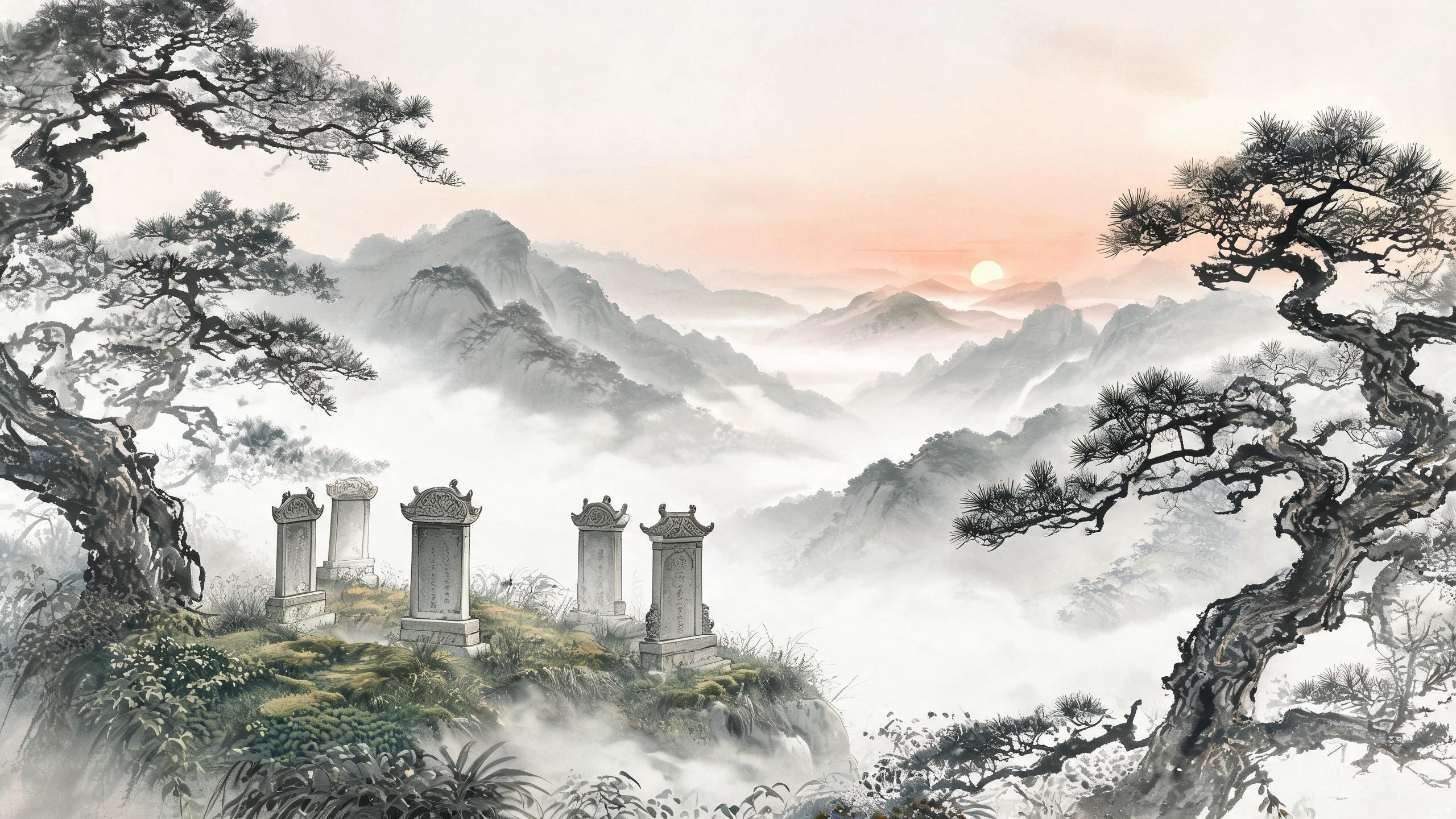
The Unique Nature of Cemetery Feng Shui
As urbanization continues to expand, cemeteries have become the primary option for city dwellers laying their loved ones to rest. Cemetery Feng Shui selection differs from traditional mountain Feng Shui — it requires making the best possible choice within limited space and a pre-determined layout.
The unique characteristics of cemetery Feng Shui are threefold: First, the cemetery's overall plan is already fixed, leaving limited personal choice. Second, graves are arranged in uniform rows with little natural terrain variation. Third, the surrounding environment is complex, heavily influenced by urban infrastructure.
Core Principles for Choosing a Cemetery Plot
When selecting a spot within a cemetery, your first step is to observe the overall layout. A well-designed cemetery should align with Feng Shui principles: backed by solid support (which can be elevated ground, buildings, or trees), open and spacious in front, and protected on both sides.
When choosing a specific plot, focus on the quality of the local environment. An ideal location should have:
- Higher elevation with proper drainage
- Plenty of sunlight and good ventilation
- Lush greenery and beautiful surroundings
Equally important is avoiding unfavorable factors: stay away from spots directly facing roads, high-voltage power lines, electrical substations, garbage stations, restrooms, and towering structures.
Feng Shui Analysis of Different Cemetery Positions
Front-Row Positions
The front row is close to roads, making it convenient for visiting, but it is also more exposed to noise and pedestrian traffic. The advantages of front-row positions include open views and abundant sunlight; the disadvantages include a lack of privacy and vulnerability to outside disturbances.
Middle Positions
Middle positions within a cemetery are generally considered the best choice. These spots enjoy protection from both front and back, as well as support from both sides, making them relatively stable and secure. The energy field in middle positions is usually balanced and less susceptible to outside interference.
Back-Row Positions
Back-row positions are typically near the cemetery's boundary or outer wall. Their advantages include quietness and good privacy; their disadvantages include potentially lacking backing support, or being affected by the environment beyond the cemetery.
Corner Positions
Corner positions are generally considered less ideal. With exposure on two or three sides and lacking protection, the energy field in corner spots tends to be unstable.
Choosing the Direction of a Grave
Most cemeteries have a uniform grave orientation, determined by the cemetery's overall master plan. When all graves face the same direction, individual choice is limited — but you can still optimize the Feng Shui by selecting a more favorable position.
A few cemeteries allow free choice of grave direction. In these cases, follow these guidelines:
- Face an open, bright direction — avoid dark, narrow orientations
- Face an auspicious water feature — avoid Reverse Bow Sha (反弓煞) water
- Face scenic beauty — avoid views of unfavorable structures
Practical Tips for Cemetery Feng Shui
Observe Vegetation
You can judge a location's quality by observing vegetation growth within the cemetery. Where plants grow lush and healthy, the Qi is generally favorable; where vegetation is sparse and stunted, the energy may be unfavorable.
Consider Greenery
Greenery in a cemetery not only beautifies the environment but also improves the Feng Shui. Choosing a spot near a green belt allows you to benefit from the Sand (砂) function of trees, achieving the effect of Storing Wind and Gathering Qi (藏风聚气).
Mind the Road Patterns
Road patterns within the cemetery affect Feng Shui significantly. When choosing a spot, avoid positions directly facing oncoming roads and select positions where roads curve around protectively. The influence of road shapes on Feng Shui is similar to that of rivers.
Quick Tips:
- Walk the cemetery grounds slowly before choosing — your body's response to a location can be surprisingly informative
- Bring a compass (or use a Feng Shui Compass app) to verify the direction and check for any nearby Sha Qi (harmful energy) sources
- Visit at different times of day to assess sunlight, shadows, and noise levels
Choosing the right spot in a cemetery requires balancing Feng Shui principles, environmental quality, and practical needs. Even though the choices are limited, applying the correct methods will help you find a genuinely favorable position for your loved ones.
Important Considerations in Practice
In real Feng Shui practice, you must combine theory with the specific geographic environment and actual conditions at hand. Do not apply textbook rules rigidly, and do not rely on any single method exclusively. A skilled Feng Shui practitioner combines theory with practice, tradition with modernity.
During the selection process, keep these points in mind:
- Respect nature — do not attempt to forcibly alter the natural environment
- Make holistic judgments — never decide based on a single factor alone
- Consider practical feasibility — theoretical perfection does not always equal real-world viability
A Modern Scientific Perspective
From a modern scientific standpoint, many traditional Feng Shui principles rest on rational foundations. For example, choosing a site with a mountain behind and water in front allows the mountain to block cold winds while the water moderates the temperature — creating an ideal microclimate. Choosing elevated ground with good drainage prevents moisture and standing water, helping preserve the integrity of the grave.
Cultural Context: These Feng Shui principles are the result of centuries of careful observation by ancient Chinese sages. They reflect a profound understanding of how humans can live in harmony with nature — a philosophy that modern sustainable design is only beginning to rediscover.
These principles embody the wisdom of harmonious coexistence between humanity and nature. In modern society, we should approach this traditional wisdom with scientific respect and carry it forward thoughtfully.
Preserving and Developing Feng Shui Culture
As an essential component of Chinese traditional culture, Feng Shui retains significant cultural value in modern society. It is more than ancient knowledge of the natural environment — it is the crystallized wisdom of Chinese civilization. Studying Feng Shui helps us better understand the essence of traditional Chinese thought.
As we preserve Feng Shui culture, we must also keep pace with the times — integrating the rational core of traditional Feng Shui with modern science, allowing this ancient wisdom to flourish with renewed vitality in our era.
Special Considerations for Cemetery Selection
Cemetery Feng Shui differs noticeably from traditional mountain Feng Shui. Cemeteries are typically human-planned and designed, with graves arranged in orderly rows and uniform directions, lacking natural Dragon Veins (龙脉) or authentic Sand and Water (砂水) patterns. Therefore, selecting a position in a cemetery requires a different set of evaluation criteria.
When choosing a spot in a cemetery, prioritize the following factors:
- Choose higher ground — avoid low-lying, damp areas
- Seek openness in front — ensure good views and natural light
- Back onto a solid feature — such as a wall, fence, or tree line, creating a Backing Mountain (靠山) pattern
- Avoid Form Sha (形煞) — such as high-voltage towers, smokestacks, electrical boxes, and similar structures
The Cultural Heritage of Feng Shui
Feng Shui culture carries the Chinese nation's profound understanding of nature and life — a precious cultural heritage left by our ancestors. In today's high-tech society, the philosophy of respecting nature and pursuing harmony embedded in Feng Shui remains deeply relevant. By learning Feng Shui, we can better understand traditional culture while applying ancient wisdom to bring peace and security to our own lives and those of our families.
When approaching Feng Shui, maintain a rational and scientific attitude — respect tradition while embracing modern progress, and let Feng Shui culture play a positive, constructive role in contemporary society.
Quick Tips:
- Consult with multiple family members before finalizing the plot — collective decision-making ensures everyone feels at peace with the choice
- Consider long-term accessibility — choose a plot that is easy to visit in all seasons and weather conditions
- Document the location clearly with GPS coordinates and landmarks so future generations can find and honor the site
Related Articles
- [[../05-命理与运势/09-面相断Yin Dwelling风水.md|Face Reading for Yin Dwelling Feng Shui: Reading the Nose for Graves and Facial Yin Dwelling Methods]]
- [[../07-风水故事/58-风水与丧葬.md|Feng Shui and Funeral Traditions: The Ancient Practice of Yin Dwelling Feng Shui]]
- [[../07-风水故事/01-曾国藩葬地择选记.md|Zeng Guofan's Burial Site Selection: The Feng Shui Wisdom of "Heaven Dislikes Cunning"]]
- [[../08-百科问答库/50-墓碑有什么风水讲究?墓碑朝向怎么定?.md|Tombstone Feng Shui Guide: What to Know About Tombstone Orientation and Placement]]