Dragon Method in Yin Dwelling Feng Shui: A Complete Guide to Dragon Veins
The Dragon Method is the most fundamental and essential technique in Yin Dwelling Feng Shui. Here, "dragon" refers to the flow and form of mountain ranges — known as the Dragon Vein (龙脉, long mai). Th
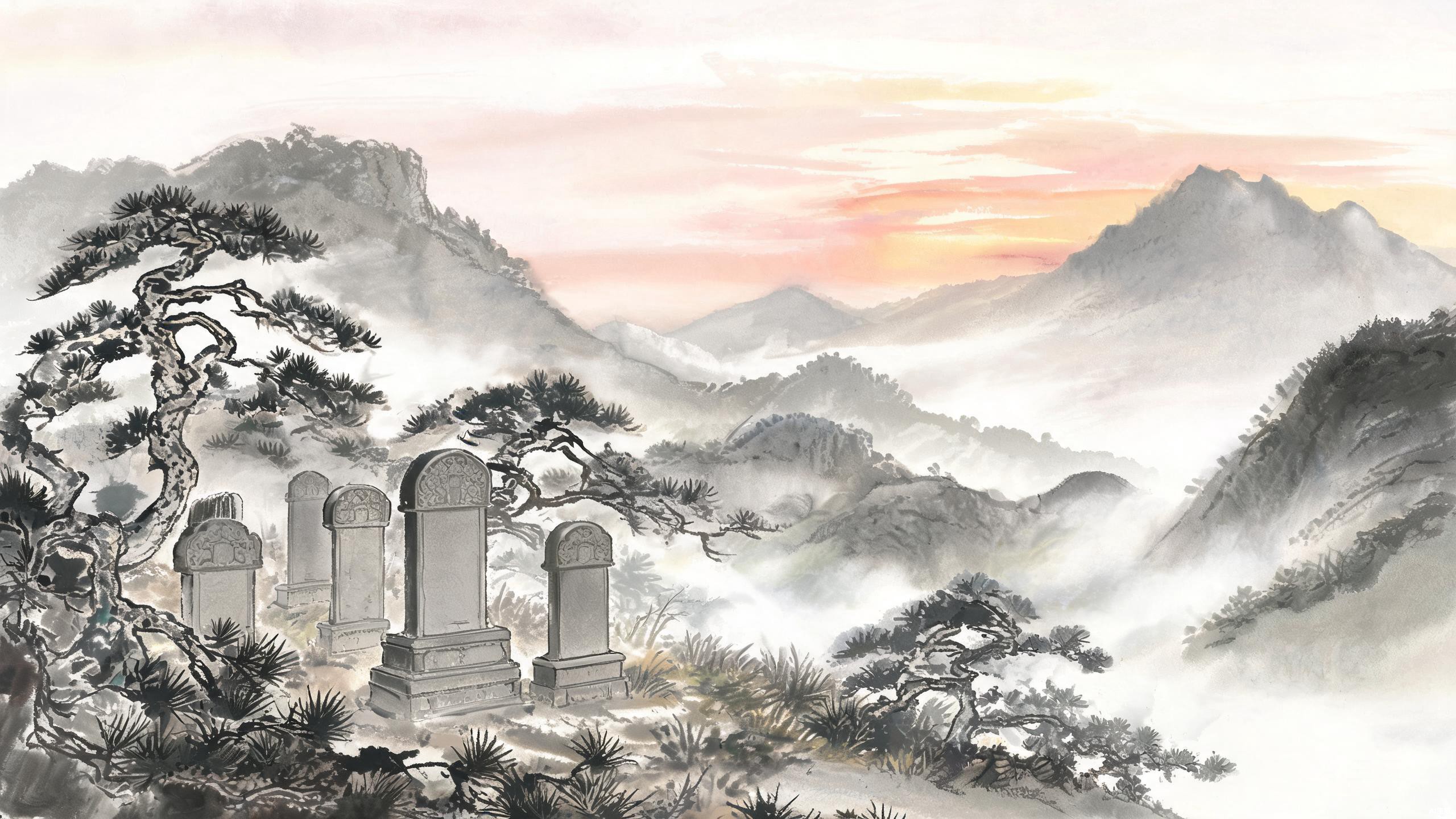
The Importance of the Dragon Method in Yin Dwelling Feng Shui
The Dragon Method is the most fundamental and essential technique in Yin Dwelling Feng Shui. Here, "dragon" refers to the flow and form of mountain ranges — known as the Dragon Vein (龙脉, long mai). The Dragon Method is the practice of analyzing and assessing the quality of these Dragon Veins.
Among the Five Essentials (龙穴砂水向) — Dragon, Acupoint, Sand, Water, and Direction — the Dragon ranks first, underscoring its foundational importance. Without a strong Dragon Vein, the other elements have nothing to build upon. Therefore, the first step in any Feng Shui practice is Seeking the Dragon.
Cultural Context: The Dragon in Feng Shui is not a mythical creature but a metaphor for the life force that flows through mountain ranges. Just as blood flows through the body's meridians, Qi (气) flows through the earth's topography. Identifying where this energy is strongest is the key to finding auspicious burial or building sites.
The Structural Elements of a Dragon Vein
Grand Ancestor Mountain (太祖山)
The Grand Ancestor Mountain is the tallest peak at the origin of the Dragon Vein, marking its starting point. The grander and more majestic this peak, the more powerful the Dragon Vein's overall energy.
Lesser Ancestor Mountain (少祖山)
The Lesser Ancestor Mountain is the second most significant peak in the Dragon Vein, located in its middle section. It serves as a critical bridge between the Grand Ancestor Mountain and the burial site, where the Dragon's energy gathers and concentrates.
Parent Mountain (父母山)
The Parent Mountain is the backing mountain directly behind the Feng Shui Acupoint. It has an immediate impact on whether the Acupoint is auspicious or inauspicious. An ideal Parent Mountain should be dignified, stable, and full of presence — capable of providing solid support to the Acupoint.
Narrow Passage (过峡)
The Narrow Passage is the connecting segment of the Dragon Vein between two mountains. The form of this passage reveals the vitality of the Dragon. A good Narrow Passage should be thin but unbroken, curved rather than straight.
Energy Constriction (束气)
Energy Constriction refers to the narrowing and tightening of the Dragon Vein just before it forms an Acupoint. The tighter this constriction, the more concentrated the Vital Qi (Sheng Qi) — and the more powerful the resulting Acupoint.
Classifications of Dragon Veins
Classification by Form
Living Dragon (生龙): Mountain ranges with lively, undulating forms and graceful movement — an auspicious dragon.
Dead Dragon (死龙): Stiff, rigid terrain devoid of life force — should be avoided.
Strong Dragon (强龙): Mountain ranges with tremendous momentum and abundant energy — suitable for grand-scale Acupoints.
Weak Dragon (弱龙): Terrain lacking sufficient power and force — even if it forms an Acupoint, the energy is limited.
Classification by Direction of Flow
Trunk Dragon (干龙): The main artery of a major mountain range, extending for hundreds of miles with tremendous scope.
Branch Dragon (支龙): Smaller veins branching off from the Trunk Dragon, with comparatively reduced energy.
Classification by Five Elements (Wu Xing)
Each mountain shape corresponds to a different element:
- Metal (金): Rounded, dome-shaped mountains
- Wood (木): Sharp, tapered peaks
- Water (水): Rolling, undulating forms
- Earth (土): Square, flat-topped shapes
- Fire (火): Red-tinted, flame-like formations
Different elemental dragons suit different Acupoints and orientations.
Cultural Context: The Five Elements (Wu Xing, 五行) theory underpins much of Feng Shui analysis. Each element has unique characteristics that interact through cycles of generation (Wood feeds Fire, Fire creates Earth, etc.) and restriction. Matching the right element to the right location creates harmony and amplifies lucky energy.
How to Identify a Good Dragon Vein
Examine Its Momentum
A strong Dragon Vein should display grand momentum, winding gracefully with vibrant vitality. Viewed from a distance, it resembles a giant dragon coiled across the landscape — undulating continuously, with no breaks or rigid sections.
Observe Its Form
A quality Dragon Vein features rounded,full and rounded mountain shapes, lush vegetation, and fertile soil. The mountains should not be overly steep or loose; they should feel solid and full of life force.
Discern Its Color
The soil of a good Dragon Vein is pure in color and fine in texture. The best signs are reddish-yellow tones with all five colors present. Dragon Veins with mixed, dull, or lifeless soil colors typically lack sufficient Vital Qi.
Remember: Feng Shui seeks to balance Yin and Yang energies — the dual forces that shape all existence.
How to Apply This When Scouting a Location
- Visit in person: Walk the terrain and feel the landscape's energy — ground yourself in the physical environment
- View from multiple angles: Observe from both near and far, and from high vantage points if possible
- Check vegetation health: Dense, diverse plant life indicates strong Earth Qi (地气)
- Test the soil: Dig a small sample — rich, layered soil suggests good energy concentration
- Note water flow: Nearby streams and groundwater patterns reveal where Qi gathers
Quick Tips:
- A Dragon Vein that appears to "crouch" or gather toward a central point is typically more powerful than one that spreads outward
- Avoid sites where the mountains appear to "run away" from the location — the energy dissipates rather than gathers
Practical Application of the Dragon Method
Steps for Seeking the Dragon
The basic process for seeking a dragon:
- Begin at the Grand Ancestor Mountain and follow the Dragon Vein's direction
- Pay close attention to the form of the Lesser Ancestor Mountain and Parent Mountain
- Conduct detailed analysis at the Acupoint location where the dragon terminates
Where the Dragon Forms an Acupoint
As the Dragon Vein travels across the landscape, it forms an Acupoint at the appropriate location. The conditions for Acupoint formation are:
- The Dragon Vein rises and falls multiple times, reaching its peak momentum
- The energy then begins to contract and gather
- This concentration creates the Acupoint — the ideal site for burial or construction
Verifying the Dragon
Once a potential Acupoint is identified, the Dragon Vein's authenticity must be verified. Verification methods include observing:
- Soil quality and composition
- Vegetation patterns and health
- Water sources and flow patterns
- Overall environmental harmony
The Dragon Method in Modern Environments
In highly urbanized modern societies, completely natural Dragon Veins have become increasingly rare. However, this does not render the Dragon Method obsolete. Even in suburban areas or cemeteries, we can still observe the rise and fall of terrain, analyze the fundamental flow of landforms, and identify relatively favorable locations.
Modern dragon-seeking can incorporate tools like topographic maps and satellite imagery to understand regional terrain patterns from a macro perspective. At the same time, on-site inspection remains an indispensable step.
Cultural Context: Traditional Feng Shui was developed in an era of vast wilderness and mountain landscapes. Modern practitioners have adapted the principles — viewing highways as "water" and tall buildings as "mountains" — to apply ancient wisdom to contemporary environments.
Remember: Feng Shui seeks to balance Yin and Yang energies — the dual forces that shape all existence.
How to Apply Dragon Principles in Modern Settings
- Use digital tools: Study Google Earth or topographic maps to identify natural ridges and elevations before visiting
- Look for human-made "mountains": Clusters of tall buildings or large structures can serve as backing mountains
- Interpret roads as "water": Curved roads and pathways carry Qi similarly to rivers
- Find the "Acupoint": Look for naturally sheltered spots — perhaps a courtyard, garden, or quiet corner where energy feels calm
- Verify on foot: No technology replaces the feel of standing on the actual land
The Dragon Method, as the core technique of Yin Dwelling Feng Shui, plays a decisive role in assessing the quality of a Feng Shui layout. Mastering its principles and applications is the foundation for learning Yin Dwelling Feng Shui.
Important Considerations in Practice
In actual Feng Shui practice, one must adapt theory to the specific geographical environment and real-world conditions. Knowledge cannot be applied mechanically from books, nor should one rely excessively on any single method. A skilled Feng Shui practitioner combines theory with practice, tradition with modernity.
During the assessment process, keep these principles in mind:
- Respect nature: Do not attempt to forcibly alter the natural environment
- Make holistic judgments: Never base decisions on a single factor alone
- Consider practical feasibility: Theoretical perfection does not always equal practical viability
A Modern Scientific Perspective
From a modern scientific viewpoint, many traditional Feng Shui principles have reasonable, logical foundations:
- Back to Mountain, Facing Water (背山面水): Mountains block cold winds while water regulates temperature, creating a favorable microclimate
- Elevated, well-drained sites: These prevent dampness and water accumulation, protecting the integrity of burial sites
These Feng Shui principles are the result of ancient people's long-term observation and synthesis of natural environments — reflecting the wisdom of living in harmony with nature. In modern society, we should inherit and promote this traditional wisdom with a scientific attitude.
The Preservation and Development of Feng Shui Culture
Feng Shui, as an important component of traditional Chinese culture, retains significant cultural value in modern society. It represents not only ancient people's understanding of the natural environment but also the crystallization of Chinese civilization's wisdom. Studying Feng Shui culture helps us better appreciate the essence of traditional Chinese thought.
In preserving Feng Shui culture, we must also keep pace with the times — integrating the reasonable core of traditional Feng Shui with modern science, allowing this ancient wisdom to flourish with renewed vitality.
Modern Applications of the Dragon Method
In contemporary practice, the Dragon Method must be adjusted to fit real-world conditions. Traditional applications focused on natural mountain ranges; modern applications must also account for human-made structures and urban environments.
In cities, the expression of Dragon Veins has transformed. The arrangement of skyscrapers, the direction of roads, and the undulation of terrain can all serve as indicators of Dragon Vein flow. When applying the Dragon Method today, practitioners must flexibly use traditional principles while adapting to urban characteristics — adjusting strategies to local conditions.
Related Articles
- [[../08-百科问答库/27-什么叫山管人丁水管财?.md|What Does "Mountains Govern People, Water Governs Wealth" Mean?]]
- [[../09-Yin Dwelling风水/55-Yin Dwelling风水中的砂法详解.md|Yin Dwelling Feng Shui: A Complete Guide to the Sand Method]]
- [[../09-Yin Dwelling风水/58-Yin Dwelling风水中的向法详解.md|Yin Dwelling Feng Shui: A Complete Guide to the Direction Method]]
- [[../01-风水入门/18-风水中的藏风聚气.md|The "Storing Wind and Gathering Qi" Principle in Feng Shui]]