Family Cemetery Feng Shui: Essential Layout Principles for Ancestral Harmony and Prosperity
A family cemetery is a dedicated burial ground where multiple generations of a single family are laid to rest. These sites typically occupy larger plots of land and can accommodate descendants across
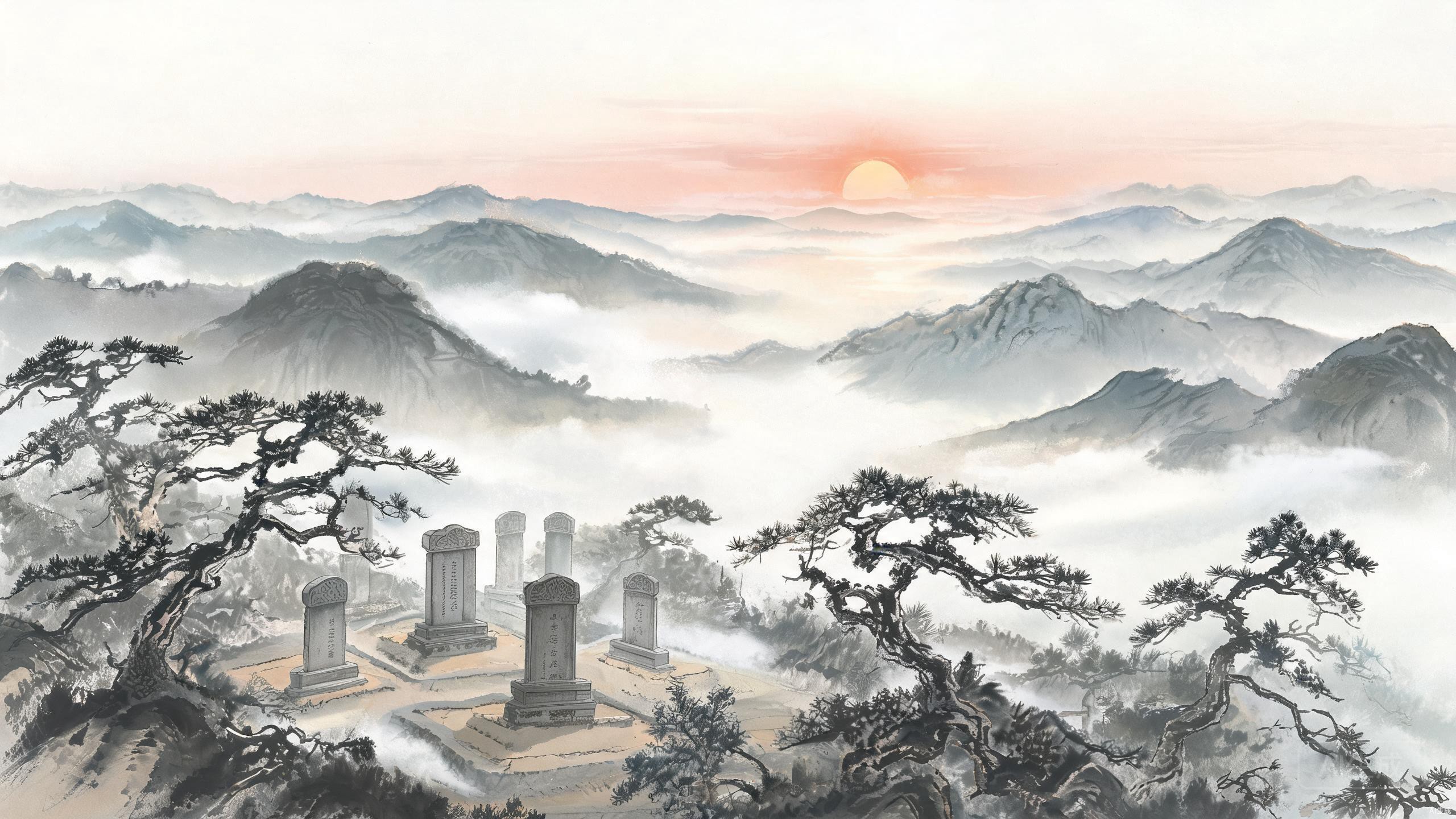
The Concept and Significance of a Family Cemetery
A family cemetery is a dedicated burial ground where multiple generations of a single family are laid to rest. These sites typically occupy larger plots of land and can accommodate descendants across many generations. In traditional Chinese culture, family cemeteries hold profound significance — they serve as powerful symbols of family unity and act as vessels preserving the family's history and cultural heritage.
The Feng Shui layout of a family cemetery affects not only the peaceful rest of each departed soul but also the fortune and development of the entire family lineage. A well-designed family cemetery Feng Shui layout can consolidate family strength and promote lasting prosperity across generations.
Cultural Context: In Chinese tradition, the relationship between the living and their ancestors is deeply interconnected. A well-sited family cemetery is believed to generate positive energy that flows down through the family line — much like how a healthy root system nourishes a thriving tree. This concept, known as Bloodline Resonance (血脉感应), underpins centuries of ancestral burial practices.
Overall Layout Principles for Family Cemeteries
Clear Hierarchy and Order
The layout of a family cemetery should establish a clear hierarchy, with the earliest or most distinguished ancestor occupying the central position while later generations' graves are arranged around them. This arrangement reflects the traditional Chinese values of seniority and proper order, and it also aligns with the Feng Shui principle of master-subordinate relationships.
In practical terms, the earliest ancestor's grave should be placed at the center or the highest elevation of the site, with subsequent generations arranged in descending order of seniority. This layout facilitates the concentration and continuity of the family's collective Qi.
Continuous Flow and Connection
The cemetery's layout should maintain an unbroken energetic flow, with pathways between graves that are orderly and unobstructed. A well-designed layout allows Qi to circulate freely throughout the cemetery rather than becoming blocked or scattered.
When planning, pay attention to the spacing and arrangement of graves. Spacing should not be too tight — which would cause Qi to become congested — nor too sparse, which would allow Qi to dissipate. An orderly, well-organized arrangement is ideal; avoid random or chaotic placement.
Harmony with the Surrounding Environment
The cemetery's layout should harmonize with the surrounding environment to form a unified whole. The style, materials, and color palette of the graves should be consistent and coherent, avoiding visual disorder. Ideally, the family cemetery should blend seamlessly into the natural landscape rather than disrupt it.
Specific Layout Methods for Family Cemeteries
The center position of a family cemetery is the most important location, traditionally reserved for the earliest ancestor or the most distinguished member of the lineage. Selecting this central point requires careful consideration of the entire cemetery's Feng Shui configuration. The center should be situated at the Dragon Vein acupoint where vital energy gathers, or at the optimal location within the overall site.
The graves within a family cemetery are typically arranged according to generational seniority. The highest-ranking ancestor is placed at the center or highest point, with subsequent generations descending in order. Careful attention must also be paid to left-right positioning. In traditional Chinese culture, the left side is considered superior and the right side inferior — therefore, elders are typically placed on the left, while younger generations are placed on the right.
All graves within a family cemetery should face the same direction. Unified orientation promotes the harmony and concentration of Qi, preventing the energetic conflicts that can arise from inconsistent directional alignment.
Quick Tips:
- The central ancestor's grave is the energetic heart of the cemetery — any disturbance here affects all subsequent graves
- Maintaining consistent spacing creates a rhythmic flow of Qi across the entire site
- Left-right seniority placement honors tradition while supporting energetic balance
Environmental Requirements for Family Cemeteries
A family cemetery should be situated on terrain that is open, level, and well-drained. Avoid low-lying, damp areas or steep, rugged terrain. The ideal location is one with a hill behind for protection, an open vista in front, and gentle protection on both sides — a configuration known as Mountains Embracing and Water Surrounding (山环水抱).
The cemetery should have access to clean water nearby or possess an excellent drainage system. Water represents wealth in Feng Shui, and a favorable water source can bring prosperity to the family. However, water sources should not be too close to the graves, as excessive moisture could compromise the integrity of the burial site.
The cemetery surroundings should feature healthy vegetation cover. Plants improve environmental quality, regulate the microclimate, and serve as protective "Sand" (surrounding formations) that shield the cemetery from strong winds. When selecting vegetation, choose evergreen species with auspicious symbolism — such as pine and cypress trees, which represent longevity and resilience.
In modern public cemeteries, family burial plots are typically arranged as designated family sections. When selecting a family plot, choose an area with strong Feng Shui characteristics and ensure the space is large enough to accommodate the family's burial needs for many generations to come.
How to Select a Modern Family Cemetery Plot
- Survey the surrounding terrain: Look for backing support (a hill, slope, or tall structure) and an open foreground
- Check drainage patterns: Visit the site after rainfall to confirm water flows away from the plot
- Observe existing vegetation: Healthy, well-established trees indicate favorable Earth Qi
- Evaluate accessibility: Ensure the plot can be visited comfortably year-round
- Plan for the future: Choose a plot large enough to accommodate 3-5 generations of family members
Practical Considerations in Application
In actual Feng Shui practice, it is essential to adapt theoretical principles to specific geographical environments and real-world conditions. Avoid applying textbook knowledge rigidly, and do not rely excessively on any single method. A skilled Feng Shui practitioner combines theory with practice, tradition with modernity — creating holistic solutions tailored to each unique situation.
During the consultation and implementation process, keep the following guidelines in mind: First, respect nature fully — never forcefully alter the natural environment. Second, rely on comprehensive judgment — never make decisions based on a single factor alone. Third, consider practical feasibility — theoretical perfection does not always translate into workable reality.
Cultural Context: This flexible, observational approach reflects the deeper philosophical roots of Feng Shui in Daoist thinking. Rather than imposing rigid rules, traditional Feng Shui masters acted as careful readers of the landscape, working with natural forces rather than against them.
A Modern Scientific Perspective
From a modern scientific standpoint, many traditional Feng Shui principles rest on solid empirical foundations. For example, choosing a site backed by mountains and facing water allows mountain slopes to block cold winds while water surfaces moderate temperature — creating a favorable microclimate. Selecting elevated, well-drained ground prevents moisture accumulation and helps preserve the integrity of burial sites.
These Feng Shui principles represent the cumulative observations and wisdom of ancient peoples who studied natural environments over centuries — embodying a profound understanding of harmonious coexistence between humanity and nature. In modern society, we should approach these inherited wisdoms with scientific rigor while honoring their cultural depth.
The Preservation and Evolution of Feng Shui Culture
As a vital component of traditional Chinese culture, Feng Shui retains significant cultural value in contemporary society. It represents not only the ancient understanding of natural environments but also the crystallized wisdom of Chinese civilization. Studying and understanding Feng Shui culture allows us to better appreciate the essence of Chinese philosophical heritage.
While preserving this cultural tradition, we must also move forward with the times — integrating the rational core of traditional Feng Shui with modern science, allowing this ancient wisdom to take on renewed vitality in the modern era.
Planning Principles for Family Cemeteries
The Feng Shui layout of a family cemetery affects the long-term fortune of the entire family. When planning a family cemetery, adhere to these core principles: First, ensure overall harmony and unity, with each grave position complementing the others. Second, maintain clear hierarchy — the central, most important grave should occupy the optimal location, with other graves arranged around it. Third, reserve space for future expansion to accommodate the family's burial needs for generations to come.
The layout should also reflect the relationships among family members. Generally, the graves of elders should occupy central positions, with younger generations distributed around them. This arrangement honors family ethics while supporting the Feng Shui principle of hierarchical relationship.
How to Plan a Multi-Generational Family Cemetery
- Map the site's energy center: Identify the strongest point on the land — this will anchor the central ancestor's grave
- Establish directional consistency: Choose one unified facing direction for all graves based on the site's Dragon Vein
- Create a generational blueprint: Sketch the layout on paper before any construction, showing all planned positions
- Allocate space strategically: Reserve adequate room for unborn generations — typically 20-30% additional space
- Document the plan: Keep detailed records of each grave's position, direction, and lineage connection
The Cultural Significance of Feng Shui Heritage
Feng Shui culture embodies the Chinese people's profound understanding of nature and life — a precious cultural legacy passed down from our ancestors. In today's rapidly modernizing world — despite the extraordinary advances of science and technology — the Feng Shui ideals of respecting nature and pursuing harmony remain deeply relevant. By studying Feng Shui principles, we not only gain deeper insight into traditional culture but also access the practical wisdom of the ancients, bringing peace and security to our own lives and those of our families.
When approaching Feng Shui, we should maintain a rational, scientific attitude — honoring tradition while embracing modernity, allowing this ancient wisdom to play a positive and constructive role in contemporary life.
Quick Tips:
- A family cemetery is a long-term investment in ancestral blessing — plan with multiple generations in mind
- Never compromise the central ancestor's position for convenience or cost savings
- Regular maintenance of the cemetery preserves both its physical integrity and its energetic stability
Related Articles
- [[../02-家居风水/29-厨房炉灶风水.md|Kitchen Stove Feng Shui: Achieving Harmony Between Water and Fire for a Peaceful Home]]
- [[../02-家居风水/28-book房文昌位布置.md|Study Room Wenchang Position: Feng Shui Secrets to Boost Academic and Career Luck]]
- [[../04-商业风水/05-办公室风水布局.md|Office Feng Shui Layout: Executive Office and Desk Positioning for Business Success]]
- [[../05-命理与运势/09-面相断Yin Dwelling风水.md|Face Reading for Yin Dwelling Feng Shui: Reading Burial Ground Fortune Through Facial Features]]