Feng Shui for Flat Terrain: Special Considerations for Yin Dwelling Site Selection
Flat terrain features level ground and expansive views, presenting a significantly different Feng Shui landscape compared to mountainous regions. When selecting Yin Dwelling (阴宅, yín zhái — ancestral
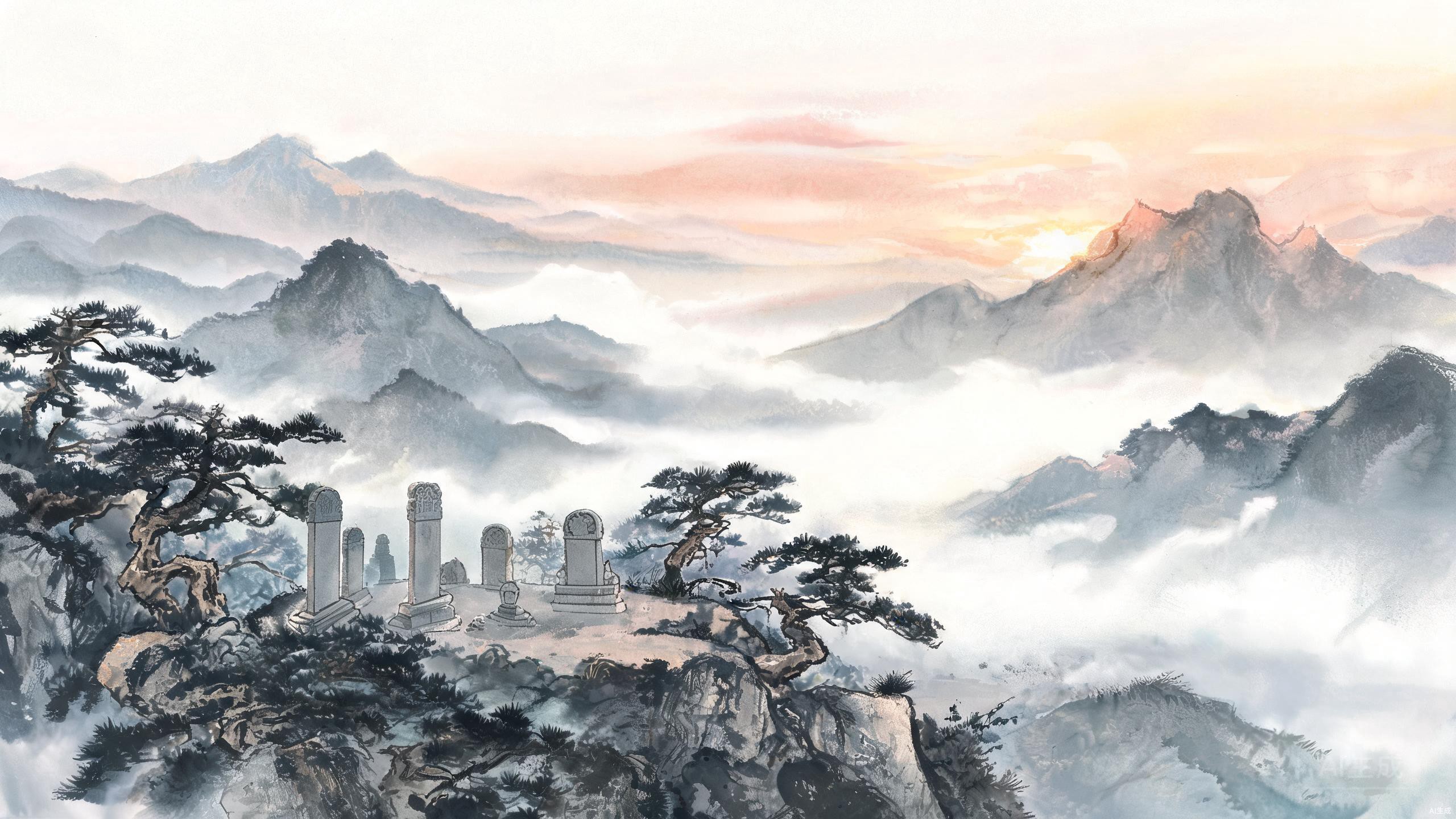
Characteristics and Challenges of Flat Terrain
Flat terrain features level ground and expansive views, presenting a significantly different Feng Shui landscape compared to mountainous regions. When selecting Yin Dwelling (阴宅, yín zhái — ancestral burial sites) locations in flatlands, practitioners face unique challenges that diverge from traditional Feng Shui theory, requiring specialized considerations and methods.
The primary characteristics of flat terrain include: level topography, indistinct Dragon Veins (mountain ranges that channel Qi), lack of natural Sand (protective surrounding hills), and slow-moving water. These conditions make Feng Shui site selection considerably more demanding, requiring more careful observation and refined judgment.
Cultural Context: Traditional Feng Shui was largely developed in China's mountainous south and central regions, where dramatic landscapes made Dragon Veins clearly visible. When practitioners migrated to the great plains of northern China, they had to adapt their methods — essentially "reading" subtle landscape clues that most people would overlook.
Unique Methods for Finding the Dragon in Flatlands
Finding the Dragon by Observing Water
In flat terrain, the path of the Dragon Vein is far less visible than in mountainous regions, so practitioners must infer its direction by observing water flow. In plains, rivers typically meander in winding patterns; the direction and curvature of water reflects underlying terrain changes and hints at the Dragon Vein's path.
When using water observation to find the Dragon, pay attention to: the direction and bending patterns of main rivers, the confluence points where tributaries meet the main flow, and variations in water speed and depth.
Finding the Dragon by Sensing Qi
In flat terrain, Qi field manifestations become more subtle, requiring keen observation to perceive. Look for the distribution and health of vegetation — areas with lush, thriving plants often indicate abundant Qi. Observe soil color and texture — locations with pure-colored, fine-grained soil often have favorable Qi fields. Notice minor elevation changes — even slight undulations may represent the residual Qi of a Dragon Vein.
Artificial Dragon Creation
In flat terrain where natural Dragon Veins are insufficient, practitioners can create artificial Dragons to enhance Feng Shui. This includes building earth mounds, planting trees and forests, and constructing buildings — all aimed at recreating mountainous Feng Shui patterns on flat ground. The height and form of artificial Dragons must harmonize with surrounding environments, and placement should follow Feng Shui principles.
Special Considerations for Flat Terrain Site Selection
Groundwater Level
Flat terrain typically has high groundwater levels, a critical concern during site selection. Excessively high water tables can cause moisture infiltration into burial chambers, leading to deterioration of coffins or urns. When selecting a site, choose locations with relatively higher elevation and good drainage.
Wind Direction and Force
Flat terrain lacks natural wind barriers, so winds tend to be stronger. Strong winds disperse Qi fields, undermining the Feng Shui effectiveness of a burial site. Choose locations with natural or artificial windbreaks, such as tree groves or buildings.
Soil Quality
Flat terrain exhibits significant variation in soil quality — some areas have rich, fertile soil while others are barren and poor. Select sites with dense, well-draining soil texture. Avoid sandy soil or locations with excessively heavy clay.
Common Layout Patterns for Flat Terrain Sites
Even a modest hill or elevated area in flat terrain can serve as a Backing Mountain (靠山, kào shān). Selecting a site backed by higher ground provides support and protection for the burial site. Because water in flat terrain typically winds in curves, choosing a position facing the water flow allows the site to welcome incoming wealth Qi.
In flat terrain, protection can be created on both sides of a burial site by planting trees or building walls. This artificial Sand serves the same purpose as natural hills — Storing Wind and Gathering Qi (藏风聚气).
How to Apply These Principles Today
- Look for subtle elevation: Even a slight rise of 1-2 feet can function as a symbolic Backing Mountain
- Identify curved pathways: Gentle curves in nearby roads or streams mimic the protective embrace of flowing water
- Create artificial protection: Plant evergreen trees or install fences to form protective "wings" flanking the site
- Observe the water table: After rainfall, note where water collects and where it drains quickly — choose the well-drained spots
Selecting Modern Public Cemeteries in Flat Terrain
When evaluating modern flatland cemeteries, analyze the overall layout of the entire grounds. Choose sections with relatively higher elevation and good drainage; select areas away from roads and noise sources; look for sections with lush greenery and attractive surroundings.
Within a single cemetery, different sections vary in Feng Shui quality. Choose sections backed by the cemetery's internal high ground or main buildings; select sections with open, expansive views in front; look for sections flanked by green belts on both sides.
Although Yin Dwelling site selection in flat terrain presents many challenges, excellent Feng Shui locations can still be found by mastering the right methods and principles. The key lies in adapting to local conditions with flexibility, integrating traditional Feng Shui theory with the realities of flat terrain.
Quick Tips:
- Visit potential cemetery sites at different times of day and in different weather conditions before deciding
- Bring a simple compass to verify that the section's facing direction matches your family's auspicious orientation
- Ask the cemetery staff about drainage history — areas that flood after heavy rain should be avoided
Practical Application Notes
In actual Feng Shui practice, theories must be combined with specific geographic environments and real-world conditions. One cannot rigidly apply textbook knowledge, nor over-rely on any single method. A skilled Feng Shui practitioner is a comprehensive professional who integrates theory with practice, and tradition with modernity.
During fieldwork, keep the following points in mind: First, fully respect nature — do not forcibly alter the natural environment. Second, emphasize comprehensive judgment — never make decisions based on a single factor alone. Third, consider practical feasibility — theoretical perfection does not always equal real-world viability.
Quick Tips:
- Always visit sites in person — photographs and descriptions cannot capture subtle terrain features
- Document your observations with notes and sketches for later analysis
- Consult multiple sources and practitioners when facing difficult decisions
A Modern Scientific Perspective
From a modern scientific viewpoint, many principles in traditional Feng Shui theory have reasonable scientific foundations. For example, selecting a position backed by mountains and facing water allows the mountain to block cold winds while the water body moderates temperature, creating a favorable microclimate. Selecting elevated ground with good drainage avoids moisture and waterlogging, helping preserve the integrity of burial chambers.
These Feng Shui principles are essentially the result of ancient people's long-term observation and summarization of natural environments, reflecting the wisdom of harmony between humanity and nature. In modern society, we should inherit and develop these traditional wisdoms with a scientific attitude.
Preservation and Development of Feng Shui Culture
As an important component of Chinese traditional culture, Feng Shui continues to hold significant cultural value in modern society. It represents not only ancient people's understanding and synthesis of natural environments but also the crystallization of Chinese civilizational wisdom. Learning about Feng Shui culture helps us better grasp the essence of traditional Chinese culture.
While preserving Feng Shui culture, we must also keep pace with the times, integrating the rational core of traditional Feng Shui with modern science, allowing this ancient wisdom to radiate new vitality in the contemporary era.
Feng Shui Characteristics of Flat Terrain
Although flat terrain lacks obvious mountain undulations, it possesses its own distinctive Feng Shui characteristics. In flat regions, the path of the Dragon Vein is primarily reflected through micro-topography and water systems. Minor elevation changes, river directions, and road layouts can all serve as indicators for judging Dragon Vein pathways.
When selecting Yin Dwelling locations in flat terrain, greater emphasis must be placed on observing micro-topography. Locations with slight ground swelling, areas embraced by rivers, and places with relatively higher elevation often have favorable Feng Shui. At the same time, avoid low-lying damp areas, as well as former riverbeds or pond locations — these areas have unstable geological conditions.
Related Articles
- [[../08-百科问答库/49-什么是寻龙点穴?Yin Dwellingsite selection有哪些原则?.md|What Is Seeking Dragon and Pointing Acupoint? Principles of Yin Dwelling Site Selection]]
- [[../09-Yin Dwelling风水/11-Yin Dwellingsite selection的基本原则与禁忌.md|Basic Principles and Taboos of Yin Dwelling Site Selection]]
- [[../09-Yin Dwelling风水/12-如何选择风水宝地安葬先人.md|How to Choose a Feng Shui Treasure Site for Ancestral Burial]]
- [[../01-风水入门/10-风水常见误区澄清.md|Feng Shui Myths Clarified: Distinguishing Superstition from Science]]