Feng Shui Remedies for New Buildings Near Ancestral Graves: Protect Yin Dwelling Harmony
As urbanization expands, new construction projects frequently appear near ancestral graves (Yin Dwellings, 阴宅). These buildings can significantly impact the Feng Shui of ancestral graves, depending on
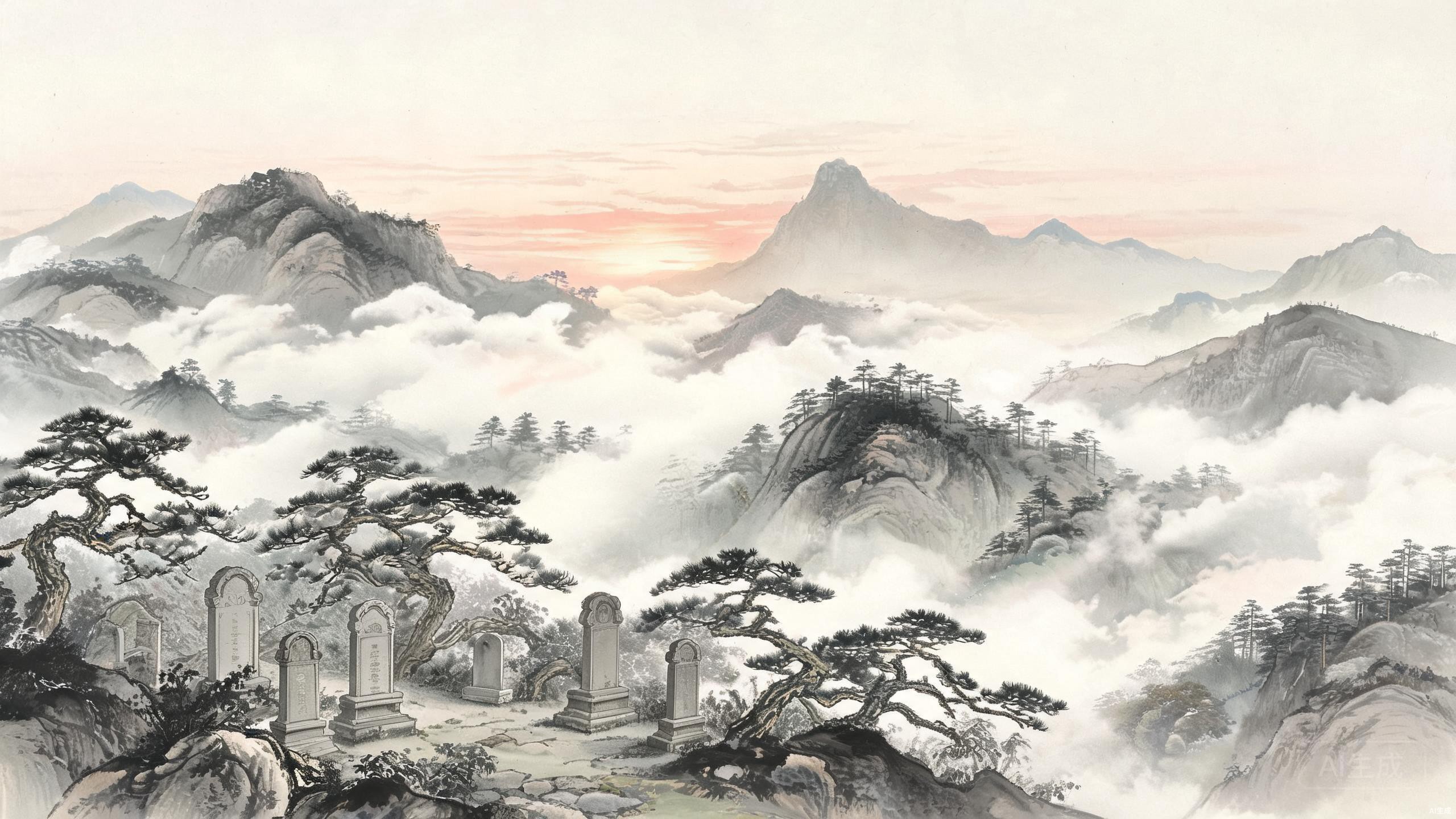
How New Buildings Affect Ancestral Grave Feng Shui
As urbanization expands, new construction projects frequently appear near ancestral graves (Yin Dwellings, 阴宅). These buildings can significantly impact the Feng Shui of ancestral graves, depending on their location, height, shape, and function.
In Feng Shui theory, buildings are considered "artificial Sand (砂)" — man-made protective formations that serve functions similar to natural hills. Well-designed buildings can provide protection and support for an ancestral grave, while poorly placed structures may generate Sha Qi (harmful energy) that disrupts its harmonious energy field.
Cultural Context: In traditional Feng Shui, ancestral graves are more than burial sites — they are believed to maintain a spiritual connection between the deceased and their descendants through what practitioners call "Bloodline Resonance" (血脉感应, xue mai gan ying). Protecting the grave's environment is therefore considered essential for the wellbeing and fortune of the entire family lineage.
Common Impacts of New Buildings
Buildings That Are Too Tall
When new buildings surrounding an ancestral grave exceed appropriate height, they create a sense of oppression that disrupts the grave's energy field. Tall structures block natural sunlight, causing the grave area to become dark and damp — allowing excessive Yin (阴) energy to accumulate.
Buildings Too Close to the Grave
Structures built too near an ancestral grave create pressure that disturbs the site's tranquility. Excessive proximity can also compromise privacy and interfere with ceremonial visits and worship activities by family members.
Unfavorable Building Shapes
Buildings with awkward shapes — sharp corners, bow-shaped structures, or bizarre architectural designs — generate Form Sha (形煞) that negatively impacts the ancestral grave's Feng Shui energy.
Incompatible Building Functions
Buildings whose functions conflict with a burial site's peaceful nature — such as garbage stations, chemical plants, or public restrooms — release stagnant, polluted energy that contaminates the sacred atmosphere of the ancestral grave.
Quick Tip: If you notice any of these conditions near your family's ancestral grave, document them with photos and notes about the specific location relative to the grave's facing direction. This information will be invaluable when consulting a Feng Shui practitioner for personalized remedies.
Effective Feng Shui Remedies and Solutions
Blocking Methods (遮挡法)
Placing barriers between the ancestral grave and the offending building is the most commonly used remedy. Effective barriers include trees, walls, and decorative screens.
Planting Trees: Planting tall trees between the ancestral grave and the building creates an effective natural screen. Choose evergreen species that maintain coverage year-round — pine, cypress, and holly are excellent traditional choices.
Quick Tip: Avoid planting trees with aggressive root systems directly on the grave mound, as they can damage the burial structure over time. Maintain a respectful distance of several meters.
Building Walls: Constructing walls around the ancestral grave blocks Sha Qi generated by nearby buildings. Wall height should be moderate — neither too tall (which creates its own oppressive energy) nor too short (which fails to provide adequate protection).
Reflection Methods (反射法)
Use reflective tools to bounce harmful energy back toward its source. Common reflective implements include the Bagua Mirror and convex mirrors.
Bagua Mirror: Hang a Bagua Mirror on the ancestral grave facing the offending building to deflect Sha Qi. Always use an authentic Feng Shui Bagua Mirror, and ensure proper height and angle for effective deflection.
Cultural Context: The Bagua Mirror (八卦镜) is one of the most recognized Feng Shui tools worldwide. Its octagonal shape represents the Eight Trigrams (Bagua), and its reflective surface is believed to bounce negative energy away from protected spaces. In grave protection, it's traditionally hung facing the source of disturbance rather than toward visitors.
Dissolution Methods (化解法)
Employ Feng Shui镇物 (protective talismans) to dissolve Sha Qi produced by nearby buildings. Traditional options include Shi Gan Dang (Taishan Stone Tablet), Stone Lions, and Five Emperor Coins.
Shi Gan Dang (Taishan Stone Tablet): Place this traditional stone tablet between the ancestral grave and the disturbing building to suppress negative energy. Select authentic stone with properly carved inscriptions.
Five Emperor Coins: Bury Five Emperor Coins at the four corners around the ancestral grave to neutralize Sha Qi and protect the site. Arrange the coins in the correct traditional sequence for maximum protective effect.
Direction Adjustment Methods (调整朝向法)
When blocking and dissolution methods cannot adequately address the problem, adjusting the ancestral grave's facing direction may be considered. Repositioning the orientation can avoid unfavorable influences and align the grave with an auspicious direction.
Adjusting an ancestral grave's direction is a major decision requiring professional guidance from an experienced Feng Shui practitioner. It must be performed on an auspicious date and at an appropriate time to ensure positive results.
Remember: Feng Shui seeks to balance Yin and Yang energies — the dual forces that shape all existence.
How to Apply These Remedies: Step-by-Step
- Assess the situation: Identify which type of negative influence is most prominent (height, proximity, shape, or function)
- Start with the gentlest solution: Begin with natural remedies like tree planting before progressing to more significant interventions
- Combine methods when necessary: For severe cases, layering multiple remedies (e.g., trees plus a Bagua Mirror) provides stronger protection
- Consult a professional: For major decisions like wall construction or direction adjustment, seek guidance from an experienced Feng Shui practitioner
- Document everything: Keep records of all remedies implemented and any changes observed in family fortune or health
- Balance the Five Elements: Incorporate Wood, Fire, Earth, Metal, and Water in your décor for harmonious energy
Communicating with Building Developers
When new construction near an ancestral grave creates genuine Feng Shui problems, attempting communication with the developers or property owners may yield mutually beneficial solutions.
Friendly Negotiation
Approach building developers with a respectful, collaborative attitude. Explain the situation clearly and seek solutions acceptable to both parties. Possible negotiated solutions include:
- Requesting modifications to the building's design
- Proposing a green buffer zone between the building and the ancestral grave
- Suggesting relocation of particularly offensive features (like ventilation exhausts)
Legal Recourse
When friendly negotiation fails to resolve the issue, legal channels may protect your legitimate interests. Many regions have specific regulations governing construction near burial sites and ancestral graves.
Quick Tip: Before pursuing legal action, research local cemetery protection laws thoroughly. Many jurisdictions have buffer zone requirements and protected zones around registered ancestral graves that developers must observe.
Long-Term Monitoring Practices
After new buildings appear near an ancestral grave, ongoing monitoring of the grave's Feng Shui conditions becomes essential. When new issues emerge, timely application of appropriate remedies can prevent minor disturbances from becoming major problems.
Regular Inspections
Conduct routine inspections of the ancestral grave, checking that:
- The tombstone remains intact and legible
- The grave mound is structurally stable
- Surrounding vegetation hasn't overgrown or been removed
- No new environmental changes have occurred nearby
Observing Family Fortune
Pay attention to changes in family members' health, career, and wealth fortune. When unusual patterns emerge, prompt Feng Shui diagnosis and adjustment can restore balance and harmony.
The negative impacts of new buildings near ancestral graves can be effectively mitigated through proper remedies. The key lies in promptly identifying the nature of each problem, applying targeted solutions, and maintaining consistent long-term monitoring and care.
Important Considerations for Practical Application
In real Feng Shui practice, theory must be adapted to specific geographic environments and practical circumstances. Rigid application of textbook knowledge or excessive reliance on any single method produces poor results. An excellent Feng Shui practitioner combines theoretical knowledge with practical experience, integrating traditional wisdom with modern understanding.
During practical application, keep these principles in mind:
- Respect nature: Avoid forcibly altering the natural environment
- Make comprehensive judgments: Never decide based on a single factor alone
- Consider practical feasibility: Theoretical perfection does not always equal practical viability
Modern Scientific Perspectives on These Principles
From a modern scientific viewpoint, many traditional Feng Shui principles contain remarkably rational foundations. For example:
- Selecting sites with mountains behind and water in front (背山面水, bei shan mian shui) uses mountains to block cold winds while water bodies moderate temperature, creating beneficial microclimates
- Choosing well-drained elevated ground prevents moisture accumulation and waterlogging, protecting burial site integrity
- Considering proximity to transportation routes historically balanced accessibility with protection from excessive disturbance
Cultural Context: These Feng Shui principles represent generations of careful observation and accumulated wisdom about natural environments. They reflect a sophisticated understanding of humanity's harmonious relationship with nature — a philosophy increasingly relevant in today's sustainability-focused world.
These traditional insights should be inherited and developed with scientific attitudes, preserving their practical wisdom while integrating modern environmental knowledge.
Preserving and Developing Feng Shui Cultural Heritage
As a vital component of Chinese traditional culture, Feng Shui retains significant cultural value in contemporary society. It represents not only ancient understanding of natural environments but also crystallized wisdom from Chinese civilization. Studying Feng Shui culture helps us better appreciate the essence of traditional Chinese thought.
While preserving this cultural heritage, practitioners and students should also embrace contemporary relevance — combining the rational core of traditional Feng Shui with modern scientific insights to allow this ancient wisdom to flourish with renewed vitality in our era.
Assessing the Impact of New Buildings
When facing new construction near an ancestral grave, the first essential step is assessing its degree of impact. Key evaluation indicators include:
- Building height relative to surrounding structures
- Distance from the ancestral grave
- Direction relative to the grave's auspicious and inauspicious positions
- Architectural shape and its Feng Shui implications
Generally speaking, taller buildings at closer distances create more significant Feng Shui impact. Buildings positioned at the ancestral grave's auspicious directions versus inauspicious directions also produce distinctly different effects. During assessment, all these factors must be considered holistically to make accurate judgments. Based on assessment results, develop targeted remedy plans — whether planting trees for screening, installing Feng Shui items, or other appropriate interventions.
Related Articles
- [[../05-命理与运势/09-面相断Yin Dwelling风水.md|Face Reading for Yin Dwelling Feng Shui — Nose Analysis and Facial Features]]
- [[../07-风水故事/58-风水与丧葬.md|Feng Shui and Burial Customs — Ancient Traditions of Yin Dwelling]]
- [[../07-风水故事/01-曾国藩葬地择选记.md|Zeng Guofan's Burial Site Selection — The Wisdom of "Heaven Despises Cunning"]]
- [[../08-百科问答库/48-祖坟风水不好怎么办?如何改善?.md|What to Do When Ancestral Grave Feng Shui Is Unfavorable: Complete Improvement Guide]]