Feng Shui Requirements for the Environment Around a Grave: A Complete Guide to Ancestral Grave Harmony
The environment surrounding a grave is one of the most important factors influencing Yin Dwelling Feng Shui (阴宅风水, yin zhai feng shui) — the practice of laying out burials in harmony with nature. A we
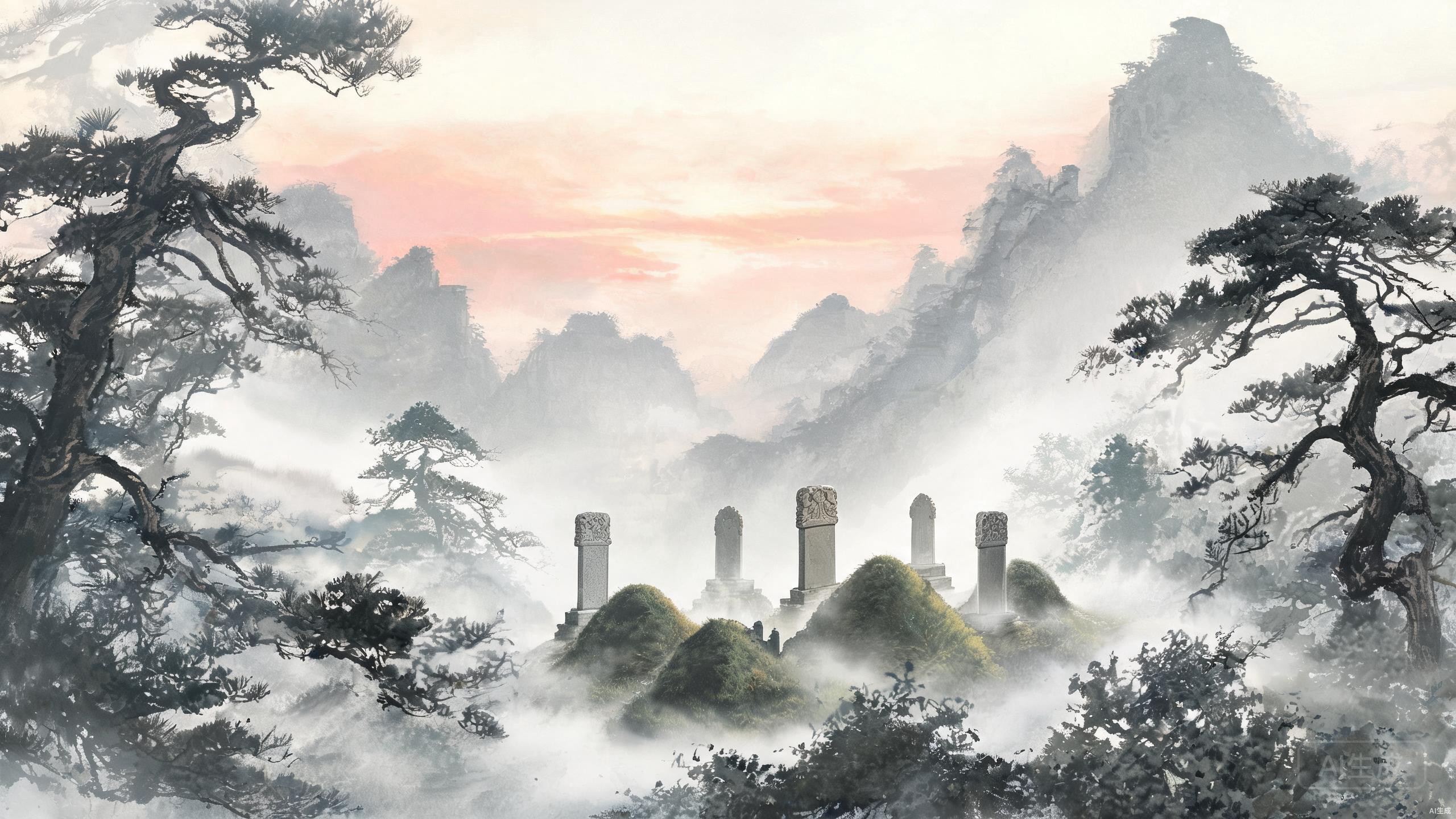
How Environment Influences Ancestral Grave Feng Shui
The environment surrounding a grave is one of the most important factors influencing Yin Dwelling Feng Shui (阴宅风水, yin zhai feng shui) — the practice of laying out burials in harmony with nature. A well-placed grave requires not only a sound internal layout but also the support and cooperation of its surrounding environment. The terrain, vegetation, water sources, and structures nearby all exert influence on the grave's energetic quality.
In Feng Shui theory, the grave and its environment are viewed as a unified whole, where each continuously influences the other. For this reason, any proper evaluation of Ancestral Grave Feng Shui (祖坟风水) must take the surrounding environment into full consideration.
Cultural Context: Yin Dwelling Feng Shui governs the resting places of the deceased, based on the belief that the energetic conditions of a grave affect the fortune, health, and prosperity of descendants — a concept known as Bloodline Resonance (血脉感应). This is why Chinese families have historically invested tremendous care in selecting and maintaining burial sites.
Feng Shui Requirements for Terrain
The terrain where a grave is placed should be moderate in elevation — neither too high nor too low. If the site sits too high, strong winds will disperse Qi; if too low, the ground becomes damp and prone to water pooling. The ideal terrain rises slightly above the surrounding land without appearing abrupt or artificial.
The landform should be flat and open, avoiding steep slopes or narrow, cramped spaces. Flat ground helps stabilize the energy field and supports the smooth flow of Qi, while also making the site easier to access for ceremonies and maintenance. If a slope is unavoidable, the grave should be positioned on the middle-to-lower portion of the slope.
The geology must be stable and free from geological hazards. When selecting a burial site, avoid areas prone to landslides, mudflows, or ground collapse.
Quick Tips:
- Walk the site after rainfall to check for proper drainage — water should flow away, not pool around the grave
- Avoid sites with visible cracks, erosion gullies, or signs of soil instability
- Choose terrain that feels solid underfoot and remains dry within a day after rain
Feng Shui Requirements for Vegetation
The density of vegetation around the grave should be moderate — neither too thick nor too sparse. Overgrown plants block sunlight and ventilation, causing dampness inside the burial chamber; too few plants leave the site exposed and unable to provide protection or aesthetic harmony.
Evergreen plants are the preferred choice for surrounding a grave, such as pine, cypress, and holly. These plants stay green throughout the year, symbolizing the continuation of life and the flourishing of the family lineage. Avoid plants with sharp thorns — such as cacti or brambles — which generate Sha Qi (harmful energy). Also avoid species with aggressive root systems, such as banyan or willow trees, whose roots can damage the structural integrity of the grave.
Recommended Plants for Grave Feng Shui
| Plant Type | Examples | Symbolic Meaning |
|---|---|---|
| Evergreen trees | Pine, Cypress | Endurance, eternal life |
| Flowering shrubs | Osmanthus, Plum Blossom | Nobility, renewal |
| Low ground cover | Moss, Grass | Grounding, stability |
| Avoid | Cactus, Brambles, Banyan, Willow | Thorns create Sha Qi; invasive roots damage structure |
Feng Shui Requirements for Water Sources
Water sources near the grave should be clear and clean. Murky or foul-smelling water produces negative effects on the grave's energy. The water volume should be moderate — too much creates flooding risk, while too little fails to nourish the surrounding environment.
The distance between the water source and the grave should be balanced — neither too close nor too far. Water too near causes excessive dampness; water too far cannot deliver its nourishing function. As a general guideline, a distance of 50–100 meters is recommended.
Cultural Context: In classical Feng Shui, the ideal water pattern is described as "Mountains Embracing and Water Surrounding" (山环水抱) — gentle, curving waterways that embrace the site symbolize the gathering and protection of wealth. Conversely, water that flows in a straight, bow-shaped path facing away from the site creates what is known as Reverse Bow Sha (反弓煞), associated with wealth loss.
The most favorable water formation is one that curves around the grave in a gentle arc — symbolizing the gathering and protection of fortune. Avoid water sources that form a reverse-bow shape pointing away from the grave.
Feng Shui Requirements for Surrounding Buildings
Buildings around the grave should maintain a balanced distance. Structures too close create aoppressive feeling (oppressive feeling) that disrupts the grave's energy field; buildings too far away fail to provide any protective function. Building shapes should be upright and harmonious, and their function should be compatible with the nature of the burial site.
Feng Shui Requirements for Surrounding Roads
The ideal road pattern around a grave follows a curved, embracing form — a road that arcs gently around the site symbolizes protection and gathering. Avoid roads that rush directly toward the grave, as this formation produces Road Rushing Sha (路冲煞), a harmful energy associated with accidents and misfortune.
Maintenance of the Surrounding Environment
The environment around a grave requires regular cleaning to remove weeds, fallen leaves, and debris. Maintaining cleanliness and beauty is both a sign of respect for the deceased and an essential measure for preserving Feng Shui quality. Greenery needs routine pruning, and facilities need periodic inspection and repair.
How to Maintain Grave Site Feng Shui
- Clear regularly: Remove weeds, fallen leaves, and litter at least once per season
- Inspect drainage: Check that water channels are unobstructed, especially before the rainy season
- Prune vegetation: Trim overgrown trees and shrubs to maintain proper sunlight and airflow
- Check structures: Inspect tombstones, borders, and any ceremonial features for damage or instability
Important Considerations in Practical Application
In real Feng Shui practice, theory must be adapted to the specific geographic environment and actual conditions on the ground. Knowledge cannot be applied rigidly from books, nor should one depend excessively on any single method. A skilled Feng Shui practitioner combines theory with practice, tradition with modernity — drawing on multiple disciplines to reach sound judgments.
During the assessment process, keep these principles in mind:
- Respect nature: Do not force changes to the natural environment
- Judge comprehensively: Never base decisions on a single factor alone
- Consider feasibility: Theoretical perfection does not always equal practical viability
A Modern Scientific Perspective
From a modern scientific standpoint, many traditional Feng Shui principles contain reasonable, evidence-based wisdom. For example, choosing a site with a mountain at the back and water in front allows the mountain to block cold winds while the water moderates temperature — creating a favorable microclimate. Selecting elevated ground with good drainage prevents dampness and pooling, which helps preserve the structural integrity of the grave.
These Feng Shui principles are, in essence, the accumulated observations of ancient peoples studying the natural environment over centuries — reflecting a wisdom of harmony between humanity and nature. In modern society, we should approach this inheritance with a scientific attitude, preserving what is sound while letting go of what is not.
Quick Tips:
- Mountain-backed, water-facing sites create natural wind protection and temperature regulation — a principle validated by modern microclimate studies
- Elevated, well-drained sites reduce moisture damage — consistent with archaeological best practices for preservation
- Curved water and road patterns minimize destructive flow energy — aligned with contemporary landscape design
The Cultural Inheritance and Development of Feng Shui
As an important component of Chinese traditional culture, Feng Shui retains significant cultural value in modern society. It represents not only the ancient understanding of the natural environment but also the crystallization of Chinese civilizational wisdom. Studying Feng Shui helps us better grasp the essence of Chinese traditional thought.
In inheriting Feng Shui culture, we must also keep pace with the times — integrating the reasonable core of traditional Feng Shui with modern science, so that this ancient wisdom may take on new life in the present era.
Maintenance Standards for the Grave Environment
The environmental conditions around a grave directly affect its Feng Shui quality. A well-maintained grave environment should remain clean, tranquil, and harmonious. Overgrown weeds, accumulated trash, and visual disorder all diminish the grave's energetic effectiveness.
When maintaining a grave site, observe these guidelines:
- Clean regularly: Remove weeds and debris to keep the area tidy
- Check drainage: Ensure water systems flow freely and prevent pooling
- Manage vegetation: Prune overgrowth promptly to maintain appropriate sunlight and ventilation
These maintenance practices are essential for preserving the long-term Feng Shui quality of the burial site.
The Cultural Significance of Feng Shui
Feng Shui culture carries the profound Chinese understanding of nature and life — a precious cultural heritage passed down from our ancestors. In today's highly developed scientific society, the values embedded in Feng Shui — respect for nature and the pursuit of harmony — still hold meaningful real-world relevance. By studying Feng Shui, we can not only better understand traditional culture but also apply ancient wisdom in practice, bringing peace and security to ourselves and our families. When approaching Feng Shui, we should maintain a rational, scientific attitude: honoring tradition while moving with the times, allowing this ancient practice to play a positive role in modern life.
Related Articles
- [[../05-命理与运势/09-面相断Yin Dwelling风水.md|Face Reading for Yin Dwelling Feng Shui — Reading Burial Sites Through the Nose]]
- [[../07-风水故事/58-风水与丧葬.md|Feng Shui and Funeral Traditions — The Ancient Practice of Yin Dwelling Feng Shui]]
- [[../07-风水故事/01-曾国藩葬地择选记.md|Zeng Guofan's Burial Site Selection — The Wisdom of "Heaven Disdains Cunning"]]
- [[../08-百科问答库/50-墓碑有什么风水讲究?墓碑朝向怎么定?.md|What Are the Feng Shui Considerations for Tombstones? How to Determine Tombstone Direction?]]