Grave Landscaping and Plant Selection: Feng Shui Guide for Cemetery Greenery
Grave landscaping refers to the practice of planting trees, flowers, lawns, and other vegetation around a cemetery to beautify the environment and enhance Feng Shui. Thoughtful landscaping not only im
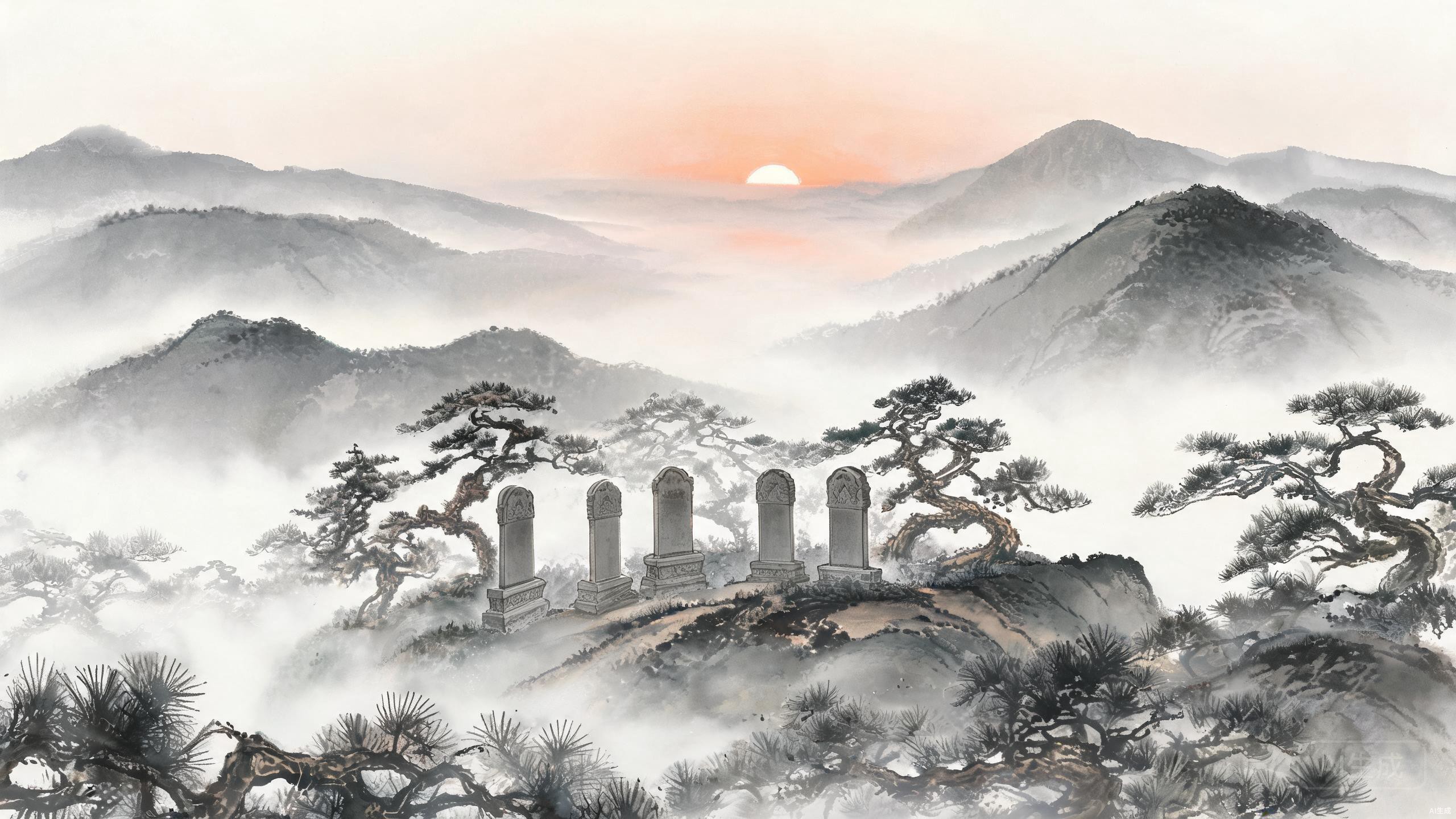
The Meaning of Grave Landscaping
Grave landscaping refers to the practice of planting trees, flowers, lawns, and other vegetation around a cemetery to beautify the environment and enhance Feng Shui. Thoughtful landscaping not only improves the visual appeal of a burial site but also moderates the local climate, purifies the Qi, and conserves soil and water — all of which positively influence the Feng Shui of the grave.
In Feng Shui theory, vegetation is considered a form of "Sand" (砂, sha) — the protective surrounding features that help with Storing Wind and Gathering Qi (藏风聚气, cang feng ju qi). Lush, thriving plants symbolize vitality and life force, channeling positive energy into the cemetery.
Cultural Context: In Chinese metaphysics, "Sand" refers to the hills, walls, and structures that embrace and protect a site. Vegetation functions as living Sand — a natural guardian that shields the resting place while sustaining its energetic harmony.
Principles for Selecting Landscaping Plants
Year-Round Greenery Principle
When landscaping a grave, prioritize evergreen plants. Evergreens symbolize the continuation of life and the prosperity of the family lineage, bringing sustained vitality to the site. Common evergreen choices include pine, cypress, holly, privet, and osmanthus trees.
Auspicious Symbolism Principle
The symbolic meaning of each plant should be carefully considered. In traditional Chinese culture, many plants carry auspicious associations. Pine represents longevity and resilience, making it a top choice for grave landscaping. Cypress symbolizes eternity and remembrance, and is also known for its pleasant fragrance. Osmanthus represents wealth and good fortune. Bamboo stands for noble integrity and perseverance.
Cultural Context: Unlike Western gardening, which often emphasizes seasonal color and variety, Chinese grave landscaping privileges symbolic continuity. The goal is not visual drama but spiritual constancy — an unbroken presence that mirrors the eternal rest of the deceased.
Easy Maintenance Principle
Choose plants that require minimal upkeep. Since gravesites are typically visited and maintained infrequently, drought-tolerant, cold-resistant, and pest-resistant species are ideal. Low-maintenance options include pine, cypress, holly, and lilyturf grass.
Plants That Should Be Avoided
Thorny plants such as cacti, brambles, and roses should not be planted near graves, as they generate Sha Qi (harmful energy). Plants with aggressive root systems — including banyan, willow, and paulownia trees — can damage the structure of the burial site and should be kept at a safe distance. Plants with inauspicious names or associations should also be avoided. For example, mulberry (桑, sāng) sounds like "death" (丧, sāng), and pear (梨, lí) sounds like "separation" (离, lí). Finally, excessively tall trees with massive canopies should not be planted too close to the grave itself.
Principles for Landscaping Layout
Grave landscaping should be arranged in distinct layers to create a three-dimensional effect. Tall trees serve as the background, mid-height shrubs form the middle layer, and low-growing lawns and flowers occupy the foreground. This tiered arrangement produces strong visual harmony and effectively supports the function of Storing Wind and Gathering Qi.
Planting density should be balanced — neither too dense nor too sparse. A spacing of 3–5 meters between trees and 1–2 meters between shrubs is generally recommended.
Layout should also follow symmetry and balance, with matching greenery on both sides. This symmetrical arrangement conveys a sense of stability and harmony that benefits the site's Feng Shui.
Remember: Feng Shui seeks to balance Yin and Yang energies — the dual forces that shape all existence.
How to Apply This in Modern Memorial Gardens
- Plan in layers: Use tall evergreens (pines, cypresses) at the perimeter, flowering shrubs (azaleas, gardenias) in the middle, and a clean lawn or ground cover at the front
- Maintain proper spacing: Measure and mark tree positions before planting — crowding blocks light and disrupts Qi flow
- Keep the axis clear: Ensure the central pathway and the "Facing" direction of the tomb remain open and unobstructed
- Balance the Five Elements: Incorporate Wood, Fire, Earth, Metal, and Water in your décor for harmonious energy
Landscaping Plans for Different Zones
- Behind the grave (Backing Mountain, 靠山): Plant tall trees such as pine and cypress to act as a symbolic Backing Mountain, providing protection and stability
- On both sides (Dragon and Tiger Sand, 龙虎砂): Use mid-height shrubs such as holly and privet to mirror the protective roles of the Azure Dragon (青龙, Qing Long) and White Tiger (白虎, Bai Hu)
- In front of the grave: Keep the area open with low lawns and flowers; avoid tall trees here to preserve a clear and expansive foreground view
Quick Tips:
- Tall trees behind the grave form a "backing mountain" that symbolically protects descendants from hardship
- Symmetrical shrubbery on both sides activates the Dragon and Tiger guardians of the site
- An open foreground allows Bright Hall (明堂, ming tang) energy to gather freely — never block this view with tall plants
Landscaping Maintenance
Cemetery greenery requires periodic pruning to maintain shape and appearance — typically once or twice a year. Watering and fertilization are essential, especially during dry seasons. Pest and disease control should be addressed promptly at the first sign of infestation.
With the rise of ecological burial practices, new approaches to cemetery landscaping continue to emerge. Tree burials, flower burials, and lawn burials integrate greenery with interment itself, achieving a seamless fusion of landscape design and final resting place.
Practical Considerations
In real Feng Shui practice, theory must be adapted to the specific geography and circumstances of each site. Rigidly applying textbook formulas or over-relying on any single method is unlikely to produce good results. A skilled Feng Shui practitioner combines theory with practice and tradition with modernity.
Three key principles guide practical application:
- Respect nature: Never force dramatic changes to the natural environment
- Holistic judgment: Avoid making decisions based on a single factor in isolation
- Practical feasibility: What looks perfect on paper may not work in the actual terrain
A Modern Scientific Perspective
From a contemporary scientific standpoint, many traditional Feng Shui principles have a rational basis. For example, choosing a site with a mountain behind and water in front uses the mountain to block cold winds while the water moderates temperature — creating a beneficial microclimate. Selecting well-drained high ground avoids dampness and standing water, helping preserve the integrity of the burial structure.
These principles are, in essence, the result of long-term observation and accumulated wisdom from earlier generations, reflecting a deep understanding of humanity's harmonious coexistence with nature. In the modern era, we should inherit and develop this traditional wisdom with a scientific attitude.
Cultural Context: Modern environmental science now confirms what Feng Shui masters understood intuitively — microclimate, drainage, sun exposure, and wind patterns profoundly influence soil stability and the longevity of stone structures. What ancient practitioners called "Qi" can be partly understood as the flow of Qi, water, and thermal energy across a landscape.
The Heritage and Development of Feng Shui Culture
Feng Shui is an important component of traditional Chinese culture and retains significant cultural value in contemporary society. It represents not only the ancient Chinese understanding of the natural environment but also the distilled wisdom of Chinese civilization. Studying Feng Shui helps us better appreciate the essence of traditional Chinese culture.
As we pass this knowledge forward, we must also keep pace with the times — integrating the rational core of traditional Feng Shui with modern science so that this ancient art can thrive anew in the present era.
Feng Shui Principles for Grave Landscaping
Grave landscaping is a vital element of Yin Dwelling Feng Shui (阴宅风水, yin zhai feng shui). Thoughtful greenery beautifies the environment, improves the Feng Shui configuration, and creates a peaceful resting place for the departed.
When selecting landscaping plants, observe the following principles:
- Choose evergreens such as pine and cypress, symbolizing eternity and tranquility
- Avoid thorny plants such as cacti and roses, which generate Sha Qi
- Match plant size to the site — neither too tall nor too short
A well-considered landscaping plan can significantly elevate both the Feng Shui quality and the visual dignity of a gravesite.
Quick Tips:
- Pine and cypress are the classic choices for ancestral graves — they live for decades or centuries, symbolizing the unbroken family line
- Keep the immediate area around the tombstone clear and clean — clutter here disturbs the peace of the resting place
- Choose native species whenever possible; they thrive in local soil and climate with minimal intervention
The Cultural Significance of Feng Shui
Feng Shui culture carries the Chinese nation's profound understanding of nature and life — a precious cultural heritage left by our ancestors. Although modern science and technology are highly advanced, the values embedded in Feng Shui — respect for nature and the pursuit of harmony — remain deeply relevant today.
By studying Feng Shui, we can deepen our understanding of traditional culture while applying ancient wisdom to bring greater peace and security to our own lives and families. In approaching Feng Shui, we should maintain a rational, scientific attitude: honoring tradition while moving forward with the times, allowing this timeless culture to play a positive role in modern society.
Related Articles
- [[../05-命理与运势/09-面相断Yin Dwelling风水.md|Face Reading for Yin Dwelling Feng Shui — Reading Noses and Facial Features to Judge Graves]]
- [[../07-风水故事/58-风水与丧葬.md|Feng Shui and Burial Customs — Ancient Traditions of Yin Dwelling Feng Shui]]
- [[../07-风水故事/01-曾国藩葬地择选记.md|Zeng Guofan's Burial Site Selection — "Heaven Disdains Cunning" in Feng Shui Wisdom]]
- [[../08-百科问答库/50-墓碑有什么风水讲究?墓碑朝向怎么定?.md|Feng Shui Guidelines for Tombstones — How to Determine Tombstone Orientation]]