Grave Marker Feng Shui: Lucky Guide to Size, Material, and Color
The grave marker is an essential element of Yin Dwelling Feng Shui (阴宅风水, yin zhai feng shui) — the practice of selecting auspicious burial sites. It serves as both the visible symbol of a burial plot
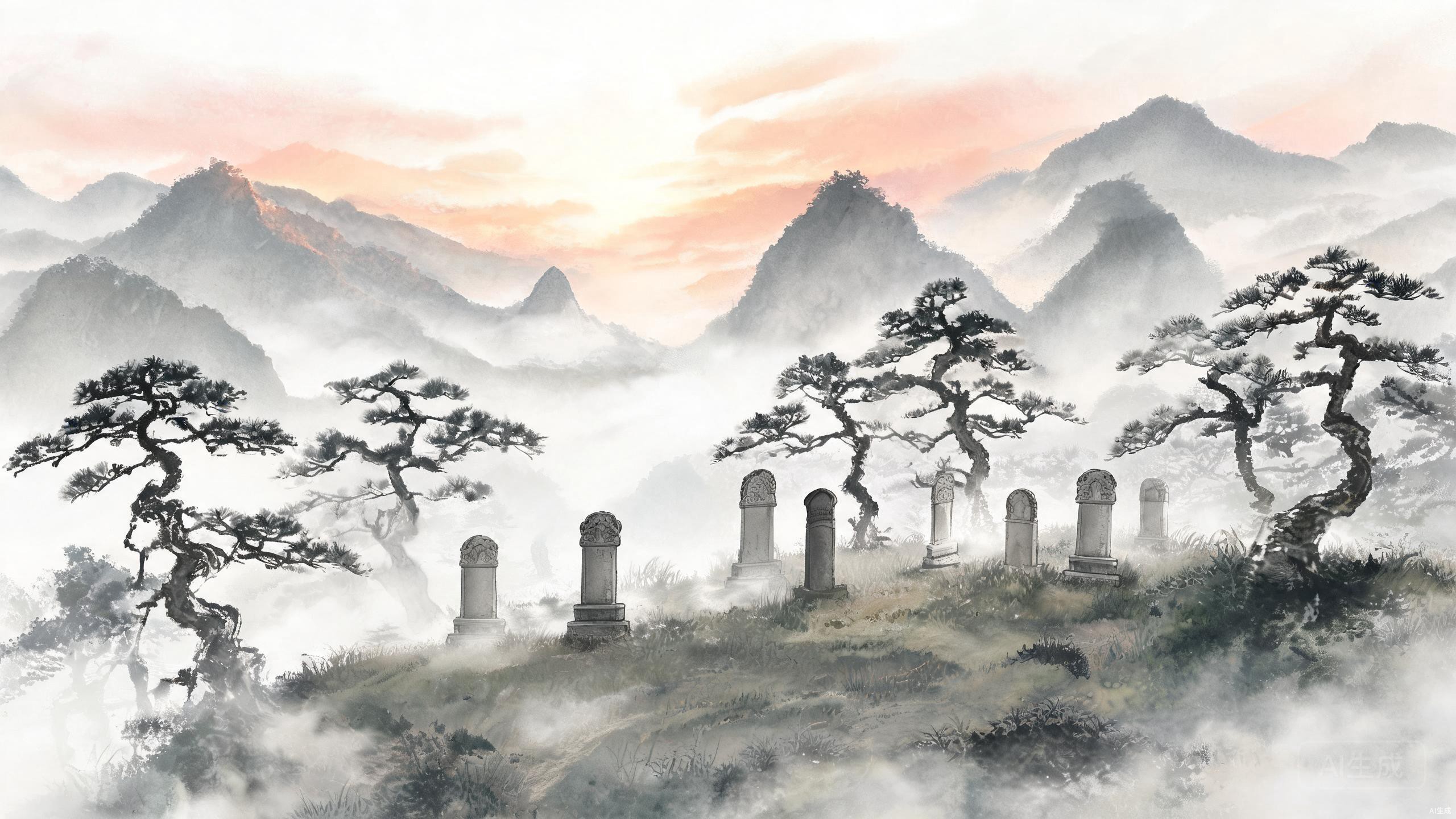
The Importance of Grave Markers in Feng Shui
The grave marker is an essential element of Yin Dwelling Feng Shui (阴宅风水, yin zhai feng shui) — the practice of selecting auspicious burial sites. It serves as both the visible symbol of a burial plot and the focal point for descendants paying respects to their ancestors. In Feng Shui philosophy, the grave marker is considered a gateway connecting the Yin and Yang realms, and its size, material, color, and orientation all influence the energetic quality of the burial site.
A well-chosen grave marker honors the deceased and helps gather auspicious Qi for the family. Conversely, a poorly chosen marker can disrupt the energetic harmony of the entire burial site.
Cultural Context: While Western cemeteries often use uniform headstones, traditional Chinese Feng Shui treats the grave marker as an active energetic instrument. Every detail — from the proportions measured by an ancient ruler to the stone's elemental property — is believed to affect the fortune of descendants for generations.
Grave Marker Size: Traditional Proportions
The dimensions of a grave marker follow strict traditional guidelines, typically measured using the Lu Ban Ruler — an ancient woodworking measuring tool also widely applied in Feng Shui for determining auspicious measurements. The Lu Ban Ruler contains markings for both auspicious (吉) and inauspicious (凶) measurements, and the marker's dimensions should always fall on an auspicious marking.
Height Considerations:
- The marker should match the scale of the burial site. Too tall creates a sense of oppression; too low appears insufficiently dignified.
- As a general rule, the marker should not exceed the height of the Backing Mountain (靠山) behind the grave.
- Height should harmonize with the surrounding environment.
Width Considerations:
- Width and height should follow proportional ratios, typically 3:2 or 5:3.
- Too wide appears bulky; too narrow looks thin and fragile.
- The marker's width should not exceed the width of the burial plot itself.
How to Apply This in Practice
- Measure the site first: Before selecting a marker, assess the burial plot dimensions and the surrounding terrain
- Consult the Lu Ban Ruler: Use an actual Lu Ban Ruler or verified conversion chart to ensure your chosen dimensions land on an auspicious measurement
- Check proportions visually: The 3:2 or 5:3 ratio creates a balanced appearance that feels dignified and grounded
- Consider the environment: A marker that looks proportional in a flat memorial park may appear too small on a hillside burial site
Quick Tip: If you cannot obtain a Lu Ban Ruler, aim for standard harmonious ratios (3:2 height-to-width) and avoid extreme proportions. When in doubt, choose a moderate size that looks visually balanced from the main viewing angle.
Grave Marker Materials: Stone Selection
Stone is the traditional material for grave markers, with granite, marble, and bluestone being the most common choices. Each stone carries distinct qualities and energetic properties.
Granite (花岗岩):
- Hard texture with excellent durability — the most common material for modern markers
- Available in many colors to suit different preferences
- From the Five Elements perspective, granite belongs to Earth (土), providing stability and grounding energy
Marble (大理石):
- Fine texture with beautiful luster, though less durable than granite
- Primarily available in white and gray tones, ideal for aesthetically refined markers
- From the Five Elements perspective, marble belongs to Metal (金), offering elegant and refined energy
Bluestone (青石):
- Ancient appearance with a tough, resilient texture
- A traditional choice for classical-style markers
- Conveys a sense of stability and solemnity appropriate for ancestral graves
Material Quality Standards
A quality grave marker should meet these criteria:
- Uniform texture without cracks or impurities
- Weather and corrosion resistance for long-term durability
- Even, pure color that does not fade or discolor over time
Cultural Context: The Five Elements (Wu Xing, 五行) — Wood, Fire, Earth, Metal, and Water — assign elemental properties to all materials, colors, and directions in Feng Shui. Selecting a marker whose stone matches the elemental needs of the deceased creates energetic harmony between the grave and the ancestor's spirit.
Grave Marker Colors: Five Elements Correspondence
In Feng Shui, every color carries an elemental property and represents a different type of energy. Selecting the marker's color should consider the deceased's BaZi (八字, Eight Characters birth chart) and elemental preferences.
| Color | Element | Symbolic Meaning | Visual Impression |
|---|---|---|---|
| Black | Water | Wisdom and depth | Solemn and dignified |
| Gray | Metal | Refinement and elegance | Understated and reserved |
| White | Metal | Purity and brightness | Fresh and luminous |
| Red | Fire | Passion and vitality | Warm and energetic |
| Yellow | Earth | Stability and prosperity | Warm and grounded |
Color Pairing for Inscriptions: The marker's main color should contrast with the inscription color for legibility. Common combinations include:
- Black marker with gold lettering
- Gray marker with white lettering
- White marker with black lettering
How to Choose the Right Color
- Determine the deceased's elemental needs: Consult the BaZi to find which element is favorable (用神) and which is unfavorable (忌神)
- Select the marker's main color to either support favorable elements or avoid unfavorable ones
- Choose contrasting inscription color — dark stone with gold lettering is the most popular traditional combination
- Consider local cemetery regulations: Some memorial parks have color restrictions to maintain uniformity
Quick Tips:
- Black and gray are the safest, most traditional choices that suit most burial sites
- Avoid overly bright or flashy colors — they clash with the solemn atmosphere of a memorial space
- Gold lettering on dark stone creates the classic, dignified appearance favored in traditional Chinese burials
Grave Marker Shape and Design
Traditional grave markers are predominantly rectangular with a slightly arched top. This shape is simple, dignified, and aligned with classical aesthetic standards. The top design also carries meaning:
| Top Shape | Symbolic Meaning |
|---|---|
| Arched (semicircle) | Completeness and perfection — the most common traditional choice |
| Flat | Stability and straightforwardness |
| Pointed | Aspiration and upward energy |
While modern grave markers come in more varied shapes, all designs should maintain an overall dignified and solemn character. The guiding principles are:
- Simplicity: Clean design without excessive ornamentation
- Flowing lines: Smooth contours rather than harsh angles
- Visual harmony: All elements should feel unified and balanced
Grave Marker Inscriptions
The inscription typically includes the deceased's name, birth and death dates, and information about who erected the marker. All text should be accurate, complete, and clearly legible.
Standard Layout:
- Deceased's name: Centered in the most prominent position
- Birth and death dates: Flanking the name or placed below
- Erected by (立碑人): At the bottom of the inscription
Typography Guidelines:
- Use traditional Chinese scripts such as Kai Shu (regular script), Xing Shu (running script), or Li Shu (clerical script)
- Characters should be upright, clear, and dignified — avoid overly decorative or hard-to-read fonts
- Character size should be proportional to the marker dimensions
Practical Application: Important Considerations
In real Feng Shui practice, theory must be adapted to actual geographic conditions and circumstances. Rigidly applying textbook rules or over-relying on any single method leads to poor results. A skilled Feng Shui practitioner combines theory with practice and integrates traditional wisdom with modern understanding.
Three core principles guide practical application:
- Respect nature: Never force changes to the natural environment — work with the land, not against it
- Holistic judgment: Never base decisions on a single factor alone; consider the complete energetic picture
- Practical feasibility: Theoretically perfect solutions may not work in practice — always account for real-world constraints
A Modern Scientific Perspective
Many traditional Feng Shui principles align remarkably well with modern science:
- Back to Mountain, Facing Water (背山面水): Mountains block cold winds while water moderates temperature, creating beneficial microclimates
- Elevated, well-drained sites: Avoid moisture accumulation and waterlogging, protecting the burial site's structural integrity
- Material selection: Durable, weather-resistant stones last longer and maintain their appearance
These principles represent centuries of careful environmental observation by ancient practitioners — embodying the wisdom of harmony between humanity and nature. A scientific attitude allows us to preserve this valuable traditional knowledge while understanding its practical basis.
Cultural Context: The concept of "Unity of Heaven and Humanity" (天人合一, tian ren he yi) is a foundational principle in Chinese philosophy. It holds that human flourishing depends on living in harmony with natural patterns — a perspective increasingly validated by modern environmental science.
Preserving and Evolving Feng Shui Culture
As an important component of Chinese traditional culture, Feng Shui retains significant cultural value in the modern world. It represents not only ancient environmental wisdom but the crystallization of Chinese civilizational thought. Studying Feng Shui deepens our understanding of traditional Chinese cultural heritage.
The key to meaningful preservation lies in combining the rational core of traditional Feng Shui with modern science — allowing this ancient wisdom to flourish in the contemporary era.
Modern Value of Feng Shui Culture
Feng Shui influences much more than burial customs in modern society. Its principles appear in:
- Architecture and urban planning
- Environmental design
- Landscape architecture
- Interior design
Studying Feng Shui provides insight into Chinese cultural foundations and offers practical wisdom for creating more harmonious living and memorial environments today.
Integrating Theory with Practice
The most important aspect of Feng Shui study is integrating theoretical knowledge with practical experience. Theory provides frameworks for analysis, but only through hands-on practice can these principles be truly understood and mastered.
For aspiring practitioners:
- Observe and reflect: Visit burial sites regularly and analyze their features
- Conduct fieldwork: Gain experience through on-site investigation
- Learn from masters: Maintain humility and openness when studying under experienced practitioners
- Continuously improve: Refine your skills through ongoing practice and self-evaluation
Quick Tips:
- Keep a journal of grave sites you visit — noting marker dimensions, materials, orientations, and overall impressions
- Compare successful and unsuccessful burial sites to identify patterns over time
- Remember that Feng Shui is a lifelong study; even masters continue learning throughout their careers
Related Articles
- [[../05-命理与运势/09-面相断Yin Dwelling风水.md|Face Reading for Yin Dwelling Feng Shui: Reading Burial Sites Through Facial Features]]
- [[../07-风水故事/58-风水与丧葬.md|Feng Shui and Burial Customs: The Ancient Tradition of Yin Dwelling Feng Shui]]
- [[../07-风水故事/01-曾国藩葬地择选记.md|Zeng Guofan's Burial Site Selection: The Feng Shui Wisdom of "Heaven Dislikes Cleverness"]]
- [[../08-百科问答库/50-墓碑有什么风水讲究?墓碑朝向怎么定?.md|Grave Marker Feng Shui Guide: How to Determine Tombstone Orientation]]