Grave Relocation Timing and Ritual Guide: A Feng Shui Approach to Moving Burial Sites
Grave relocation (迁坟, qian fen) refers to the act of moving a deceased person's remains or ashes from an original burial site to a new one. In traditional Chinese belief, this is considered a major ev
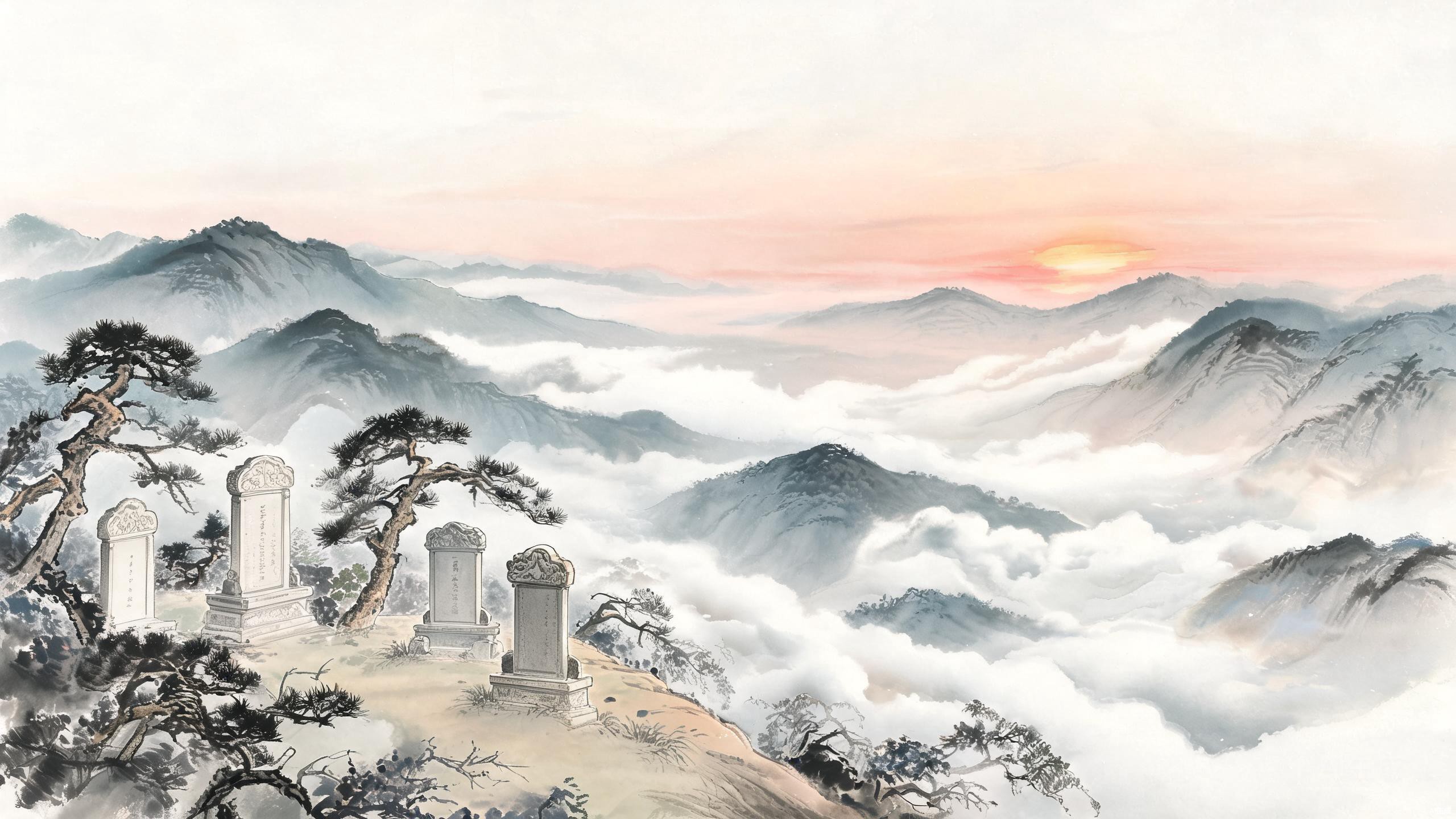
Reasons and Significance of Grave Relocation
Grave relocation (迁坟, qian fen) refers to the act of moving a deceased person's remains or ashes from an original burial site to a new one. In traditional Chinese belief, this is considered a major event that must be approached with great care and respect. There are many reasons for relocation, including unfavorable Feng Shui at the original site, land requisition, family relocation, and deterioration of the burial environment.
From a Feng Shui perspective, grave relocation aims to improve the resting environment of the departed and enhance the fortune (运势) of their descendants. If the original burial site experiences Feng Shui problems, or if a new site offers superior conditions, relocation becomes a worthwhile consideration.
Cultural Context: In Chinese tradition, ancestors continue to exert spiritual influence over their descendants. The quality of their resting place directly affects the well-being, prosperity, and harmony of future generations — making grave relocation both a practical and a deeply spiritual decision.
Choosing the Right Time for Grave Relocation
The Importance of Selecting an Auspicious Day
Grave relocation is a major undertaking that requires selecting an auspicious day and favorable timing (吉日良辰). In Feng Shui studies, the timing of a grave relocation directly affects both the outcome of the move and the fortune of the descendants. Choosing a favorable date minimizes the negative impact on the departed and their family.
Methods for Selecting an Auspicious Date
When choosing an auspicious day for grave relocation, consider the following factors: avoid inauspicious dates such as Three Sha days, Five Yellow days, and Year Breaker days; match the deceased's BaZi (八字, Eight Characters) with a compatible date; align the date with the BaZi of the descendants; and consider seasonal factors — spring and autumn are generally the most favorable seasons.
Common Auspicious Timing Choices
In traditional custom, the period around the Qingming Festival (清明节, Tomb-Sweeping Day) is a common time for grave relocation, as Yang energy rises and the season supports burial-related activities. The Double Ninth Festival (重阳节) is another important ancestral commemoration period suitable for relocation. Around the Winter Solstice, when Yang energy begins to recover, is also considered an auspicious time.
The Ritual Process of Grave Relocation
Pre-Relocation Preparation
Thorough preparation is essential before relocating a grave. This includes: selecting the new burial site and completing all required procedures; choosing an auspicious date; notifying relatives; and preparing ceremonial offerings (祭品).
Opening the Original Grave
The opening ceremony (启坟仪式) is the first step, performed at the original burial site. The process includes: making offerings and respectfully informing the deceased of the reason and plan for relocation; carefully opening the grave with trained professionals to protect the integrity of the remains; and collecting the remains into a dedicated container.
Transportation Process
During transportation, the atmosphere should remain solemn and respectful. The remains or urn should be covered with black or red cloth to avoid direct sunlight and should be protected from excessive jarring or vibration.
Interment Ceremony
The interment ceremony (安葬仪式) is the final step, performed at the new burial site. The process includes: making offerings to the Earth God (土地神) to request acceptance and protection; placing the remains with correct position and facing direction; sealing the burial chamber and erecting the tombstone; and concluding with offerings to inform the deceased that the relocation is complete.
Important Considerations During Grave Relocation
Throughout the relocation process, protect the integrity of the remains. Preserve any original burial objects and transfer them along with the remains to the new site. After relocation, the original burial site must be properly handled — the old grave chamber should be filled in. Following relocation, descendants should perform worship at the new burial site.
After relocation, the Feng Shui of the new burial site should be evaluated, including the trajectory of the Dragon Vein, the embrace of Sand (surrounding hills), the flow of water, and the auspiciousness of the facing direction. If any Feng Shui problems are identified, timely adjustments and remedies should be made.
Practical Application Considerations
In actual Feng Shui practice, one must integrate specific geographic environments and real-world conditions, applying the relevant theories flexibly. It is unwise to apply textbook knowledge rigidly, nor to rely excessively on any single method. A skilled Feng Shui practitioner should be a well-rounded professional who combines theory with practice, and tradition with modernity.
During operations, pay attention to the following: first, fully respect nature and avoid forcibly altering the natural environment; second, emphasize comprehensive judgment rather than decisions based on a single factor; third, consider practical feasibility — theoretical perfection does not always equal practical viability.
Interpretation from a Modern Scientific Perspective
From a modern scientific viewpoint, many principles in traditional Feng Shui theory possess reasonable scientific foundations. For example, choosing a position with mountains behind and water in front (背山面水) can use the mountain to block cold winds while the water moderates temperature, creating a favorable microclimate. Selecting well-drained high ground avoids dampness and standing water, helping preserve the integrity of the burial chamber.
Cultural Context: These Feng Shui principles are essentially the result of ancient people's long-term observation and synthesis of the natural environment — embodying a wisdom of harmonious coexistence between humanity and nature. In modern society, we should inherit and promote this traditional wisdom with a scientific attitude.
The Inheritance and Development of Feng Shui Culture
As an important component of Chinese traditional culture, Feng Shui continues to hold significant cultural value in modern society. It is not only the ancients' understanding and summary of the natural environment but also the crystallization of Chinese civilizational wisdom. Studying Feng Shui culture helps us better grasp the essence of Chinese traditional culture.
While passing down Feng Shui culture, we should also keep pace with the times — combining the rational core of traditional Feng Shui with modern science, allowing Feng Shui culture to radiate new vitality in the contemporary era.
Psychological Preparation for Grave Relocation
Grave relocation is not only a technical task but also one that requires thorough psychological preparation. Before deciding to relocate, one should fully understand the necessity and potential impacts, and build appropriate mental readiness.
During the process, family members may experience complex emotional fluctuations. Therefore, thorough communication and consensus should be reached before relocation. After the move, give family members adequate time to adjust to the new environment. The relocation ceremony itself serves as a form of psychological guidance — helping family members better accept the change and regain inner peace.
The Cultural Significance of Feng Shui Inheritance
Feng Shui culture carries the Chinese nation's profound understanding of nature and life — a precious cultural heritage left by our ancestors. In today's highly developed technological society, the concepts of respecting nature and pursuing harmony embedded in Feng Shui still carry important practical meaning. By learning Feng Shui knowledge, we can not only better understand traditional culture but also apply ancient wisdom in practice to add tranquility and security to our own lives and those of our families. In approaching Feng Shui, we should maintain a rational and scientific attitude — respecting tradition while moving with the times — allowing Feng Shui culture to play a positive role in modern society.
Family Cohesion After Grave Relocation
Although grave relocation is a complex undertaking, it also serves as an important opportunity to strengthen family cohesion. During the process, family members must participate and cooperate together, which helps deepen mutual understanding and trust. At the same time, relocation activities transmit and promote family culture, allowing younger generations to learn about family history and traditions. Through grave relocation, family relationships often grow closer — which holds positive significance for the long-term development of the family.
Quick Tips for a Smooth Grave Relocation:
- Always consult a qualified Feng Shui practitioner to evaluate both the old and new sites before making decisions
- Keep clear documentation of the original burial details (date, direction, remains condition) to preserve ancestral records
- Involve all immediate family members in the planning process to ensure emotional support and unity
Related Articles
- [[../07-风水故事/58-风水与丧葬.md|Feng Shui and Burial: The Ancient Tradition of Yin Dwelling Feng Shui]]
- [[../05-命理与运势/09-面相断Yin Dwelling风水.md|Face Reading for Yin Dwelling Feng Shui: Nose Analysis and Facial Burial Connections]]
- [[../07-风水故事/01-曾国藩葬地择选记.md|Zeng Guofan's Burial Site Selection: The Feng Shui Wisdom of "Heaven Dislikes Cunning"]]
- [[../08-百科问答库/48-祖坟风水不好怎么办?如何改善?.md|What to Do When Ancestral Grave Feng Shui Is Poor? How to Improve It?]]