Grave Shapes and Feng Shui: Traditional Designs for Auspicious Burial Sites
In Yin Dwelling Feng Shui (阴宅风水, yin zhai feng shui) — the practice of placing ancestral graves to benefit descendants — the shape of a grave carries important Feng Shui meaning. Beyond aesthetics, th
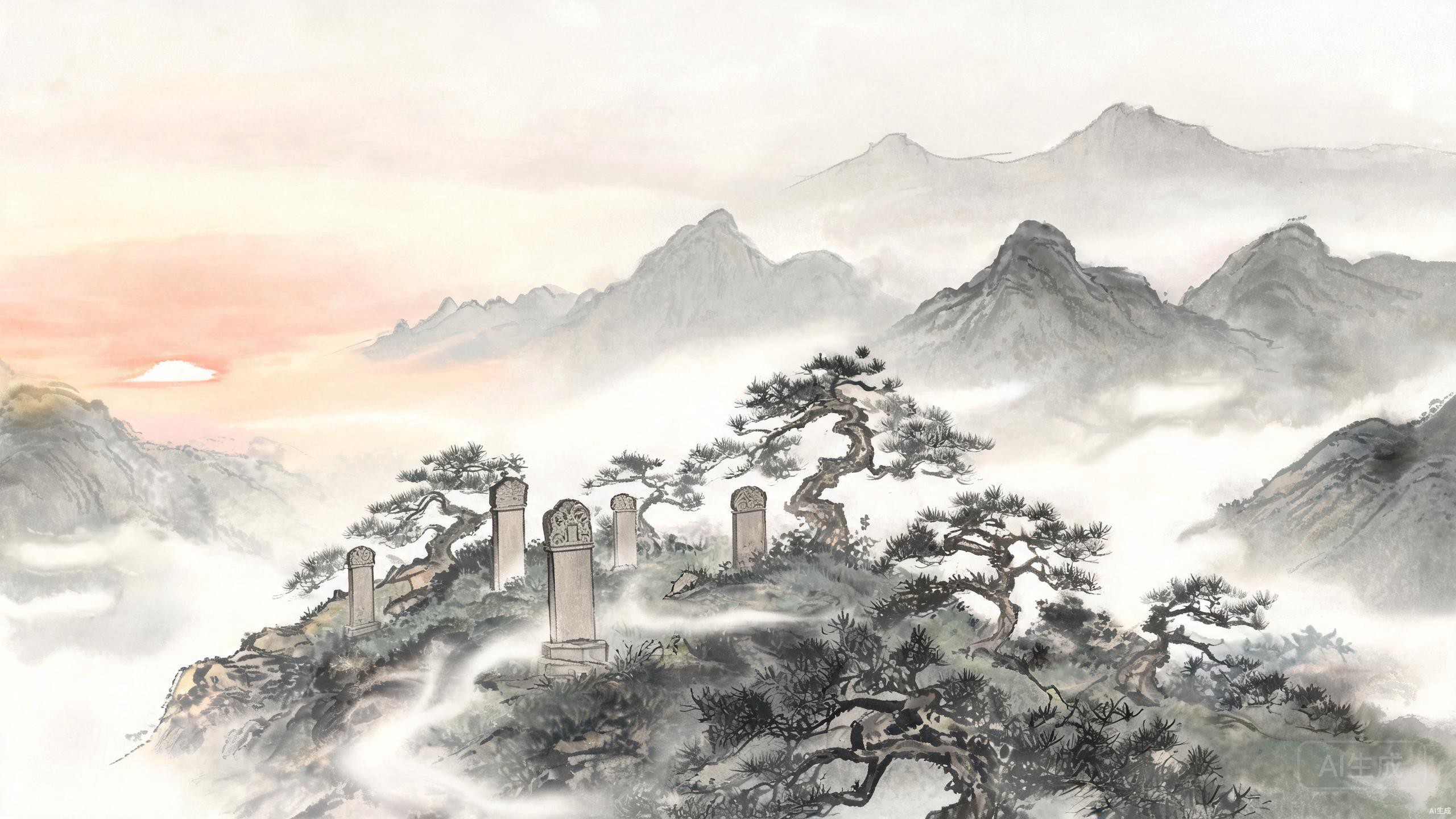
The Feng Shui Significance of Grave Shapes
In Yin Dwelling Feng Shui (阴宅风水, yin zhai feng shui) — the practice of placing ancestral graves to benefit descendants — the shape of a grave carries important Feng Shui meaning. Beyond aesthetics, the grave's shape directly influences how Qi (气) gathers and circulates within the burial site. Different shapes carry distinct symbolism and energetic characteristics.
Traditional grave shapes have evolved over centuries into several standardized forms, each with its own Feng Shui principles and ideal applications.
Traditional Grave Shapes
Round Grave
The round grave is the most recognizable traditional shape. In Feng Shui, the circle symbolizes completeness, harmony, and eternity. A round grave effectively gathers Qi, allowing Vital Qi (生气, sheng qi) to circulate around the burial site.
Key construction points:
- The mound should be smooth and full — no dents or flat spots
- The slope angle should be moderate and balanced
Semi-Round Grave
The semi-round grave is a variation of the round shape, typically used for smaller burial plots. It still gathers Qi effectively, though slightly less powerfully than a full circle.
Key construction points:
- The arc and height should be moderate and proportional
Square Grave
Square graves are common in modern public cemeteries, symbolizing stability, dignity, and order. Their uniform shape makes them ideal for organized cemetery management.
Key construction points:
- All four corners must be true right angles — no slant
- Side lengths should be even and balanced
Rectangular Grave
The rectangular grave is an extension of the square shape, traditionally used for couples or family burials. It maximizes space efficiency and accommodates multiple deceased family members.
Ideal proportions: The length-to-width ratio should be 3:2 or 5:3 for harmony.
Cultural Context: The concept of "round heaven, square earth" (天圆地方) is fundamental to Chinese cosmology. A square base represents the stable, structured earth, while the elements above — sun, moon, and stars — are round. Grave shapes often reflect this dual cosmology.
Feng Shui Principles for Grave Construction
The Mound (坟头)
The mound is the highest point of the grave and the focal point where Qi converges. The ideal shape is smooth and full, like an inverted bowl. It should never be too sharp or too flat:
- Too sharp: Creates Sha Qi (harmful energy) that disturbs the site's harmony
- Too flat: Cannot effectively gather and retain Qi
The Slope (坟体)
The slope of the grave body affects both drainage and energetic stability:
- Too steep: Qi flows away too quickly, leading to energy loss
- Too flat: Water pools around the grave, creating dampness
- Ideal angle: 30–45 degrees
The Base (坟基)
The base provides the foundation and should be solid, stable, and proportionate. Traditionally, the base shape mirrors the grave body but is slightly larger in dimension.
Choosing the Right Shape for Different Burial Types
| Burial Type | Recommended Shape | Typical Size |
|---|---|---|
| Single burial | Round or semi-round | Diameter: 1.5–2 meters |
| Couple burial | Rectangular | Length: 2–3 meters; Width: 1.5–2 meters |
| Family burial | Larger square or rectangular | Scale to family size |
In most modern public cemeteries, grave shapes are standardized by cemetery management, leaving limited room for personal choice. However, understanding the traditional principles helps you select the best available option within these constraints.
Quick Tips for Choosing a Grave Shape
- Prioritize proportion over size — a well-proportioned small grave is more auspicious than a poorly proportioned large one
- Match shape to relationship — couples naturally suit rectangular graves, while single burials honor the symbolism of round shapes
- Consider the surroundings — the grave shape should harmonize with the terrain and neighboring plots
Important Warnings About Grave Shapes
Certain shapes should be avoided due to their harmful Sha Qi (煞气):
- Sharp or angular shapes (triangles, pointed corners) generate aggressive Sha Qi
- Grotesque or unusual shapes disrupt the site's solemn, respectful atmosphere
- Exaggerated or unbalanced proportions create energetic instability
Always maintain a dignified, harmonious appearance that honors both the deceased and the natural surroundings.
Practical Guidelines for Application
When applying these principles in real-world Feng Shui practice, flexibility and context-awareness are essential. No theory should be applied rigidly. A skilled Feng Shui practitioner combines:
- Theoretical knowledge with field experience
- Traditional methods with modern practicality
- Environmental factors with family circumstances
Three Guiding Principles
- Respect nature — Never forcefully alter the natural environment. Work with the land, not against it.
- Make holistic judgments — Never decide based on a single factor. Consider the complete picture: location, shape, orientation, timing, and family needs.
- Prioritize feasibility — What is theoretically perfect may not be practically achievable. Adapt principles to real-world constraints.
A Modern Scientific Perspective
Many traditional Feng Shui principles align remarkably with modern environmental science:
- Back to Mountain, Facing Water (背山面水): Mountains block cold winds; water bodies regulate temperature and humidity — creating favorable microclimates
- Elevated, well-drained sites: Preventing moisture accumulation protects grave integrity and prevents soil erosion
- Natural orientation: Aligning with land contours works with natural water flow rather than against it
These principles represent centuries of careful observation by ancient practitioners — a testament to humanity's ability to live in harmony with nature. Modern society benefits from approaching this wisdom with both scientific rigor and cultural respect.
The Cultural Legacy of Feng Shui
Feng Shui remains a vital component of Chinese cultural heritage, carrying profound philosophical and practical value. It represents not only ancient environmental knowledge but the crystallized wisdom of Chinese civilization itself.
Studying Feng Shui deepens our understanding of traditional Chinese thought — its cosmology, its relationship with nature, and its reverence for ancestral connections.
Preserving Tradition While Embracing Modernity
The future of Feng Shui lies in integrating its time-tested wisdom with contemporary knowledge:
- Honoring traditional principles while filtering out superstition
- Applying scientific validation to validate or refine ancient claims
- Making the knowledge accessible to modern practitioners and homeowners
Grave Shape Symbolism and Tradition
Traditional grave shapes carry deep symbolic meaning:
| Shape | Symbolism | Best Orientation |
|---|---|---|
| Semi-round | Unity of heaven and earth (天圆地方) | Arc should face open space to gather Qi |
| Rectangular | Order and proper conduct (规矩方正) | Long edge should align with the Dragon Vein (龙脉) direction |
In modern public cemeteries, grave shapes are typically standardized, limiting personalization. However, understanding these traditional meanings enriches your appreciation of Feng Shui as a living cultural tradition.
The Enduring Relevance of Feng Shui Culture
Feng Shui embodies the Chinese people's profound understanding of nature, life, and ancestral connection. Although modern science has transformed much of daily life, the core values embedded in Feng Shui — respect for nature, pursuit of harmony, reverence for ancestry — remain deeply relevant.
What Feng Shui Teaches Us Today
- Environmental wisdom: Working with natural forces rather than against them
- Holistic thinking: Seeing humans, environment, and ancestors as interconnected
- Practical benefit: Applying ancient insights to create peace and stability for living families
When approaching Feng Shui, maintain a balanced, rational mindset:
- Respect tradition without blind faith
- Embrace modernity without dismissing ancient wisdom
- Seek harmony between heritage and progress
By doing so, you allow this remarkable cultural tradition to continue offering guidance, comfort, and a sense of connection to those who practice it with sincerity.
Related Articles
- [[../05-命理与运势/09-面相断Yin Dwelling风水.md|Reading Yin Dwelling Feng Shui Through Face Reading — Nose and Burial Site Connections]]
- [[../07-风水故事/58-风水与丧葬.md|Feng Shui and Funeral Traditions — The Ancient Practice of Yin Dwelling Feng Shui]]
- [[../07-风水故事/01-曾国藩葬地择选记.md|Zeng Guofan's Burial Site Selection — The Feng Shui Wisdom of "Heaven Dislikes Cunning"]]
- [[../08-百科问答库/50-墓碑有什么风水讲究?墓碑朝向怎么定?.md|What Are the Feng Shui Principles for Gravestones? How to Determine the Facing Direction?]]