How to Choose a Feng Shui Treasure Site for Ancestral Burial: Complete Guide to Yin Dwelling Feng Shui
A Feng Shui treasure site (风水宝地) is a geographic location with an exceptionally harmonious Feng Shui layout. In Yin Dwelling Feng Shui (阴宅风水, yin zhai feng shui) — the practice of selecting burial gro
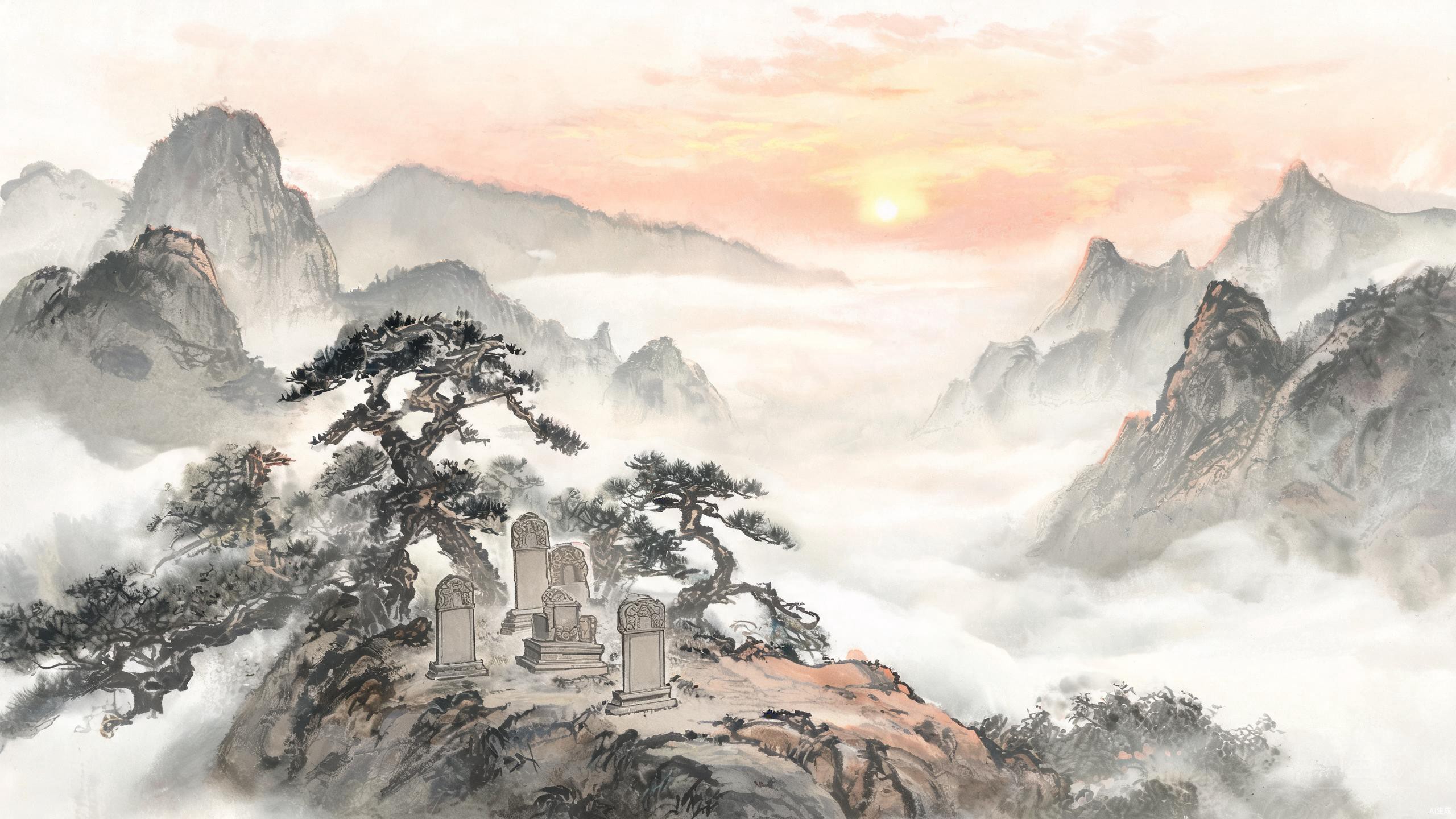
What Is a Feng Shui Treasure Site?
A Feng Shui treasure site (风水宝地) is a geographic location with an exceptionally harmonious Feng Shui layout. In Yin Dwelling Feng Shui (阴宅风水, yin zhai feng shui) — the practice of selecting burial grounds — such sites are believed to bring peace to the deceased and blessings to future generations.
A true Feng Shui treasure site must possess a vital Dragon Vein (龙脉), an accurately placed Feng Shui Point (穴, xue), protective Sand (砂, sha) formations, and embracing water — meaning the mountain range is authentic, the acupoint is precise, surrounding hills provide protection, and water flows gracefully around the site.
Cultural Context: Feng Shui treasure sites are not mystical or supernatural places from legend. They represent the culmination of centuries of careful observation of natural geography. What ancient masters identified as "auspicious energy" often aligns with what modern environmental science recognizes as optimal site conditions — good drainage, natural shelter, clean water, and balanced microclimate.
Feng Shui treasure sites are not mythical locations from folklore — they are rational choices based on natural geographic conditions. Through long-term observation of the natural environment, ancient practitioners summarized the common characteristics of these ideal sites. Even today, these characteristics remain both scientifically sound and practically useful.
The Five Essential Features of a Feng Shui Treasure Site
1. A Living Dragon Vein
The first feature of a Feng Shui treasure site is a living, dynamic Dragon Vein. The Dragon Vein refers to theflow and direction (flow and direction) of a mountain range. A superior Dragon Vein should wind and undulate with vitality — resembling a coiling dragon when viewed from a distance. Specific indicators of a living Dragon Vein include:
- Rounded,full and rounded mountain shapes with full, generous contours
- Lush vegetation covering the slopes
- Rich, fertile soil indicating strong earth energy
- Clear, defined ridgelines that flow with purposeful movement
2. An Accurate Feng Shui Point (Acupoint)
The second feature is an accurately identified Feng Shui Point. The acupoint is the optimal location along the Dragon Vein where Vital Qi (Sheng Qi) gathers most powerfully. A well-placed acupoint sits at the "convergence knot" of the Dragon Vein — where life energy concentrates most intensely. Signs of an accurate acupoint include:
- Flat, open terrain that allows energy to settle naturally
- Dry, firm ground that protects remains and prevents decay
- Pure, high-quality soil with appropriate color and texture
3. Harmonious Protective Sand Formations
The third feature is well-arranged Sand (surrounding hills). Sand refers to the hills and mounds encircling the acupoint. In an ideal arrangement, these hills embrace the acupoint like stars surrounding the moon, forming an effective protective barrier. The Four Celestial Animals (四象) provide the classical framework:
| Direction | Celestial Animal | Ideal Characteristics |
|---|---|---|
| Back (North) | Black Tortoise (玄武) | Tall, solid, and stable — provides strong backing |
| Front (South) | Vermilion Bird (朱雀) | Elegant and graceful — offers an open, bright view |
| Left (East) | Azure Dragon (青龙) | Winding and undulating — gentle, flowing protection |
| Right (West) | White Tiger (白虎) | Submissive and tame — softer than the Dragon side |
4. Embracing Water with Affection
The fourth feature is water that embraces the site with feeling. In Feng Shui, water represents wealth. The ideal water pattern should curve around the acupoint like a jade belt around the waist, locking wealth energy within the site. Signs of favorable water include:
- Clear, transparent water of high quality
- Gentle, steady flow without rushing or stagnation
- Curved, embracing shape rather than straight or angular
- Tightly sealed Water Mouth (水口) that prevents energy from escaping
Quick Tips for Reading Water:
- Curved rivers = gentle, accumulating wealth energy ✓
- Straight rivers or roads = wealth energy rushing away ✗
- Reverse Bow Sha (反弓煞) patterns = water flowing away from site = wealth leakage
5. An Auspicious Direction
The fifth feature is an auspicious facing direction. The burial site's orientation should harmonize with the Dragon Vein's flow and the water's direction to receive maximum auspicious Qi. Indicators of an auspicious direction include:
- Open, bright outlook without obstructions
- A Desk Mountain (案山) in front providing gentle support
- Avoidance of inauspicious directions that bring Sha Qi (harmful energy)
How to Select a Feng Shui Treasure Site: Step-by-Step Method
Step 1: Macro-Level Survey
Begin with a broad regional analysis. Examine the area's mountain ranges, water systems, and overall topography. Use modern tools like topographic maps, satellite imagery, and GIS data to identify promising regions. The goal is to identify areas where major Dragon Veins converge and where water flows favorably.
Step 2: Micro-Level Investigation
Once promising areas are identified, conduct detailed on-site surveys. Micro-level analysis includes:
- Measuring precise orientations using a Luopan (Feng Shui Compass) or modern surveying tools
- Examining soil composition for quality, drainage, and stability
- Analyzing water sources for purity, flow rate, and seasonal behavior
- Assessing vegetation health as a bioindicator of land vitality
Step 3: Comprehensive Analysis
Synthesize findings from both macro and micro surveys. Evaluate whether the site meets all five essential features and whether these features work in harmonious coordination. A site that scores well on all five criteria — rather than excelling in one while failing others — is the most balanced and auspicious choice.
Remember: Feng Shui seeks to balance Yin and Yang energies — the dual forces that shape all existence.
How to Apply This Method in Practice
- Start broad: Use Google Earth or topographic maps to identify areas with curving rivers and mountain backdrops
- Narrow down: Visit shortlisted locations in person to feel the energy and verify terrain features
- Measure carefully: Use a Luopan or compass to check orientation against the Dragon Vein's flow
- Test the water: Observe water clarity, flow speed, and shape — curved is better than straight
- Look for protection: Confirm the Four Celestial Animals are properly positioned around the site
- Trust balance: Choose the site where all five features work together, not the one that excels in just one area
- Balance the Five Elements: Incorporate Wood, Fire, Earth, Metal, and Water in your décor for harmonious energy
Selecting a Feng Shui Site in Modern Cities
In modern urban environments, traditional Feng Shui treasure sites are increasingly rare. However, you can still apply these principles when selecting plots in public cemeteries. Look for locations that fulfill these criteria:
Checklist for Modern Cemetery Plot Selection
- ☑ Higher elevation with good drainage — avoids waterlogging and protects the site
- ☑ Higher ground at the back with open space in front — mimics the ideal "back to mountain, facing water" pattern
- ☑ Surrounded by green belts — trees and landscaping substitute for natural Sand formations
- ☑ Away from pollution and noise sources — factories, highways, and busy roads create Sha Qi
- ☑ Avoid plots directly facing sharp corners of other structures (Sharp Corner Sha 尖角煞)
- ☑ Avoid plots at T-junctions or road ends (Road Rushing Sha 路冲煞)
Quick Tip: Even in a flat cemetery, you can find "backing" by selecting a plot near a tall hedge, memorial wall, or tree line. And you can create "facing openness" by choosing a plot with a clear view down a gentle slope or pathway.
Selecting a Feng Shui treasure site for ancestral burial is both a way of respecting the deceased and ainheritance (inheritance) of traditional culture. Throughout the selection process, we should respect nature and work in harmony with it — choosing locations with beautiful environments and good Qi whenever conditions permit.
Important Considerations for Real-World Practice
In actual Feng Shui practice, theory must be adapted to specific geographic environments and real-world conditions. You cannot rigidly apply textbook knowledge, nor should you depend excessively on any single method. A skilled Feng Shui practitioner combines theory with practice and tradition with modernity — making them a well-rounded professional.
Three Guiding Principles for Application
- Respect nature: Never force major changes to the natural environment. Work with what the land offers rather than against it
- Make holistic judgments: Never base decisions on a single factor. Consider the complete picture of all Five Essentials
- Consider practical feasibility: Theoretically perfect conditions rarely exist in reality. Balance ideals with what's actually available
Modern Scientific Interpretation
From a modern scientific perspective, many traditional Feng Shui principles contain sound reasoning backed by environmental science. For example:
- Sites backed by mountains utilize natural landforms to block cold northern winds, while nearby water bodies regulate temperature — creating favorable microclimates
- Higher ground with good drainage prevents moisture accumulation and waterlogging, protecting burial sites from decay and erosion
- South-facing orientations in the Northern Hemisphere maximize sunlight exposure, which has documented health and psychological benefits
Cultural Context: This convergence between ancient Feng Shui wisdom and modern environmental science is no coincidence. Feng Shui masters were essentially early landscape ecologists, observing patterns that modern science has only recently been able to quantify. This doesn't diminish Feng Shui's value — rather, it reveals that traditional knowledge often anticipated scientific discoveries by centuries.
These Feng Shui principles are essentially the result of ancient people's long-term observation and summarization of the natural environment — embodying the wisdom of harmonious coexistence between humanity and nature. In modern society, we should approach these traditional wisdoms with a scientific attitude, both honoring their origins and applying them with contemporary understanding.
The Heritage and Evolution of Feng Shui Culture
As a vital component of traditional Chinese culture, Feng Shui retains significant cultural value in modern society. It is not merely the ancients' understanding and summary of the natural environment — it is the crystallization of Chinese civilizational wisdom. Studying Feng Shui culture helps us better understand the essence of traditional Chinese culture.
While preserving Feng Shui heritage, we must also advance with the times — integrating the rational core of traditional Feng Shui with modern science, allowing Feng Shui culture to radiate new vitality in our contemporary era.
Summary: The Five Features of a Feng Shui Treasure Site
An ideal Feng Shui treasure site typically possesses the following characteristics:
- A living Dragon Vein — clear mountain flows, undulating terrain, lush vegetation
- An accurate acupoint — the optimal location where Vital Qi gathers along the Dragon Vein
- Protective Sand arrangements — appropriate hills encircling and protecting the site
- Embracing water — clear water flowing in curved patterns around the acupoint
- An auspicious direction — orientation that harmonizes with the Dragon Vein and water flow
These five features are interconnected and mutually influential, together forming the complete layout of a Feng Shui treasure site. In practice, all factors should be considered holistically rather than pursuing perfection in just one aspect. Finding a location with balanced qualities across all five areas is far more practical and auspicious than seeking extreme excellence in any single feature.
The Cultural Significance of Feng Shui Heritage
Feng Shui culture carries the Chinese nation's profound understanding of nature and life — it is a precious cultural heritage left by our ancestors. In today's society, despite the高度发达 (highly advanced) state of science and technology, the principles embedded in Feng Shui — respecting nature and pursuing harmony — remain deeply relevant.
By studying Feng Shui knowledge, we not only gain deeper insight into traditional culture but also access the practical wisdom of our ancestors, adding a measure of peace and security to our lives and those of our families. When approaching Feng Shui, we should maintain a rational and scientific attitude — respecting tradition while moving forward with the times — allowing Feng Shui culture to play a positive role in modern society.
Final Quick Tips:
- Trust balance over extremes — a site good in all five areas beats one perfect in one
- Use modern tools (maps, satellite imagery) to aid ancient wisdom
- Respect the land's natural features rather than trying to force them
- When conditions are limited, prioritize drainage, elevation, and protection from Sha Qi
- Remember: Feng Shui is ultimately about harmony with nature — let the land guide your choices
Related Articles
- [[../05-命理与运势/09-面相断Yin Dwelling风水.md|Face Reading for Yin Dwelling Feng Shui — Reading Burial Grounds Through the Nose and Face]]
- [[../07-风水故事/58-风水与丧葬.md|Feng Shui and Funeral Traditions — The Ancient Practice of Yin Dwelling Feng Shui]]
- [[../07-风水故事/25-鲤鱼地传说.md|The Legend of the Carp Site — A Feng Shui Auspicious Acupoint of the Carp Leaping Through the Dragon Gate]]
- [[../08-百科问答库/50-墓碑有什么风水讲究?墓碑朝向怎么定?.md|Grave Marker Feng Shui Principles — How to Determine the Facing Direction of a Tombstone]]