Joint Burial Tomb Feng Shui: Essential Rules for Harmonious Couple and Family Burials
Joint burial refers to the practice of interring two or more deceased individuals in the same grave or tomb. The most common form is the couple joint burial, though family joint burial and sibling joi
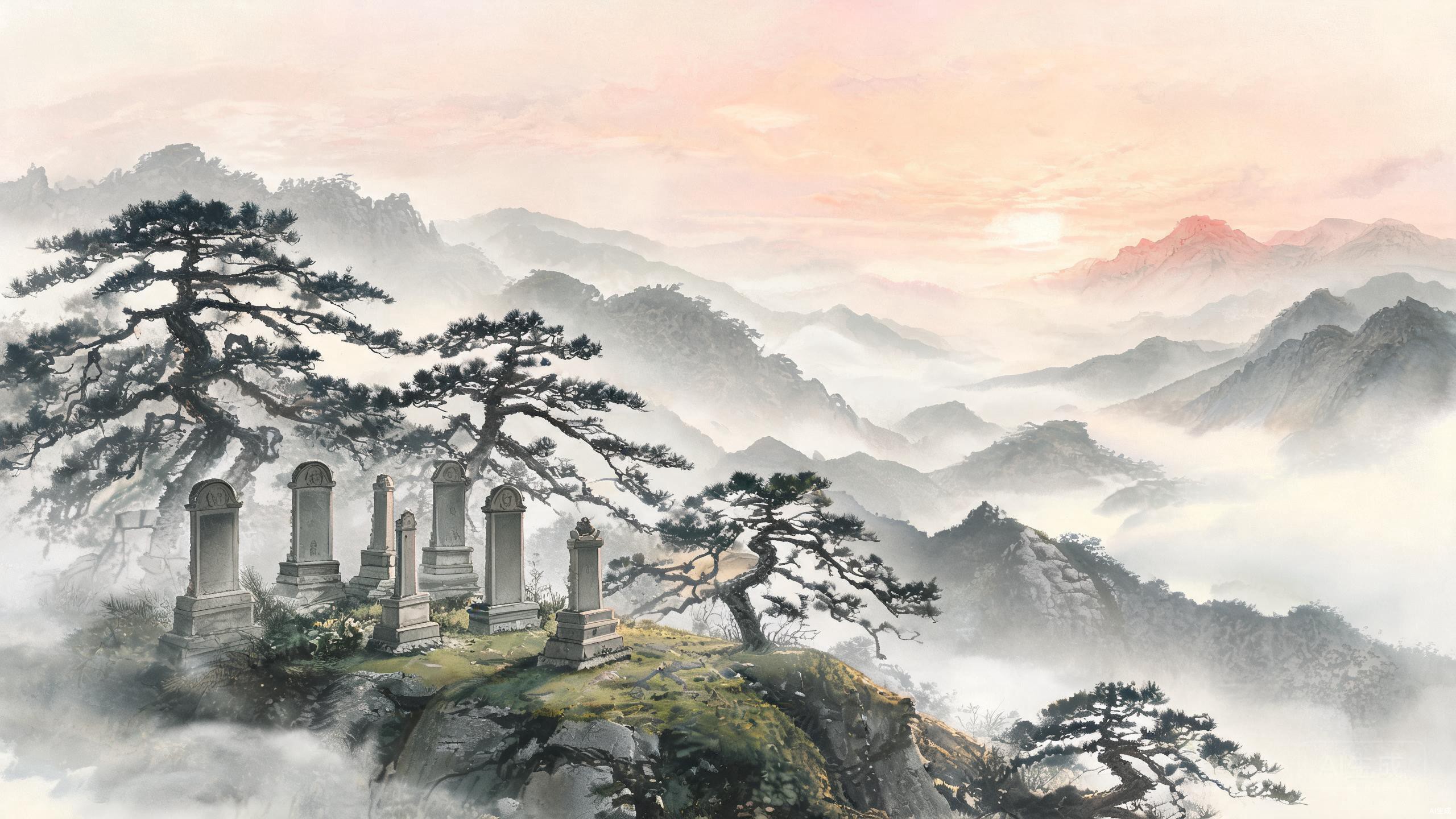
The Cultural Tradition of Joint Burial
Joint burial refers to the practice of interring two or more deceased individuals in the same grave or tomb. The most common form is the couple joint burial, though family joint burial and sibling joint burial are also practiced. Joint burial has a long and revered history in China, reflecting deeply held cultural values that honor family ethics and emphasize the bond between the living and the departed — even beyond death.
Cultural Context: In Chinese tradition, marriage and family are considered bonds that extend beyond this life. Joint burial represents the ultimate expression of "till death do us part," ensuring that loved ones remain together in the afterlife. This practice has shaped Chinese burial customs for over two millennia.
From a Feng Shui perspective, joint burial tombs are far more complex than single-occupancy graves. Practitioners must carefully coordinate the Qi fields of multiple deceased individuals, ensuring that each person's energy harmonizes with the others rather than creating internal conflict.
Feng Shui Rules for Couple Joint Burials
Couple joint burials typically take two forms: dual side-by-side chambers, where husband and wife occupy adjacent graves sharing a single memorial stone; and shared-chamber burial, where both cremated remains or coffins rest together in one tomb.
Left-Right Positioning
In a couple joint burial, the positioning follows strict tradition. The husband is placed on the left, the wife on the right (measured from the perspective of facing the memorial stone). This arrangement reflects the classical Chinese concept of "man on the left, woman on the right."
In Feng Shui terms, these positions correspond to the Azure Dragon (青龙) on the left and the White Tiger (白虎) on the right — two of the Four Symbols (Four Celestial Animals). The Azure Dragon position should be higher and more active, while the White Tiger position should be lower and more subdued.
Memorial Stone Arrangement
Couple joint burial tombs typically feature either two parallel stones or one larger stone engraved with both names. The text arrangement also follows convention: the husband's name on the left, the wife's name on the right, mirroring the burial positions below.
How to Apply This in Practice
If you are arranging a couple's burial today:
- Confirm the orientation first: Before positioning the remains, determine which direction the memorial stone will face — this establishes your left and right reference
- Apply the Azure Dragon-White Tiger principle: Ensure the husband's side (left/Azure Dragon) has slightly higher ground or a more prominent marker
- Engrave names accordingly: Husband's name appears left, wife's name appears right on the memorial stone
- Keep the arrangement symmetrical: A balanced visual presentation honors both individuals equally
Quick Tips:
- In modern columbarium niches, place the urns in the same left-right order even when space is limited
- Avoid placing one urn significantly higher than the other — it creates an imbalance that may disturb family harmony
- If the couple had a particularly harmonious relationship, shared-chamber burial is considered especially auspicious
Feng Shui Rules for Family Joint Burials
Family joint burial involves interring multiple family members in the same tomb or burial plot. The arrangement follows a strict hierarchy based on generational seniority: the highest-ranking ancestor occupies the central or uppermost position, with descendants arranged progressively around or below them.
Coordinating Multiple Qi Fields
Family joint burials involve coordinating the Qi fields of several deceased individuals — a delicate task that requires careful planning. The following methods help harmonize these energies:
- Maintain adequate spacing: Avoid crowding the Qi fields too closely together
- Unify the orientation: Ensure all remains face the same direction so that Qi flows in a single, coherent stream
- Strategic layout: Arrange the deceased so their Qi fields complement and reinforce one another rather than clash
Cultural Context: The family tomb functions like a small "Qi community" in Chinese metaphysics. Just as a well-designed home brings harmony to the living, a well-arranged family burial promotes continued unity and blessings for the entire lineage — past, present, and future.
Site Selection Requirements for Joint Burial Tombs
Joint burial tombs demand more from the surrounding terrain than single graves. Because of their larger scale, they require more space and more stable ground.
Key Criteria
- Flat, open, stable terrain: Avoid slopes, flood-prone areas, or unstable soil
- Quiet, clean surroundings: Stay away from pollution sources, excessive noise, or visually unpleasant environments
- Abundant greenery: Joint burial sites require more extensive landscaping with trees and vegetation than single graves
Quick Site Selection Checklist
| Criterion | Recommended | Avoid |
|---|---|---|
| Terrain | Flat, stable, well-drained | Sloped, marshy, unstable |
| Surroundings | Quiet, scenic, clean | Noisy, polluted, cluttered |
| Vegetation | Lush trees and plants | Bare, exposed, eroded |
| Water | Gentle drainage, no pooling | Stagnant water, flooding risk |
| Access | Reachable but not on busy roads | Direct road noise, industrial areas |
Important Considerations for Joint Burial
Relationship Matters
The relationships between the deceased profoundly affect the Qi dynamics of a joint burial:
- Harmonious relationships: Qi fields reinforce and amplify one another, creating powerful protective energy
- Conflicted relationships: Qi fields may clash, generating disruptive energy that affects descendants
For this reason, practitioners strongly recommend carefully considering the relationships between the deceased before arranging a joint burial.
Sequence of Burial
In a joint burial, the first to pass away is buried first; the second burial requires opening the existing tomb. This process may disturb the peace of the first deceased, so the timing of the second burial must be chosen with care — ideally on an auspicious date and hour.
Modern Cremation Adaptations
With the widespread adoption of cremation, urn joint burial has become the dominant modern form. Because cremation urns are far smaller than traditional coffins, multiple urns can share a single chamber, dramatically reducing the required space. The Feng Shui principles remain essentially the same as traditional joint burial, but the practice offers greater flexibility.
Quick Tip: When arranging an urn joint burial in a columbarium, treat each niche with the same respect as a full-sized tomb — the smaller scale does not diminish the spiritual significance.
Practical Application Guidelines
In real-world Feng Shui practice, theory must be adapted to local geography and real conditions. No formula should be applied mechanically, and no single method should be relied upon exclusively.
A skilled Feng Shui practitioner combines theory with practice and tradition with modernity. During site assessment and burial arrangement, observe these three guiding principles:
- Respect nature: Never force drastic changes to the natural environment — work with the land, not against it
- Synthesize multiple factors: Make decisions based on the complete picture, not a single variable
- Prioritize practical feasibility: Theoretically "perfect" placements are useless if they cannot be implemented
A Modern Example
Consider a couple who wishes to be buried in a suburban cemetery with flat terrain and no dramatic mountain features:
- "Mountains" can be symbolized by large memorial structures or tree clusters behind the plot
- "Water" can be represented by gently curving pathways or a small memorial fountain
- "Dragon and Tiger" balance can be achieved through asymmetric landscaping that protects the left (Azure Dragon) side
A Modern Scientific Perspective
From a modern scientific viewpoint, many traditional Feng Shui principles contain genuinely sound environmental reasoning:
- Sites with mountains behind and water in front use landforms to block cold winds while water moderates temperature, creating favorable microclimates
- Elevated positions with good drainage prevent moisture accumulation and structural decay, protecting the burial site over time
These principles represent centuries of careful observation of natural environments — embodying the wisdom of humans living in harmony with nature.
Cultural Context: Feng Shui is increasingly studied alongside environmental science and landscape architecture. Many of its "superstitious" rules turn out to be practical guidelines for site selection that modern planners still use today — whether they call it Feng Shui or simply good design.
Preserving and Developing Feng Shui Culture
As an essential component of Chinese traditional culture, Feng Shui retains significant cultural value in modern society. It represents not only ancient observations about the natural environment but also the distilled wisdom of Chinese civilization.
Studying Feng Shui helps us better understand the essence of Chinese traditional culture. As we pass this knowledge to future generations, we must also adapt it to contemporary contexts — integrating the rational core of traditional Feng Shui with modern science so that this ancient wisdom continues to flourish in the modern era.
Coordinating Qi in Joint Burial Tombs
The central challenge of joint burial is harmonizing all parties involved — ensuring that each deceased individual rests peacefully without energetic conflict.
Directional Adjustments for Different Individuals
The optimal facing direction for a joint burial must satisfy both deceased individuals. When two people have different BaZi (八字, Eight Characters) charts, their ideal directions may conflict. In such cases, practitioners must:
- Seek a compromise orientation that serves both parties adequately
- Adjust the internal layout of the tomb to compensate for any directional trade-offs
- Choose the acupoint (穴位) carefully to promote harmonious coexistence between the deceased
The goal is to avoid any arrangement that generates unfavorable energy through internal imbalance.
The Cultural Significance of Feng Shui
Feng Shui culture carries the Chinese nation's profound understanding of nature and life — a precious heritage left by our ancestors. Even in today's scientifically advanced society, the principles embedded in Feng Shui — respect for nature and the pursuit of harmony — remain deeply relevant.
By studying Feng Shui, we gain not only a deeper appreciation of traditional culture but also practical wisdom for creating peace and security in our own lives. When approaching Feng Shui, we should maintain a rational, scientific attitude: honoring tradition while moving with the times, allowing this ancient art to play a constructive role in modern life.
Related Articles
- [[../07-风水故事/58-风水与丧葬.md|Feng Shui and Burial — The Ancient Tradition of Yin Dwelling Feng Shui]]
- [[../05-命理与运势/09-面相断Yin Dwelling风水.md|Face Reading for Yin Dwelling Feng Shui — Reading Burial Sites Through the Nose]]
- [[../07-风水故事/01-曾国藩葬地择选记.md|Zeng Guofan's Burial Site Selection — The Feng Shui Wisdom of "Heaven Disapproves of Cunning"]]
- [[../08-百科问答库/50-墓碑有什么风水讲究?墓碑朝向怎么定?.md|What Are the Feng Shui Rules for Memorial Stones? How to Determine the Direction?]]