Mountain Cemetery Feng Shui: Site Selection Guide for Auspicious Burial Grounds
Mountain cemeteries refer to burial sites selected in mountainous or hilly terrain. Compared to flat plains regions, the Feng Shui site selection for mountain cemeteries has its own unique characteris
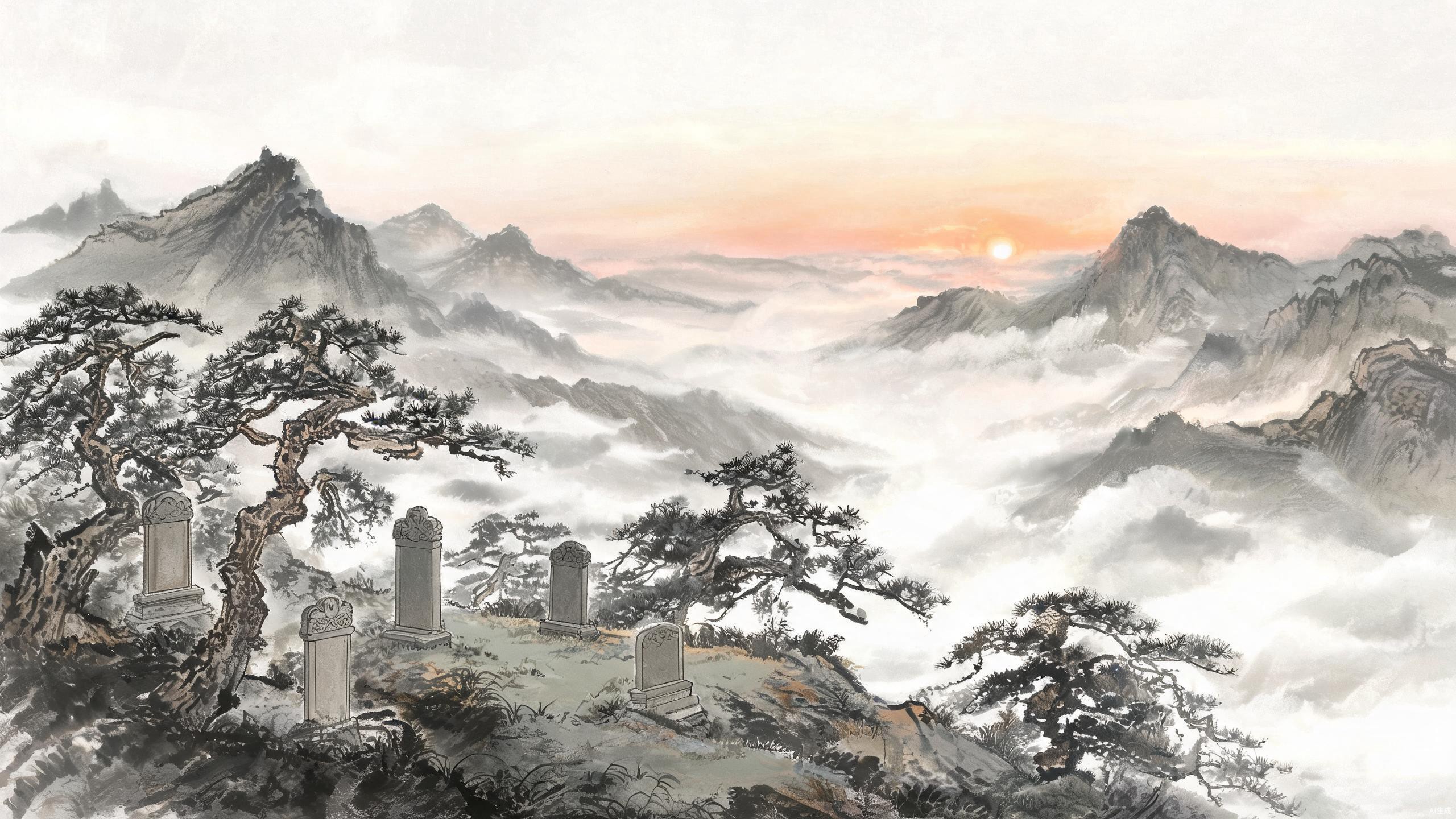
Characteristics of Mountain Cemeteries
Mountain cemeteries refer to burial sites selected in mountainous or hilly terrain. Compared to flat plains regions, the Feng Shui site selection for mountain cemeteries has its own unique characteristics and requirements. Mountain terrain is complex and ever-changing, with clearly visible Dragon Vein (long mai) patterns, making professional Feng Shui knowledge and practical experience even more essential.
The advantages of mountain cemeteries include: clearly identifiable Dragon Veins, rich topographical variation, beautiful natural scenery, and relatively stable energy fields. However, there are also challenges: difficult transportation, complex construction requirements, and risks of geological hazards.
Core Principles for Mountain Site Selection
Observing the Dragon and Identifying the Vein
In mountain site selection, observing the Dragon and identifying the Vein is the most important step. In mountain terrain, Dragon Vein patterns are relatively visible but also more complex. You need to observe the overall flow of mountain ranges from a distance, judging the source, branches, and direction of the Dragon Vein. When observing the Dragon, pay attention to: whether the rises and falls of the Dragon Vein are clear, whether the turns are natural, whether the Qi gathering is tight, and whether the Acupoint formation is obvious.
Cultural Context: In Feng Shui, "Dragon" (龙, lóng) refers to the flowing energy lines of mountains and landforms. Practitioners "read" the landscape the way a doctor reads a pulse — tracing how energy moves through the terrain to find where it pools and gathers.
Locating the Acupoint
In mountain terrain, positioning the Feng Shui Point (穴位, xué wèi) requires extra caution. Mountain topography is steep, and not every location is suitable for a cemetery. The Acupoint should be located where the Dragon Vein gathers — a place with sufficient Vital Qi (生气, shēng qì) accumulation and adequate space. The Acupoint should not be placed on a mountain ridge, because ridges are windy and cannot Storing Wind and Gathering Qi (藏风聚气, cáng fēng jù qì); nor should it be placed at the bottom of a valley, because valleys are damp and prone to water accumulation.
Examining Sand for Acupoint Protection
In mountain terrain, the embracing function of Sand (砂, shā) is especially important. Mountain winds are strong, and without good Sand protection, the Acupoint is vulnerable to strong wind invasion. The Black Tortoise Sand (玄武砂, backing mountain) should be tall and steady, capable of blocking winds from behind; the Azure Dragon Sand (青龙砂) and White Tiger Sand (白虎砂) should embrace the site from left and right, forming effective protection.
Observing Water and Assessing Momentum
Water in mountain terrain usually appears as streams, springs, and similar forms. The direction and shape of water significantly influence the Feng Shui of the cemetery. Water should embrace the site with affection — not rush directly toward it or form a Reverse Bow Sha (反弓煞). Water should be clear and flowing — not murky or stagnant. The Water Mouth (水口, shuǐ kǒu) should be controlled — not pouring out without restraint.
Taboos for Mountain Site Selection
Avoid mountain ridges: Ridges are the highest points of a mountain range, where wind is strong and Qi scatters — unsuitable for a cemetery.
Avoid steep slopes: Excessively steep slopes are not only difficult for construction but also prone to landslides and collapse.
Avoid valley bottoms: Valley bottoms are damp, waterlogged, and poorly ventilated — detrimental to keeping the burial site dry and preserved.
Avoid isolated peaks: Lonely peaks lack the support of a Dragon Vein and cannot form a favorable Feng Shui pattern.
Practical Tips for Mountain Site Selection
When selecting a mountain site, you should make full use of natural terrain. Look for a natural "armchair" formation — with a backing mountain behind, armrests on both sides, and open space in front. This is the ideal cemetery layout pattern.
Cultural Context: The "armchair" formation (太师椅, tài shī yǐ) is one of the most coveted Feng Shui patterns in classical texts. It mirrors how a person sits protected and supported — exactly the energy a resting place should embody for peace and stability.
Drainage is especially critical for mountain cemeteries. Choose a slightly elevated position with good drainage to prevent water accumulation around the burial site. At the same time, pay attention to the direction of water flow on the slope above to prevent rainwater from washing over the grave.
Sunlight conditions on mountain terrain also affect Feng Shui quality. Choose a location with ample sunlight and good ventilation to keep the burial site dry and clean. Excessively dark and damp locations are not only harmful to the preservation of the burial site but also unfavorable for Qi accumulation.
In modern society, traditional mountain cemeteries face certain restrictions. Many mountainous areas have been designated as nature reserves or ecological protection zones, prohibiting the random construction of cemeteries. In legitimate mountain cemeteries or public memorial parks, when selecting a position, priority should be given to higher ground with good drainage, and locations backed by a mountain body with open space in front.
Practical Application Considerations
In actual Feng Shui practice, it is necessary to combine specific geographical environments and real conditions, flexibly applying the relevant theories. You cannot mechanically apply book knowledge, nor can you over-rely on any single method. A good Feng Shui practitioner should be a comprehensive talent who combines theory with practice, tradition with modernity.
During the operation, pay attention to the following points: first, fully respect nature and do not forcefully alter the natural environment; second, emphasize comprehensive judgment and do not make decisions based on a single factor; third, consider practical feasibility — theoretical perfection does not always equal practical viability.
How to Apply These Principles: A Checklist
- Survey the broader landscape first — identify the main Dragon Vein before focusing on a specific Acupoint
- Test the "armchair" formation — verify backing, armrests, and open facing all exist at your candidate site
- Check drainage in person — visit after rainfall to see how water actually flows
- Observe seasonal sunlight — visit at different times of day to confirm adequate light
- Verify legal status — confirm the area is approved for burial before committing
A Modern Scientific Perspective
From a modern scientific perspective, many principles in traditional Feng Shui theory have reasonable scientific foundations. For example, choosing a position with a mountain behind and water in front can use the mountain body to block cold winds while using the water surface to regulate temperature, creating an ideal microclimate. Choosing elevated ground with good drainage avoids dampness and water accumulation, helping preserve the integrity of the burial site.
These Feng Shui principles are actually the result of long-term observation and summarization of the natural environment by the ancients, reflecting the wisdom of harmonious coexistence between humanity and nature. In modern society, we should inherit and promote this traditional wisdom with a scientific attitude.
The Inheritance and Development of Feng Shui Culture
As an important component of traditional Chinese culture, Feng Shui still holds significant cultural value in modern society. It is not only the ancients' understanding and summary of the natural environment but also the crystallization of Chinese civilizational wisdom. Learning about Feng Shui culture helps us better understand the essence of traditional Chinese culture.
While inheriting Feng Shui culture, we should also keep pace with the times, combining the reasonable core of traditional Feng Shui with modern science, allowing Feng Shui culture to radiate new vitality in the new era.
Environmental Advantages of Mountain Cemeteries
Compared with flat plains regions, mountain cemeteries have certain unique advantages. The undulating terrain of mountains more readily forms Dragon Vein patterns, providing more possibilities for Feng Shui layout. Mountain vegetation is typically more lush, with better ecological environments, conducive to creating a beautiful cemetery setting.
In addition, mountain drainage conditions are usually superior, beneficial for keeping the burial site dry and safe. The elevation changes in mountains also facilitate the formation of a Storing Wind and Gathering Qi Feng Shui pattern. Therefore, when conditions permit, mountain cemeteries are often the preferred choice for Feng Shui site selection. However, note that excessively steep mountain terrain is also unsuitable for a cemetery.
The Cultural Inheritance Significance of Feng Shui
Feng Shui culture carries the Chinese nation's profound understanding of nature and life — a precious cultural heritage left by our ancestors. In today's society, although science and technology are highly developed, the concepts of respecting nature and pursuing harmony embedded in Feng Shui still hold important practical significance. By learning Feng Shui knowledge, we can not only better understand traditional culture but also apply ancient wisdom in practice to add a measure of peace and security to our lives and those of our families. When approaching Feng Shui, we should maintain a rational and scientific attitude — respecting tradition while keeping pace with the times — so that Feng Shui culture can play a positive role in modern society.
Related Articles
- [[../08-百科问答库/29-什么是穴位?点穴是什么意思?.md|What is a Feng Shui Acupoint? Understanding Point Selection]]
- [[../02-家居风水/01-选房风水指南.md|Feng Shui Home Buying Guide: Location, Floor, Layout & Surroundings]]
- [[../02-家居风水/20-别墅风水site selection.md|Villa Feng Shui Site Selection: Environment and Layout for Detached Homes]]
- [[../04-商业风水/04-大型商业楼宇site selection.md|Large Commercial Building Feng Shui Site Selection]]