Sand Method in Yin Dwelling Feng Shui: A Complete Guide to Protective Landforms
The Sand Method (砂法) stands alongside the Dragon Method and Water Method as one of the three core techniques of Yin Dwelling Feng Shui (阴宅风水) — the practice of selecting and arranging ancestral burial
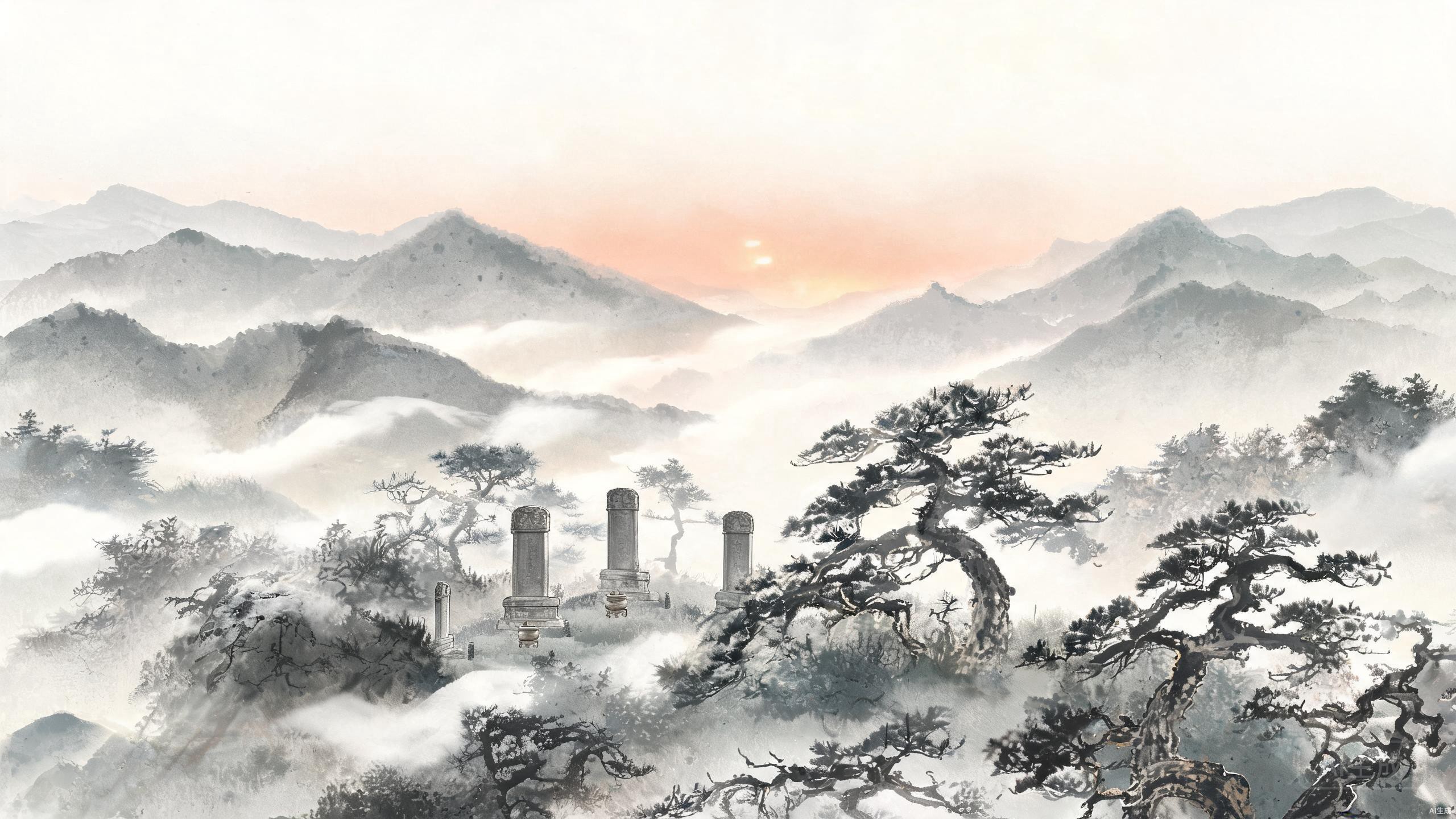
The Role of Sand Method in Yin Dwelling Feng Shui
The Sand Method (砂法) stands alongside the Dragon Method and Water Method as one of the three core techniques of Yin Dwelling Feng Shui (阴宅风水) — the practice of selecting and arranging ancestral burial sites.
In Feng Shui terminology, "Sand" (砂, sha) refers to the hills, elevated landforms, and protective ridges that surround a Feng Shui Point. Their essential function is to guard the burial site and achieve the principle of Storing Wind and Gathering Qi (藏风聚气).
Within the Five Essentials of Feng Shui — Dragon, Acupoint, Sand, Water, and Direction (龙穴砂水向) — Sand holds a position of critical importance. Well-formed Sand formations protect the burial site, block Sha Qi (煞气, harmful energy), and create a peaceful resting environment for the departed.
Cultural Context: Yin Dwelling Feng Shui concerns the placement and orientation of ancestral graves, based on the Chinese belief that the land chosen for burial influences the fortune and wellbeing of descendants — a concept known as Bloodline Resonance (血脉感应). While this practice may seem unfamiliar to Western readers, it shares kinship with the universal human desire to honor ancestors and create lasting legacies. The interplay of Yin and Yang — the dual forces of dark/light, passive/active — governs all Feng Shui applications.
Classification of Sand
Classification by Direction
The Four Celestial Animals (四象) — Azure Dragon, White Tiger, Vermilion Bird, and Black Tortoise — guard the four sides of an ideal burial site. Each carries distinct Feng Shui significance:
Vermilion Bird Sand (朱雀砂): The hill positioned in front of the Feng Shui Point, also known as the Desk Mountain (案山). Vermilion Bird Sand should never be taller than the burial site itself, as excessive height creates overwhelming pressure. Its shape should be dignified and graceful — like an elegant writing desk — symbolizing reliable support from those who approach with respect.
Black Tortoise Sand (玄武砂): The hill positioned behind the Feng Shui Point, known as the Backing Mountain (靠山). Black Tortoise Sand should be tall, solid, and stable, providing a dependable foundation for the site. It should not be too steep, nor should it contain gaps or breaks in its form.
Azure Dragon Sand (青龙砂): The hill on the left side of the Feng Shui Point. Azure Dragon Sand should be slightly taller than the White Tiger Sand on the right — symbolizing masculine, assertive energy. Its form should wind and undulate gracefully, as if a dragon is coiling protectively around the site.
White Tiger Sand (白虎砂): The hill on the right side of the Feng Shui Point. White Tiger Sand should be lower than the Azure Dragon on the left — symbolizing feminine, receptive energy. Its form should appear gentle and obedient rather than aggressive or threatening.
Classification by Function
Facing Mountain Sand (朝砂): Distant hills positioned far in front of the Feng Shui Point, resembling courtiers bowing in homage. Facing Mountain Sand symbolizes honor, prestige, and far-reaching ambition.
Desk Mountain Sand (案砂): Hills positioned closer in front of the Feng Shui Point, resembling a writing desk. These should be at eye level or slightly lower — symbolizing intimate, reliable support close at hand.
Guardian Sand (卫砂): Hills flanking both sides of the Feng Shui Point, acting as loyal sentinels. Guardian Sand protects the burial site from winds approaching from all directions — essential for achieving Storing Wind and Gathering Qi.
Water Mouth Sand (水口砂): The hills positioned at the Water Mouth (水口) — the point where water flows out of a site. Water Mouth Sand acts like a guardian locking the gateway, preventing Wealth Fortune (财运) from escaping with the current.
Quick Tips:
- When viewing a burial site, always check all four directional Sand formations — none should be missing or severely compromised
- Remember the core rule: Azure Dragon (left) should be slightly higher than White Tiger (right), and Vermilion Bird (front) should never tower above the Black Tortoise (back)
Determining Auspicious and Inauspicious Sand
Characteristics of Auspicious Sand
Auspicious Sand displays four key qualities that signal its supportive energy:
Dignified Form: Clear, well-defined contours with full,full and rounded shapes — free from fractures or deformities. Auspicious Sand resembles a dignified official: composed, substantial, and commanding respect.
Lush Vegetation: Dense, flourishing plant life and verdant trees signal abundant Vital Qi (生气). Sand that is barren or sparsely vegetated lacks the life force necessary to nourish the burial site.
Affectionate Orientation: Sand that faces toward the Feng Shui Point creates a welcoming, protective feeling — as if paying homage. Sand that turns away or faces another direction is considered "heartless" and offers no protection.
Proper Positioning: Sand placed at the appropriate height and distance — neither too high nor too low, neither too close nor too far. Properly positioned Sand effectively accomplishes Storing Wind and Gathering Qi.
Characteristics of Inauspicious Sand
Inauspicious Sand threatens the wellbeing of a burial site through these warning signs:
- Fierce Shapes: Sharp points, blade-like forms, or arrow-shaped ridges
- Improper Position: Too high creates oppressive pressure on the site; too low fails to provide protection
- Turning Away: Sand that faces away from the Feng Shui Point or points in contradictory directions
- Broken Forms: Evidence of collapse, fractures, or human destruction on the surface
Practical Application of the Sand Method
Five Elements Harmony
In practical Feng Shui work, the Five Elements (Wu Xing, 五行) attribution of Sand must harmonize with the Dragon Vein (龙脉) and the Feng Shui Point itself. When elements are in Mutual Generation (相生), the result is auspicious; when they are in Mutual Restriction (相克), the result is inauspicious.
Sand's elemental nature is determined primarily by its shape:
| Element | Shape Characteristic |
|---|---|
| Metal (金) | Rounded, smooth contours |
| Wood (木) | Sharp, pointed peaks |
| Water (水) | Flowing, undulating forms |
| Earth (土) | Square, level, stable shapes |
| Fire (火) | Reddish coloring, flame-like ridges |
Layers and Distance of Sand
The layering and distance of Sand formations are critical factors in determining their quality. The ideal arrangement features multiple concentric layers of Sand, progressing from low and near to high and far:
- Innermost Layer: Closest to the site, lowest in height
- Outer Layers: Progressively taller and more distant
Distance should be moderate — neither cramped nor excessive. Sand too close feels suffocating; Sand too far provides insufficient protection.
Compensating for Missing Sand
When a site's natural Sand formation is incomplete, artificial remedies can be employed:
- Plant Trees: Tall trees in missing positions can effectively substitute for natural Sand
- Build Features: Stone monuments or artificial hills placed at important Sand positions can enhance the protective effect
Quick Tips:
- When artificial Sand is used, choose evergreen species for year-round symbolic protection
- Stone markers should be solid and properly oriented toward the burial site
- Never use broken or damaged objects when creating compensatory Sand — they introduce harmful energy
Sand Method in Modern Environments
In contemporary urban settings, natural Sand formations are increasingly rare. Yet the principles of the Sand Method remain fully applicable — with adaptation:
- High-rise Buildings: Tall adjacent structures can function as Sand formations in city cemeteries
- Walls and Fences: Perimeter structures surrounding a cemetery serve as protective Sand
- Trees and Landscaping: Carefully planned greenery replicates the protective role of natural hills
In modern applications, the focus shifts to whether a location receives adequate shelter and enclosure from surrounding features. Avoid sites exposed to vast, open spaces without protection. Equally important: assess neighboring buildings and facilities for unfavorable elements such as sharp corners pointing toward the site, or reflective glass surfaces that create disturbing light effects.
Quick Tips:
- When evaluating a modern cemetery plot, walk the perimeter and identify which structures provide genuine protective coverage
- Note any sharp corners or pointed architectural features that directly face the site — these create Form Sha (形煞, harmful energy patterns)
- Heavy tree coverage, solid walls, and substantial neighboring buildings all represent favorable Sand energy
The Sand Method remains a vital component of Yin Dwelling Feng Shui. Mastery of its principles and applications is essential for anyone engaged in cemetery site selection and layout.
Important Considerations for Real-World Application
Feng Shui practice requires flexibility, integrating theoretical knowledge with real-world geography and practical conditions. Rigid adherence to textbook formulas leads to poor outcomes — as does over-reliance on any single method. An accomplished Feng Shui practitioner combines theory with practice, tradition with modernity.
Three guiding principles should inform every assessment:
Respect Nature: Never attempt to forcibly alter the natural environment. Work with the land's inherent characteristics rather than against them.
Use Holistic Judgment: Never base decisions on a single factor. Consider the complete picture — Dragon, Acupoint, Sand, Water, and Direction together.
Prioritize Practicality: Theoretical perfection does not guarantee practical feasibility. A workable solution that respects real constraints often serves better than an idealized plan that cannot be implemented.
A Modern Scientific Perspective
Many principles within traditional Feng Shui theory find surprising validation through modern science:
Microclimate Regulation: Sites positioned with mountain backing (挡寒风, shelter from cold winds) and water in front (调节气温, temperature moderation through water bodies) create genuinely favorable microclimates.
Drainage and Preservation: Well-drained, elevated sites avoid moisture accumulation and waterlogging — extending the structural integrity of burial chambers and protecting remains.
Environmental Observation: These Feng Shui principles represent centuries of careful observation of natural environments, embodying the wisdom of harmonious coexistence between humanity and nature. The modern practitioner should inherit and develop these traditional insights with both scientific rigor and cultural respect.
Cultural Context: Many Feng Shui principles that seem mystical at first glance turn out to be practical environmental wisdom. Ancient Chinese geomancers were skilled observers of landscape, climate, and topography — their recommendations often correlate directly with modern principles of site planning, environmental health, and sustainable design. The interplay of Yin and Yang — the dual forces of dark/light, passive/active — governs all Feng Shui applications.
Preservation and Evolution of Feng Shui Culture
Feng Shui represents one of the most profound contributions of traditional Chinese culture to humanity's understanding of the natural world. It embodies not only the ancient Chinese observation of geography and environment but also the deeper philosophical traditions of Chinese civilization.
As we preserve and transmit Feng Shui wisdom to future generations, we must also evolve — integrating the rational core of traditional Feng Shui with contemporary scientific understanding. This synthesis allows Feng Shui culture to thrive with renewed vitality in our modern era.
Related Articles
- [[../08-百科问答库/27-什么叫山管人丁水管财?.md|What Does "Mountains Govern People, Water Governs Wealth" Mean?]]
- [[../09-Yin Dwelling风水/56-Yin Dwelling风水中的龙法详解.md|Dragon Method in Yin Dwelling Feng Shui: A Complete Guide]]
- [[../09-Yin Dwelling风水/58-Yin Dwelling风水中的向法详解.md|Direction Method in Yin Dwelling Feng Shui: A Complete Guide]]
- [[../01-风水入门/18-风水中的藏风聚气.md|Storing Wind and Gathering Qi: The Core Principle of Feng Shui]]