Traditional Chinese Burial Feng Shui: Ancient Customs and Auspicious Practices
Traditional burial is the oldest and most time-honored funeral practice in China, with a history spanning several thousand years. In traditional Chinese culture, burial is regarded as the optimal meth
The Cultural Significance of Traditional Burial
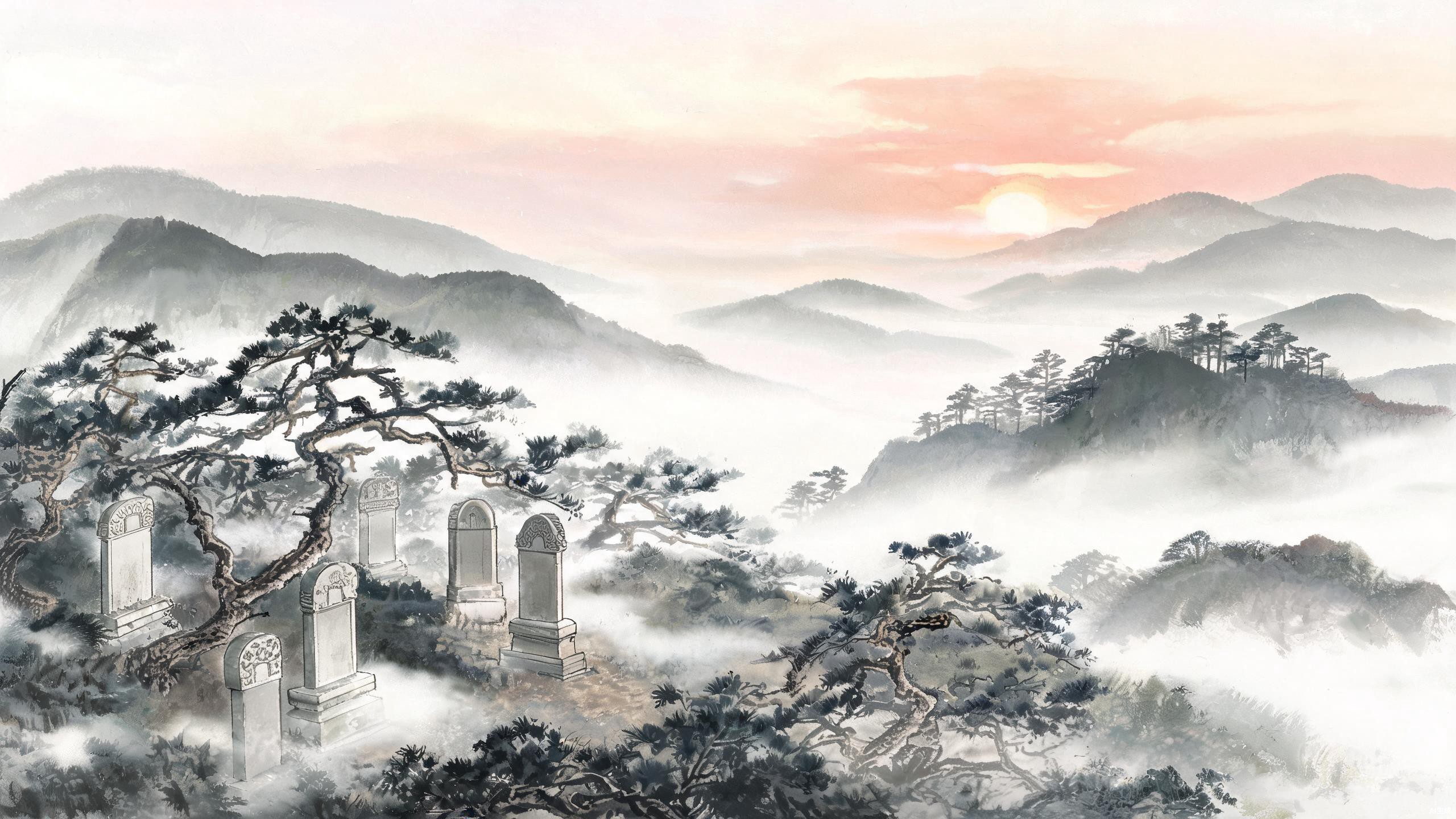
Traditional burial is the oldest and most time-honored funeral practice in China, with a history spanning several thousand years. In traditional Chinese culture, burial is regarded as the optimal method of "returning to the earth for eternal rest" (入土为安), reflecting deep respect for the deceased and harmony with natural laws.
From a Feng Shui perspective, burial places the deceased's body within the earth, allowing it to merge with Earth Qi (地气, dì qì). This method most closely aligns with the philosophical concept of the Unity of Heaven and Humanity (天人合一, tiān rén hé yī), and serves as the original foundation of Yin Dwelling Feng Shui theory.
Cultural Context: In Chinese metaphysics, Yin Dwelling Feng Shui (阴宅风水, yīn zhái fēng shuǐ) focuses on the burial sites and ancestral graves of family members. Practitioners believe that properly placed graves generate positive energy that flows through bloodline connections to benefit living descendants — a concept known as Bloodline Resonance (血脉感应). The interplay of Yin and Yang — the dual forces of dark/light, passive/active — governs all Feng Shui applications.
Core Feng Shui Principles of Traditional Burial
Returning to the Earth for Eternal Rest
The central principle of traditional burial is "returning to the earth for eternal rest" (入土为安). The coffin should be interred beneath the earth and covered with soil to form a burial mound. The burial depth must be carefully calibrated — too deep and Qi (气, qì) cannot circulate; too shallow and Qi easily disperses.
Generally, the distance from the top of the coffin to ground level should be approximately 1.5 to 2 meters. This depth ensures the peace of the deceased while maintaining a vital connection with the energies of the earth's surface.
Considerations for the Coffin
The coffin is a vital element in traditional burial. Wood is the primary material, with common choices including Chinese fir, cypress, and nanmu (Phoebe wood).
The selection of coffin material follows specific traditions:
- Chinese fir (杉木): Lightweight with excellentanti-decomposing properties, making it the most common choice
- Cypress (柏木): Dense and durable with a lasting fragrance, considered a high-grade option
- Nanmu (楠木): Superior quality with exceptionalanti-decomposing qualities, reserved for the finest burials
Traditional coffin colors also carry meaning. Red symbolizes auspiciousness and celebration, while black represents solemnity and reverence.
Excavating the Grave
Grave excavation must follow established guidelines. The size of the grave should correspond to the coffin dimensions — neither too large nor too small. The depth should accommodate the coffin plus an appropriate layer of covering soil.
The bottom of the grave must be level and even. Before placing the coffin, lime or草木灰 (plant ash) may be spread across the base to absorb moisture and prevent the coffin from decaying.
Site Selection Requirements for Traditional Burial
Topographical Requirements
The burial site must first meet topographical standards. Graves should be positioned on elevated ground with good drainage, avoiding low-lying, damp areas. The terrain should be flat and open, facilitating both excavation and interment.
Soil Quality Requirements
Soil composition significantly affects the outcome of traditional burial. Ideal soil should be moderately loose, well-aerated, and drain effectively. Excessively sandy soil tends to collapse, while overly clay-heavy soil impedes drainage.
Environmental Requirements
The surrounding environment of the burial site should be peaceful, beautiful, and tidy. Avoid locations near sources of pollution, excessive noise, or unsightly surroundings.
The Ceremonial Process of Traditional Burial
The Encoffining Ceremony (入殓)
Encoffining is the ritual of placing the deceased into the coffin. During this ceremony, the deceased is dressed in ceremonial burial garments and placed within the coffin. Personal items beloved by the deceased may be included as burial objects.
The Funeral Procession (出殡)
The funeral procession transports the coffin from the family home to the burial site. Family members accompany the coffin, mourning along the route. The procession path is chosen carefully, typically following auspicious directions.
The Interment Ceremony (下葬)
Interment is the ritual of lowering the coffin into the grave. This ceremony requires the selection of an auspicious time and is performed by experienced practitioners. Once the coffin is placed, family members fill the grave with earth, forming a burial mound.
The Memorial Stone Ceremony (立碑)
Following interment, a memorial stone is erected before the grave. The headstone bears the deceased's name, birth and death dates, and information about the person who commissioned the monument. An auspicious date is selected for this ceremony, accompanied by appropriate rituals.
Feng Shui Taboos in Traditional Burial
Avoiding Reburial
Reburial (重葬) refers to interring another person in an existing grave site. From a Feng Shui perspective, this is considered highly inauspicious. Reburial disturbs the original occupant and disrupts the site's energetic harmony.
Avoiding Prolonged Exposure
Once a grave has been excavated, the burial should proceed without delay. Prolonged exposure allows Vital Qi (生气, shēng qì) to dissipate and leaves the site vulnerable to other negative influences.
Preventing Direct Contact Between Coffin and Earth
The base of the coffin should not directly touch the soil. Wooden planks or stone slabs may be placed beneath the coffin to create a buffer from Earth Qi.
Changes in Modern Burial Practices
In contemporary society, traditional burial faces significant restrictions. Many regions now mandate cremation, with burial permitted only in designated areas.
Where traditional burial remains permitted, families must comply with relevant laws and regulations, selecting legal cemetery plots and completing all required documentation.
The Feng Shui principles underlying traditional burial form the foundation of Yin Dwelling Feng Shui theory. Although burial practices have evolved in modern times, the core principles retain meaningful reference value.
Practical Application Considerations
In actual Feng Shui practice, one must adapt theory to specific geographic conditions and real-world circumstances. Rigid adherence to textbook knowledge is as misguided as over-reliance on any single method. A skilled Feng Shui practitioner integrates theory with practice, tradition with modernity.
During practical application, several principles should guide your approach:
- Respect nature: Never force radical alterations to the natural environment
- Make holistic assessments: Avoid decisions based on a single isolated factor
- Consider practical feasibility: Theoretical perfection does not always translate to real-world viability
Quick Tips:
- Always consult local regulations before selecting a burial site — legal compliance is the foundation of ethical Feng Shui practice
- Document the site's exact location, orientation, and environmental features for future generations
- When uncertain, seek guidance from experienced practitioners who understand both classical theory and contemporary conditions
A Modern Scientific Perspective
Viewed through the lens of modern science, many principles within traditional Feng Shui theory possess rational scientific foundations. For example, selecting a site with a Backing Mountain (靠山) and Facing Water (背山面水) leverages mountains to block cold winds while utilizing water surfaces to moderate temperature — creating a favorable microclimate. Choosing elevated ground with good drainage prevents dampness and water accumulation, protecting the integrity of the burial site.
These Feng Shui principles represent the accumulated wisdom of ancient peoples' long-term observation of natural environments — embodying the philosophy of harmony between humanity and nature. In modern society, we should inherit and promote this traditional wisdom with a scientific attitude.
Cultural Context: The apparent "mystical" aspects of Feng Shui often reflect sophisticated empirical observation. Ancient practitioners lacked modern meteorological instruments but developed highly accurate intuitions about wind patterns, solar exposure, and water flow — insights that modern environmental science increasingly validates. The interplay of Yin and Yang — the dual forces of dark/light, passive/active — governs all Feng Shui applications.
The Transmission and Evolution of Feng Shui Culture
As a vital component of traditional Chinese culture, Feng Shui retains significant cultural value in contemporary society. It represents not only ancient understanding of the natural environment but also the crystallization of Chinese civilizational wisdom. Studying Feng Shui culture deepens our appreciation of traditional Chinese heritage.
As we transmit Feng Shui culture, we must also move with the times — integrating the rational core of traditional Feng Shui with modern science, allowing this ancient wisdom to flourish with renewed vitality in our era.
Related Articles
- [[../05-命理与运势/09-面相断Yin Dwelling风水.md|Face Reading and Yin Dwelling Feng Shui: Reading Burial Sites Through Facial Features]]
- [[../07-风水故事/58-风水与丧葬.md|Feng Shui and Funeral Customs: The Ancient Tradition of Yin Dwelling]]
- [[../07-风水故事/01-曾国藩葬地择选记.md|Zeng Guofan's Burial Site Selection: The Feng Shui Wisdom of "Heaven Dislikes Cunning"]]
- [[../08-百科问答库/50-墓碑有什么风水讲究?墓碑朝向怎么定?.md|Feng Shui Considerations for Memorial Stones: How to Determine Headstone Orientation]]
Note on the Five Elements: The Five Elements (Wu Xing) — Wood, Fire, Earth, Metal, and Water — form the foundation of Feng Shui energy theory. Each element interacts with the others in cycles of generation and control, influencing the Qi flow in your environment.