Yin Dwelling Feng Shui: Common Form Sha and How to Dissolve Harmful Energy in Burial Site Selection
In Feng Shui, Form Sha (形煞, xíng shà) refers to negative energy generated by unfavorable shapes of terrain, buildings, or other objects. Form Sha requires special attention in Yin Dwelling (阴宅) site s
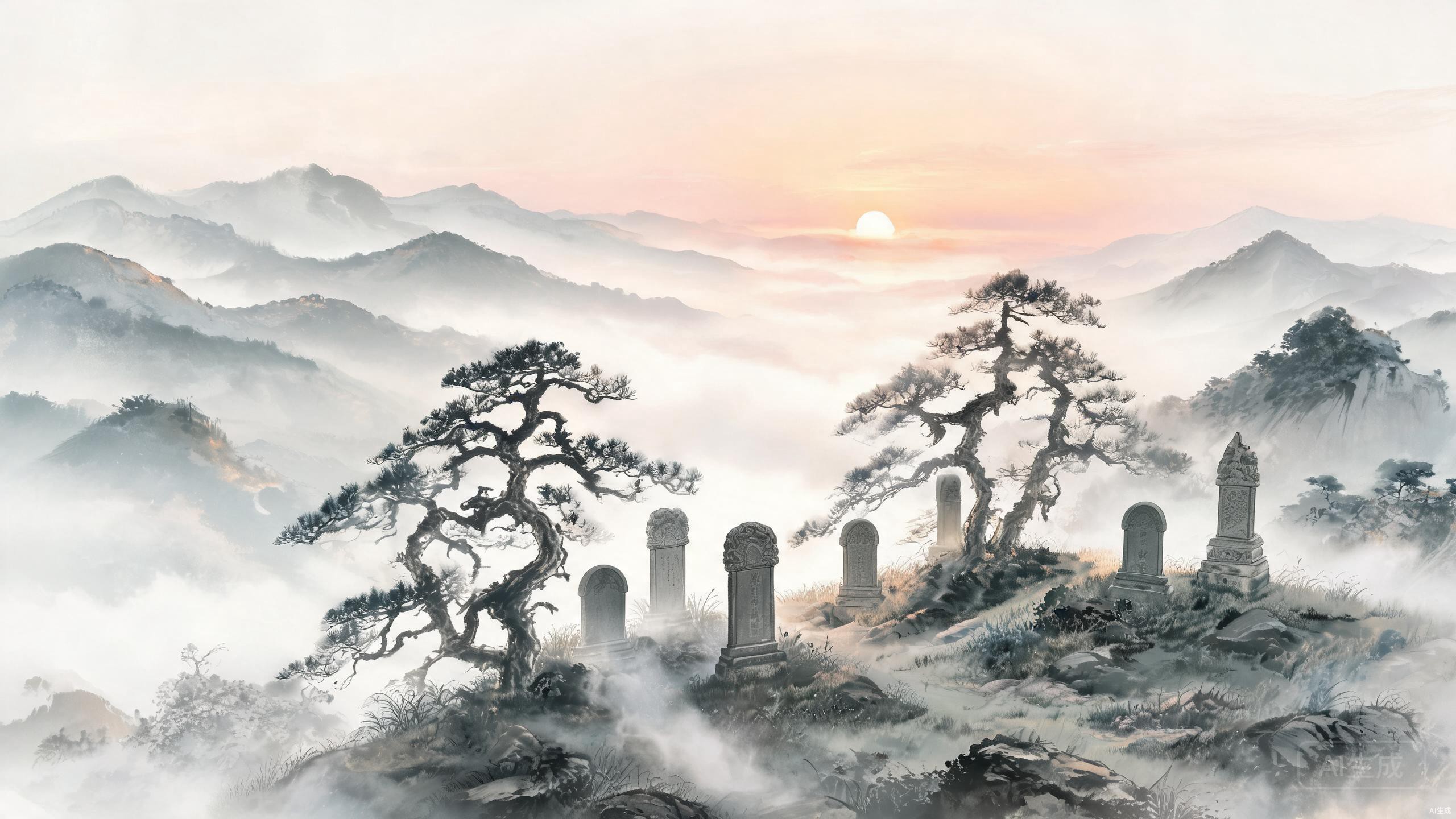
Understanding Form Sha: The Basics
In Feng Shui, Form Sha (形煞, xíng shà) refers to negative energy generated by unfavorable shapes of terrain, buildings, or other objects. Form Sha requires special attention in Yin Dwelling (阴宅) site selection, because it can disrupt the Feng Shui energy field of a burial site — affecting both the peace of the departed and the fortune of their descendants.
There are many types of Form Sha, each with distinct manifestations and varying levels of impact. Understanding common Form Sha and their remedies is an essential skill in Yin Dwelling Feng Shui practice.
Cultural Context: Yin Dwelling Feng Shui focuses on ancestral graves, based on the principle of "Bloodline Resonance" (血脉感应) — the belief that the fortunes of descendants remain energetically connected to their ancestors' resting place. This is why Form Sha at a burial site is considered especially serious: it affects not just one person, but generations.
Common Form Sha and Their Effects
Road Rushing Sha (路冲煞)
Road Rushing Sha forms when a road points directly at a burial site. Like an arrow aimed at the grave, the road generates an intense rushing force that destabilizes the site's energy field. The severity depends on the road's width, length, and traffic volume.
How to Remedy:
- Erect barriers between the road and the burial site — plant trees, build walls, or place stone tablets
- Position a Shi Gan Dang (Taishan Stone Tablet) in front of the grave to block the rushing Sha Qi
Sharp Corner Sha (尖角煞)
Sharp Corner Sha forms when a building's corner, a pointed mountain peak, or other sharp object points directly at a burial site. Like a blade aimed at the grave, this creates piercing, concentrated Sha Qi.
How to Remedy:
- Create barriers between the grave and the sharp corner — plant trees or build walls
- Hang a Bagua Mirror (八卦镜) or convex mirror facing the sharp corner to reflect the Sha Qi back
Reverse Bow Sha (反弓煞)
Reverse Bow Sha forms when a road, river, or building curves outward — like a drawn bow — facing the burial site. This outward-bending shape creates a pulling force that drains energy and wealth away from the site.
How to Remedy:
- Place barriers between the grave and the reverse bow — trees or walls
- Arrange a "Jade Belt Around the Waist" (玉带环腰) configuration around the burial site to counter the outward-pulling force
High-Voltage Sha (高压煞)
High-Voltage Sha forms when power transmission towers, high-voltage lines, or electrical substances are positioned near a burial site. These facilities generate strong electromagnetic fields that disturb the site's energy stability.
How to Remedy:
- Select burial sites far from high-voltage infrastructure whenever possible
- If relocation isn't an option, plant tall trees between the grave and the power facility to absorb electromagnetic interference
Sound Sha (声煞)
Sound Sha forms when continuous noise — from highways, railways, airports, or factories — affects a burial site. Prolonged high-decibel noise disrupts energy field stability and disturbs the peace of the departed.
How to Remedy:
- Choose burial sites in quiet locations, away from noise sources
- If avoidance isn't possible, plant dense trees or build walls to reduce noise transmission
Mountain and Water Form Sha
Evil Mountain Sha (恶山煞) forms when a burial site faces a mountain with threatening features — sharp peaks, fragmented rock formations, or barren hills with no vegetation.
Remedy: Avoid facing such mountains when selecting a site. If avoidance is impossible, plant trees or build barriers between the grave and the threatening mountain.
Evil Water Sha (恶水煞) forms when water near the burial site has poor quality or unfavorable shape — murky water, foul-smelling water, stagnant pools, or Reverse Bow water (curving away from the site).
Remedy: Avoid locations near evil water. If avoidance isn't possible, purify the water and improve the surrounding water environment to dissolve the harmful energy.
Cultural Context: In Feng Shui theory, water quality and shape directly reflect the quality of Qi at a site. Stagnant or foul water suggests blocked, unhealthy Qi, while clean, gently flowing water indicates vibrant, nourishing energy — which is why burial sites traditionally favor flowing, clean water nearby.
Core Principles for Dissolving Form Sha
The first and most important principle is avoidance. During site selection, actively avoid all forms of Form Sha and choose a peaceful, auspicious location. Avoidance is the simplest and most effective remedy available.
When avoidance isn't possible, the second principle is blocking. Create physical barriers to interrupt the path of harmful energy.
On top of blocking, the third principle is dissolution. Place Feng Shui objects designed to neutralize Sha Qi and transform harmful energy into balanced energy.
Practical Application Guidelines
Effective Feng Shui practice requires adapting theory to specific geographic conditions and real-world circumstances. Never apply textbook knowledge rigidly, and never rely on a single method alone. A skilled Feng Shui practitioner combines theory with practice and tradition with modernity — an integrated approach.
During site work, keep these three principles in mind:
- Respect nature: Never force changes to the natural environment
- Holistic assessment: Make decisions based on multiple factors, not isolated observations
- Practical feasibility: Theoretical perfection doesn't always mean real-world viability
Quick Tips:
- Always survey a burial site across multiple visits and seasons before making final decisions — energy patterns shift over time
- Document the surrounding environment with photos and notes to track changes and patterns
- Consult with experienced practitioners when encountering unfamiliar terrain
A Modern Scientific Perspective
From a modern scientific viewpoint, many traditional Feng Shui principles contain reasonable, evidence-based logic. For example:
- Selecting a site backed by a mountain and facing water uses the terrain to block cold winds while the water body moderates temperature — creating an ideal microclimate
- Choosing elevated, well-drained ground prevents moisture accumulation and protects the grave's structural integrity
These Feng Shui principles represent centuries of careful observation and synthesis by ancient practitioners — embodying a wisdom of harmony between humanity and nature. In our modern era, we should approach this inheritance with a scientific mindset while honoring its traditional roots.
Preserving and Evolving Feng Shui Culture
As a vital component of Chinese traditional culture, Feng Shui retains significant cultural value in modern society. It is more than ancient environmental knowledge — it represents the crystallized wisdom of Chinese civilization. Studying Feng Shui deepens our understanding of traditional Chinese cultural heritage.
As we preserve this tradition, we should also evolve with the times: integrating the practical wisdom of Feng Shui with modern science allows this ancient art to thrive in a new era.
Identifying and Assessing Form Sha
Identifying Form Sha is a critical step in Yin Dwelling site selection. Form Sha includes any terrain, landform, or man-made structure that creates unfavorable Feng Shui patterns. Common examples include:
- Road Rushing Sha: Roads pointing directly at the grave
- Sharp Corner Sha: Sharp building corners or pointed mountain ridges facing the site
- Reverse Bow Sha: Roads or waterways curving outward away from the site
- High-Voltage Sha: Power transmission towers or high-voltage lines
Identifying Form Sha requires careful observation of the surrounding environment and awareness of all potential adverse factors. When assessing impact, consider location, distance, and direction. The same type of Form Sha can produce wildly different effects depending on where and how far it sits relative to the burial site — each situation requires individual analysis.
How to Conduct a Site Assessment
- Walk the perimeter: Observe the site from at least eight angles to identify all surrounding features
- Note distances: Measure approximate distances to roads, structures, and natural features
- Check sight lines: From the proposed grave position, identify anything pointing directly at the site
- Observe water flow: Note the direction, speed, and quality of any nearby water
- Record findings: Document everything with photos and a simple site map for ongoing reference
The Cultural Legacy of Feng Shui
Feng Shui embodies the Chinese nation's profound understanding of nature and life — a precious cultural inheritance from our ancestors. In today's technologically advanced society, the principles of respecting nature and pursuing harmony that Feng Shui represents remain deeply relevant.
By studying Feng Shui, we gain not only insight into traditional culture but also practical wisdom to bring greater peace and security to our lives and families. When approaching Feng Shui, we should maintain a rational, scientific attitude: honoring tradition while moving with the times, so this ancient wisdom continues to serve modern society in positive ways.
Quick Tips:
- Treat Feng Shui as a complement to modern planning — not a replacement
- The most powerful "remedy" is always thoughtful site selection from the start
- Respect local customs and regulations when applying any Feng Shui practice
Related Articles
- [[../08-百科问答库/05-什么是煞气?常见的风水形煞有哪些?.md|What Is Sha Qi? Common Feng Shui Form Sha Explained]]
- [[../01-风水入门/25-风水中的五黄煞与化解.md|Five Yellow Sha in Feng Shui and How to Dissolve It]]
- [[../02-家居风水/11-风水形煞识别与化解.md|Feng Shui Form Sha: Identification and Remedies for Common Harmful Energy]]
- [[../02-家居风水/51-租房风水指南.md|Rental Feng Shui Guide: Adjusting Energy and Remedies for Temporary Homes]]