Yin Dwelling Feng Shui: Complete Guide to Acupoint Methods for Auspicious Burial Sites
The Acupoint Method (穴法, xue fa) is the most profound technique within Yin Dwelling Feng Shui (阴宅风水) — and the decisive factor in determining a burial site's energetic effectiveness. > Cultural Contex
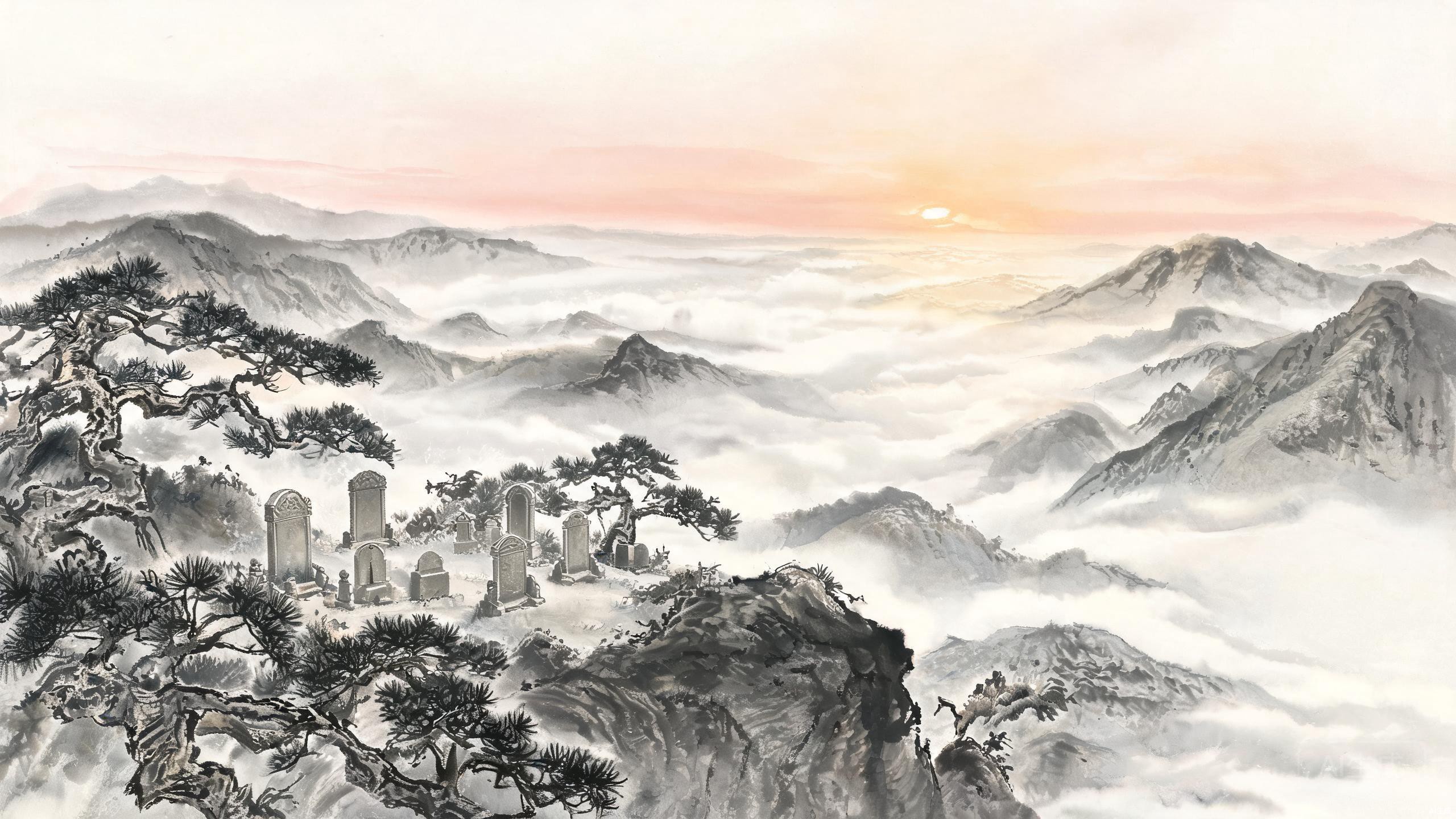
The Significance of Acupoint Methods in Yin Dwelling Feng Shui
The Acupoint Method (穴法, xue fa) is the most profound technique within Yin Dwelling Feng Shui (阴宅风水) — and the decisive factor in determining a burial site's energetic effectiveness.
Cultural Context: In Feng Shui, "Yin Dwelling" refers to burial grounds for the deceased, while "Yang Dwelling" refers to homes for the living. Traditional practitioners believed that an auspicious grave site continues to influence the fortune and well-being of descendants through a concept known as Bloodline Resonance (血脉感应).
An acupoint (穴, xue) is the optimal location along a Dragon Vein (龙脉, long mai) where Vital Qi (Sheng Qi, 生气) concentrates — the precise spot where the deceased should be laid to rest. The core of the Acupoint Method is "Pointing the Acupoint" (点穴): locating the single point on a Dragon Vein where life energy is most powerfully concentrated.
The ancient saying "Three years to seek the dragon, ten years to point the acupoint" reveals how much more demanding acupoint identification is than locating a Dragon Vein itself. A superior acupoint gathers Vital Qi to its maximum capacity, providing peace for the departed while channeling blessings to their descendants.
The Constituent Elements of an Acupoint
Acupoint Star (穴星)
The Acupoint Star is the mountain peak or hill at which the acupoint is located — the structural body of the burial site. It should appear rounded, dignified, and gracefully formed, like a plump fruit ready to be picked. The shape and quality of the Acupoint Star directly determine the acupoint's rank and its auspicious or inauspicious nature.
Acupoint Stars are classified by the Five Elements (Wu Xing) into five types:
| Type | Characteristics |
|---|---|
| Metal Star (金星穴) | Rounded, dome-like shape |
| Wood Star (木星穴) | Tall, upright, towering form |
| Water Star (水星穴) | Wavy, undulating profile |
| Fire Star (火星穴) | Sharp, pointed peaks |
| Earth Star (土星穴) | Square, level, stable form |
Acupoint Field (穴场)
The Acupoint Field is the surrounding area where the burial activities take place — the operational space around the acupoint. It should be open and flat, with lush vegetation and dry, solid ground. The field should not be overly narrow or steep, nor should it retain standing water or feel damp.
Acupoint Evidence (穴证)
Acupoint Evidence refers to the physical signs and features that confirm an acupoint's quality, including soil composition, vegetation, and hydrology. Common indicators include:
- Pure soil color — Reddish-yellow and the five auspicious colors are considered best
- Fine soil texture — Not overly sandy or rocky
- Thriving vegetation — Trees and plants grow vigorously nearby
- Water presence — Natural springs or streams flow close by
Methods for Pointing the Acupoint
Form Discrimination Method (辨形法)
This method identifies the acupoint by observing the terrain — analyzing the Dragon Vein's path, the embracing Sand (砂, surrounding mountains), and the curving Water (水) features to determine the precise burial location. The key principle is Storing Wind and Gathering Qi (藏风聚气).
Qi Sensing Method (察气法)
This method identifies the acupoint by perceiving changes in the energy field. Experienced Feng Shui masters can judge the intensity and nature of Qi through bodily sensation. Qi sensing is typically performed at dawn or dusk, when the energy field is most stable.
Quick Tip: While modern practitioners rarely rely solely on bodily sensation, paying attention to how a location "feels" — calm and grounded versus exposed and restless — remains a valuable intuitive check.
Acupoint Verification Method (证穴法)
This method confirms the acupoint by searching for physical evidence. For example, digging soil at a candidate location: if the soil color is pure and the texture fine, the acupoint's quality is confirmed as favorable.
Classification of Acupoints by Rank
By Pattern Scale
Acupoints are classified by the scale of their pattern into imperial, feudal lord, official, and commoner grades:
- Imperial Acupoint (天子穴): The grandest pattern, typically located along a Trunk Dragon (干龙) of the main Dragon Vein, with mountains embracing and water surrounding in magnificent scale
- Feudal Lord Acupoint (诸侯穴): Substantial pattern for nobility
- Official Acupoint (官宦穴): Mid-grade pattern suited to scholars and officials
- Commoner Acupoint (平民穴): Smaller pattern located near the end of a Branch Dragon (支龙)
By Quality
Acupoints are also classified by quality into three categories:
- True Acupoint (真穴): Possesses all favorable conditions and effectively gathers Vital Qi
- False Acupoint (假穴): Appears to be valid but lacks the conditions for Storing Wind and Gathering Qi
- Depleted Acupoint (废穴): Has lost function due to environmental damage or natural causes
Important Considerations When Pointing the Acupoint
Avoid Excess and Deficiency
Accuracy is paramount when pointing an acupoint. The position should not be too high or too low, too deep or too shallow. The acupoint's location should resemble a human navel — positioned at the very center of the Dragon Vein's Vital Qi.
Comprehensive Assessment
Pointing an acupoint cannot rely on a single factor alone. It requires integrated consideration of the Dragon, Sand, Water, and Direction (向). A superior acupoint must demonstrate favorable conditions across all dimensions.
Respect for Nature
Pointing the acupoint should honor the natural landscape and adapt to existing topography — never forcibly reshape the environment. When natural conditions fall short, seek an alternative location rather than imposing artificial changes.
Acupoint Methods in Modern Environments
In today's highly urbanized world, completely natural acupoint sites have become increasingly rare. Yet this does not render the Acupoint Method obsolete. Even within public cemeteries, practitioners can select relatively favorable positions by following the fundamental principles.
Modern acupoint identification can integrate tools such as map analysis and geological surveys to assess site quality from a scientific perspective. At the same time, traditional Feng Shui principles serve as a valuable reference for making more comprehensive judgments.
The Acupoint Method is the ultimate goal of Seeking Dragon and Pointing Acupoint (寻龙点穴). Mastering its principles and applications is decisive for site selection and layout in Yin Dwelling practice.
Practical Application Guidelines
In real-world Feng Shui practice, theory must be adapted to the specific geographical environment and actual circumstances. Rigid textbook formulas and over-reliance on any single method should both be avoided. A competent Feng Shui practitioner combines theory with practice, tradition with modernity.
During actual operations, observe the following principles:
- Respect nature fully — Do not forcibly alter the natural environment
- Emphasize comprehensive judgment — Never decide based on a single factor
- Consider practical feasibility — Theoretical perfection does not guarantee practical viability
A Modern Scientific Perspective
From a modern scientific viewpoint, many traditional Feng Shui principles rest on sound ecological reasoning. For example:
- Choosing a site backed by a mountain and facing water allows the landform to block cold winds while the water moderates temperature, creating a favorable microclimate
- Selecting elevated, well-drained ground prevents moisture and pooling, protecting the integrity of the burial chamber
These principles are, in essence, the accumulated wisdom of generations observing the natural environment — embodying the philosophy of harmony between humanity and nature. In modern society, we should approach this heritage with scientific respect and carry it forward.
Cultural Context: The Chinese concept of "Unity of Heaven and Humanity" (天人合一, tian ren he yi) underpins this integration of landscape observation and human well-being — a holistic worldview seeing humans not as separate from nature, but as participants within a single living system.
Preserving and Developing Feng Shui Culture
Feng Shui, as a vital component of traditional Chinese culture, retains significant cultural value in modern society. It represents not only the ancient Chinese understanding of the natural environment but also the crystallized wisdom of Chinese civilization. Studying Feng Shui culture helps us better appreciate the essence of traditional Chinese thought.
While preserving this heritage, we should also move with the times — integrating the rational core of traditional Feng Shui with modern science, so that Feng Shui culture can radiate new vitality in our era.
Comprehensive Evaluation of Acupoint Quality
Evaluating acupoint quality requires synthesizing multiple factors; no single indicator is sufficient. Assessment must proceed across multiple dimensions: the Dragon Vein, Sand, Water, and Direction.
A superior acupoint should meet the following conditions:
- Located at the convergence point of the Dragon Vein's Vital Qi
- Surrounded by appropriate Sand (砂) for protection and embrace
- Nearby clear, flowing Water (水)
- Facing an auspicious Direction (向)
These five are inseparable and must be weighed holistically. In practice, trade-offs may be necessary depending on circumstances, but the overall aim should be balance and harmony across all dimensions.
Remember: Feng Shui seeks to balance Yin and Yang energies — the dual forces that shape all existence.
How to Apply Acupoint Principles Today
Even if you are not selecting a burial site, the underlying principles of acupoint selection apply to any important space:
- Seek energetic support: Place important rooms (bedroom, home office) in locations with backing support — solid walls, hills, or taller buildings behind
- Embrace with protection: Ensure gentle "embracing" structures on either side — smaller buildings, trees, or fences — to create a sheltered feeling
- Include flowing energy: Position the space to face gentle, curved pathways rather than straight, fast roads
- Verify through evidence: Look for signs of thriving life — healthy vegetation, good drainage, stable soil
Quick Tips:
- When visiting a cemetery, observe whether the site feels sheltered yet open — neither exposed to harsh winds nor boxed in
- Avoid sites at the bottom of valleys where water pools, or on exposed hilltops where wind strikes directly
- A site with mature, healthy trees nearby is often a sign of stable, nourishing Earth Qi
Related Articles
- [[../08-百科问答库/27-什么叫山管人丁水管财?.md|What Does "Mountains Govern Population, Water Governs Wealth" Mean?]]
- [[../09-Yin Dwelling风水/56-Yin Dwelling风水中的龙法详解.md|Yin Dwelling Feng Shui: Complete Guide to Dragon Methods]]
- [[../09-Yin Dwelling风水/55-Yin Dwelling风水中的砂法详解.md|Yin Dwelling Feng Shui: Complete Guide to Sand Methods]]
- [[../01-风水入门/18-风水中的藏风聚气.md|The Feng Shui Principle of "Storing Wind and Gathering Qi"]]