Yin Dwelling Feng Shui: Complete Guide to Direction Methods for Ancestral Graves
Direction Methods (向法) represent the final and synthesizing principle of the Five Essentials (龙穴砂水向) in Yin Dwelling Feng Shui (Yin Zhai Feng Shui). The Five Essentials are: Dragon, Acupoint, Sand, Wa
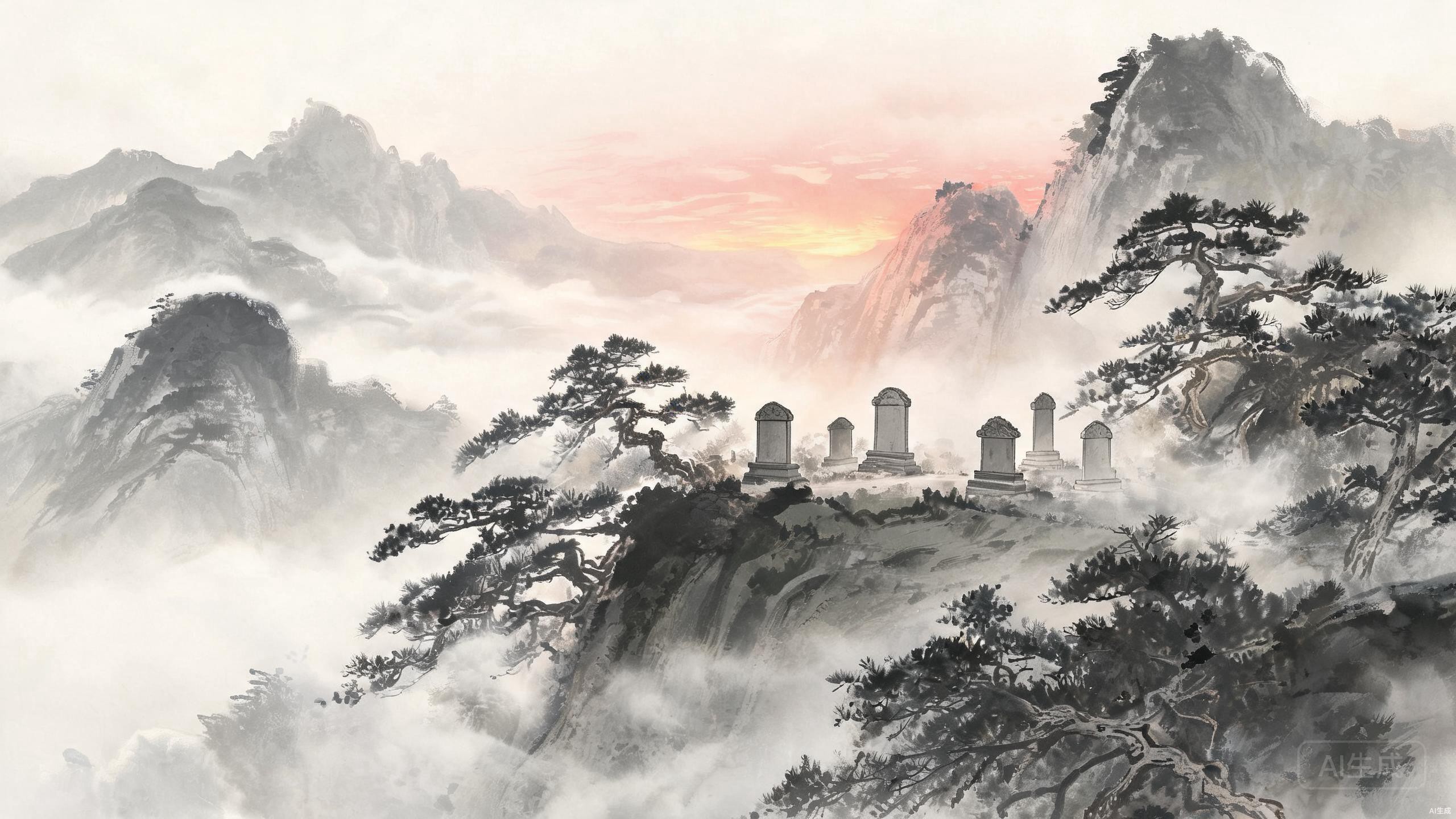
The Role of Direction Methods in Yin Dwelling Feng Shui
Direction Methods (向法) represent the final and synthesizing principle of the Five Essentials (龙穴砂水向) in Yin Dwelling Feng Shui (Yin Zhai Feng Shui). The Five Essentials are: Dragon, Acupoint, Sand, Water, and Direction. While the first four principles identify and shape a site's potential, Direction Methods determine the precise orientation that activates all of them together.
"Direction" (向) refers to the facing orientation of the grave, and Direction Methods are the techniques used to determine this facing.
Cultural Context: In Yin Dwelling Feng Shui, ancestors are believed to maintain a subtle energetic connection with their descendants. Properly aligning the grave helps this connection flow smoothly, channeling blessings and protection to the family — much like how aligning a solar panel to face the sun maximizes energy collection.
A well-chosen orientation allows the grave to receive and utilize the auspicious Qi of nature to the fullest extent, harmonizing the effects of Dragon, Acupoint, Sand, and Water. Direction Methods are truly the finishing brushstroke that brings the entire Feng Shui composition to life.
Core Principles for Setting Direction
The Principle of Riding Vital Qi
Riding Vital Qi (乘生气, cheng sheng qi) is the foremost principle in setting direction. The grave's orientation should align with the flow direction of the Dragon Vein's Vital Qi (Sheng Qi) to maximize the reception of nature's auspicious energies.
The Principle of Avoiding Inauspicious and Seeking Auspicious
When determining direction, you must avoid unfavorable orientations and select auspicious ones. On the Luopan (Feng Shui Compass), every direction carries its own auspicious or inauspicious meaning — the choice must be made according to specific circumstances.
The Principle of Harmony and Unity
The grave's orientation must harmonize with the surrounding environment, forming a unified whole. The choice of direction should never conflict with the terrain, landforms, or nearby structures.
The Basis for Setting Direction
Direction Based on the Dragon
The path of the Dragon Vein (long mai) is the primary basis for setting direction. The grave should align with the Dragon's course, following the natural flow of Vital Qi. Generally, the orientation should match the Dragon Vein's direction or form a specific beneficial angle with it.
Direction Based on Water
The direction of water flow is another critical factor. The grave should coordinate with the water's course to welcome incoming Wealth Fortune (财运). Ideally, the grave should face the direction from which water flows, or face the curve where water embraces the site.
Direction Based on Sand
The protective embrace of Sand (sha) — surrounding hills and structures — also influences direction selection. The grave should face the open mouth of the Sand's embrace, meaning the front should open onto spacious terrain.
Specific Methods for Setting Direction
Measuring the Orientation
The first step is accurately measuring the grave's orientation. Traditional Feng Shui uses the Luopan for this measurement, reading the compass degrees to determine the facing direction.
Selecting the Direction
Based on the measurement and combined analysis of Dragon, Sand, and Water factors, choose an appropriate direction. This selection requires balancing multiple factors — no single element should dominate the decision.
Determining the Precise Degree
After selecting a general direction, you must refine it to the exact degree. The Feng Shui Compass divides the full circle into 360 degrees, with each direction carrying its own auspicious or inauspicious significance. When fine-tuning the precise degree, you must consider the Dragon Vein's Five Elements (Wu Xing) attribute, the deceased's BaZi (Eight Characters, bā zì) birth chart, and the timing of the burial.
Judging Auspicious and Inauspicious Directions
The Twenty-Four Mountains and Directions
On the Luopan, the full circle is divided into twenty-four equal segments of 15 degrees each, called the Twenty-Four Mountains (二十四山). Each Mountain-direction carries its own meaning of fortune.
Auspicious vs. Inauspicious Directions
Among the Twenty-Four Mountains and Directions, some are considered auspicious while others are considered inauspicious. However, judgments of Auspicious and Inauspicious (吉凶, ji xiong) are never absolute — they must be evaluated in context of the specific time, location, and individuals involved.
Cultural Context: This contextual flexibility is one of Feng Shui's most sophisticated features. Rather than offering rigid rules, classical Feng Shui teaches practitioners to read patterns like a skilled physician reads symptoms — the same surface condition may require opposite treatments in different patients.
Direction and the Five Elements
The fortune of a direction is also tied to its Five Elements (Wu Xing) attribute. Different directions carry different elemental qualities that must be matched against the deceased's elemental preferences and taboos.
Common Errors in Setting Direction
Choosing an Inauspicious Direction
The most frequent mistake is selecting an unfavorable direction — such as facing the Five Yellow Sha position or the Two Black Sha position (both considered highly inauspicious star locations).
Direction Mismatched with the Dragon Vein
Another common error occurs when the grave's direction conflicts with the Dragon Vein's course — for example, if the Dragon runs from west to east, but the grave faces west, turning its back against the incoming Vital Qi.
Direction Mismatched with Water Flow
Similarly, the grave's orientation may fail to align with the water's path — such as when water flows in from the north, but the grave faces south, with its back to the life-giving current.
How to Avoid These Common Mistakes
- Always measure with a Luopan first: Never rely on visual estimation or phone compass apps — magnetic declination and local variations matter
- Cross-check Dragon, Sand, and Water: Ensure your chosen direction harmonizes with at least two of these three factors
- Consult the Twenty-Four Mountains: Verify that your selected degree falls within an auspicious range, not in the path of Sha Qi (harmful energy)
- Account for the deceased's BaZi: The Five Elements needs of the departed should align with the direction's elemental quality
Direction Methods in Modern Environments
In contemporary public cemeteries, choices for setting direction are often restricted. Graves are typically arranged in orderly rows, with orientations predetermined by the cemetery's overall plan. In such cases, you can only select the relatively best option from a limited range.
When some choice exists within a cemetery, prioritize these factors:
- An open, spacious view ahead
- Abundant sunlight
- Pleasant landscape in the facing direction
- Avoidance of Form Sha (harmful structural energy) such as sharp corners, electrical poles, or large looming structures nearby
Direction Methods, as the final principle of the Five Essentials, serve as the critical synthesis that brings together the previous four. Mastering the theory and application of Direction Methods plays a decisive role in ensuring the effectiveness of Yin Dwelling Feng Shui.
Practical Application Notes
In real Feng Shui practice, you must adapt theory to the specific geographic environment and actual conditions. Rigidly applying textbook formulas leads to poor results, as does over-relying on any single method. A skilled Feng Shui practitioner combines theory with practice, tradition with modernity.
During fieldwork, keep these principles in mind:
- Respect nature: Never forcefully alter the natural environment — work with it, not against it
- Make comprehensive judgments: Never decide based on a single factor in isolation
- Consider practical feasibility: Theoretical perfection does not always equal practical viability
Quick Tips:
- When multiple auspicious directions are available, choose the one that best matches the deceased's elemental needs
- Always verify your Luopan reading in two different positions to rule out local magnetic interference
- Document your measurements and reasoning — this creates a record for future adjustments and helps you refine your skills over time
A Modern Scientific Perspective
From a modern scientific standpoint, many traditional Feng Shui principles have rational explanations. For example, choosing a location with a mountain behind and water in front can leverage the mountain to block cold winds while using the water body to moderate temperature — creating a favorable microclimate. Selecting well-drained elevated ground avoids moisture and pooling, helping preserve the grave's structural integrity.
These Feng Shui principles represent the cumulative wisdom of ancient peoples who observed and summarized natural patterns over millennia. They embody the wisdom of harmony between humanity and nature. In contemporary society, we should inherit and promote this traditional wisdom with a scientific attitude.
The Transmission and Development of Feng Shui Culture
As an essential component of traditional Chinese culture, Feng Shui retains significant cultural value in modern society. It is not only the ancients' understanding and synthesis of the natural environment — it is also a crystallization of Chinese civilizational wisdom. Studying Feng Shui culture helps us better appreciate the essence of traditional Chinese thought.
While preserving this heritage, we must also keep pace with the times — integrating the rational core of traditional Feng Shui with modern science, so this ancient knowledge can flourish with renewed vitality in our era.
The Integrated Application of Direction Methods
Applying Direction Methods requires synthesizing multiple factors: Dragon, Acupoint, Sand, and Water. An ideal direction should harmonize with the Dragon Vein's path, coordinate with the Acupoint's shape, echo the Sand's protective embrace, and adapt to the water's flow.
When determining direction, use the Luopan for precise measurement, taking care to eliminate interference factors and ensure data accuracy. Additionally, combine Li Qi (Compass Energy) analysis to account for time-based influences such as the current Yuan Yun (元运, Time Period), Annual Flying Stars (流年飞星), and other temporal factors. Only by synthesizing all these considerations can you identify the truly optimal direction.
Quick Tip: The most common beginner mistake is measuring direction once and assuming it's correct. Experienced practitioners always take multiple readings from different points around the grave site, averaging out anomalies caused by metal objects, underground pipes, or local magnetic disturbances.
Related Articles
- [[../08-百科问答库/27-什么叫山管人丁水管财?.md|What Does "Mountain Governs People, Water Governs Wealth" Mean?]]
- [[../09-Yin Dwelling风水/56-Yin Dwelling风水中的龙法详解.md|Yin Dwelling Feng Shui: Complete Guide to Dragon Methods]]
- [[../09-Yin Dwelling风水/55-Yin Dwelling风水中的砂法详解.md|Yin Dwelling Feng Shui: Complete Guide to Sand Methods]]
- [[../01-风水入门/18-风水中的藏风聚气.md|Storing Wind and Gathering Qi: The Core Principle of Feng Shui]]