Yin Dwelling Feng Shui: Complete Guide to Water Methods for Ancestral Graves
In Yin Dwelling Feng Shui (阴宅风水, yín zhái fēng shuǐ) — the practice of placing ancestral graves — water methods hold a position of extraordinary importance. Classical Feng Shui teaching states that "o
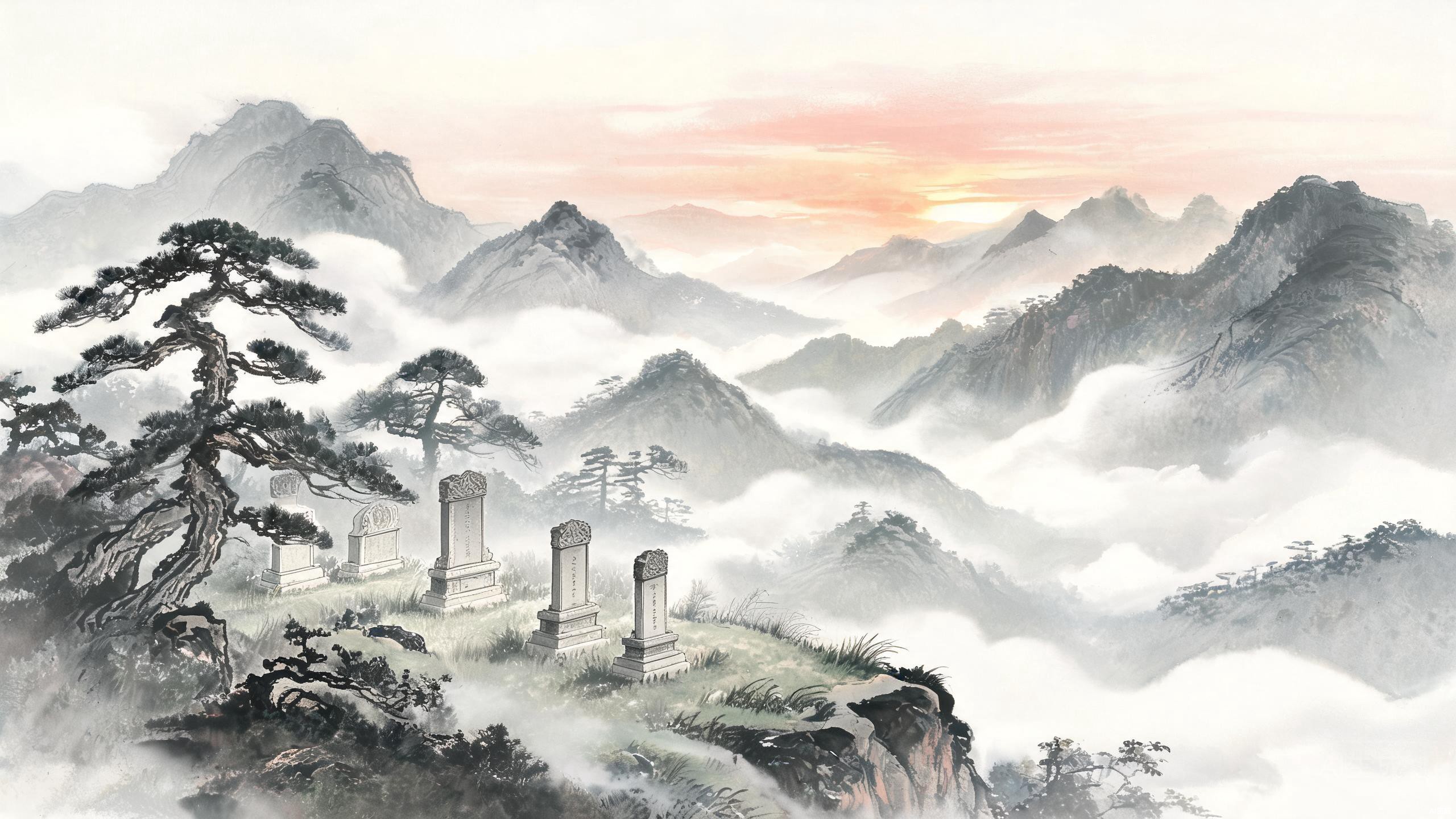
The Importance of Water Methods in Yin Dwelling Feng Shui
In Yin Dwelling Feng Shui (阴宅风水, yín zhái fēng shuǐ) — the practice of placing ancestral graves — water methods hold a position of extraordinary importance. Classical Feng Shui teaching states that "obtaining water is supreme, while storing wind comes second," reflecting just how vital water is to the practice. Water in Feng Shui represents both wealth and life force, and the quality of water methods directly determines a grave site's Feng Shui effectiveness and the family's financial fortune (财运, cai yun).
Water methods encompass the comprehensive analysis of water's form, flow direction, quality, and water mouth (水口, shuǐ kǒu) — the points where water enters and leaves a site's visual field. Excellent water methods can bring prosperity and good fortune to a burial site; poor water methods may lead to financial loss and misfortune.
Classification and Characteristics of Water
Classification by Form
Facing Water (朝水): Water flows toward the Feng Shui Point (穴位) as if paying homage. Facing water is auspicious, symbolizing wealth and good fortune flowing continuously toward the site. However, the flow should not be too rapid — gentle and measured is ideal.
Cultural Context: In Feng Shui, water flowing toward you represents opportunities, clients, and money "coming to you." This is why the phrase "water brings wealth" (水主财) is fundamental — water's direction reveals whether fortune arrives at or departs from your doorstep.
Embracing Water (环抱水): Water curves in an arc, embracing the acupoint like a jade belt around the waist. Embracing water is the most auspicious water form, symbolizing wealth held firmly in place and unable to escape.
Crossing Water (横水): Water flows horizontally across the front of the acupoint. Crossing water carries mixed fortunes — its quality depends entirely on the speed and shape of the flow. Slow, gentle crossing water is auspicious; rapid crossing water is inauspicious.
Diagonal Water (斜水): Water flows diagonally past one side of the acupoint. Diagonal water is generally inauspicious, symbolizing wealth loss. However, if the angle is gentle and the flow heads toward an auspicious direction, favorable outcomes remain possible.
Reverse Bow Water (反弓水): Water curves in a reverse-bow shape with its back turned toward the acupoint. Reverse bow water is highly inauspicious, symbolizing wealth flowing away and obstacles in career advancement.
Classification by Source
Natural Water (自然水): Naturally occurring bodies of water such as rivers, lakes, and streams. Natural water is the primary subject of Feng Shui analysis, with its form and direction reflecting the characteristics of the natural environment.
Artificial Water (人工水): Human-made water features such as reservoirs, ponds, and fountains. Artificial water also carries Feng Shui significance, though its influence is typically less profound than natural water.
Hidden Water (暗水): Underground water and concealed channels that are difficult to detect. Hidden water's quality and direction also affect Feng Shui, but assessment is considerably more challenging.
Quick Tips:
- When evaluating a burial site, prioritize locations with visible embracing water — this configuration has historically been associated with enduring family wealth
- Avoid sites near reverse bow water at all costs; the curved-away shape is considered one of the most harmful water patterns
- Before selecting a site, observe the water after rainfall to see its natural flow patterns — clearer observation leads to better decisions
Auspicious and Inauspicious Water Characteristics
Features of Auspicious Water
Excellent water exhibits the following qualities: the water quality is clear and transparent, with no unusual odor or pollution, symbolizing purity and vitality; the flow speed is moderate — neither too rapid nor too sluggish — symbolizing steady wealth accumulation; the water form curves and embraces like a jade belt around the waist; and the water sound is pleasant and melodious, like the gentle tinkling of a spring.
Features of Inauspicious Water
Inauspicious water harms the acupoint and displays the following characteristics: murky water quality with foul odors and abnormal coloration, symbolizing Sha Qi (煞气, harmful energy) and contamination; excessively rapid flow producing thunderous sounds, symbolizing the swift departure of wealth; water forming a reverse-bow shape with its back to the acupoint; and water sounds that are deafening or excessively noisy.
How to Assess Water Quality in Practice
- Visit the site multiple times: Observe water conditions across different weather conditions and seasons before making a decision
- Test clarity visually: Clear water allows you to see the bottom — murky water signals potential energetic problems
- Listen to the flow: Ideal water produces a gentle, continuous sound; roaring or stagnant silence both signal imbalance
- Map the curves: Walk the perimeter and note whether water embraces, crosses, or turns away from the site
Water Mouth Theory (水口理论)
The Concept of Water Mouth
The water mouth (水口) refers to the location where water enters and exits the acupoint's line of sight. Feng Shui places great importance on the form of the water mouth, considering it the gateway through which wealth energy enters and departs.
Auspicious and Inauspicious Water Mouths
The ideal water mouth form is "locked and sealed" — the entrance hidden, the exit narrow, as if secured by a lock. When hills or massive boulders guard the water mouth, they effectively seal in wealth energy and prevent its escape.
If the water mouth is wide open with water rushing out unchecked, the site is considered inauspicious, symbolizing wealth energy draining away and fortune becoming difficult to accumulate.
Cultural Context: The water mouth concept functions like the front and back doors of a house. An open front door (entrance) is fine, but if the back door is also wide open, energy rushes straight through without settling. The same principle applies to burial sites — controlled inflow and tightly sealed outflow preserve accumulated fortune.
Practical Application of Water Methods
Application in Site Selection
When selecting a Yin Dwelling site, water sources are a critical consideration. Prioritize locations with embracing water; avoid locations with reverse bow water. The distance to the water source should be moderate — neither too close nor too far.
Application in Layout
When laying out a burial site, practitioners can adjust the orientation so the grave faces auspicious water. If the water's form is less than ideal, improvements can be made by planting trees or constructing landscape features.
Application in Remedies
If a water source displays inauspicious characteristics, Feng Shui remedies can be applied. For example, planting trees at a reverse bow water location can lessen the reverse bow's harmful effects; placing barriers in rapid water flow can reduce the current speed.
How to Apply Water Methods to a Modern Burial Site
- Survey the surrounding water: Map all visible water within 500 meters of the proposed site
- Identify the dominant form: Determine whether the water primarily embraces, faces, crosses, or turns away from the location
- Check the water mouth: Confirm that inflow and outflow points are naturally guarded by terrain
- Plan enhancements: If conditions are imperfect, design tree placements or landscape features to compensate
- Document with photos: Return annually to photograph and compare changes in water patterns over time
Coordination Between Water Methods and Other Elements
Water methods do not stand alone — they must work in harmony with other Feng Shui elements: dragon, acupoint, sand, and direction. The five essentials (龙穴砂水向, Five Essentials: Dragon, Acupoint, Sand, Water, Direction) function as an integrated system:
- Water and Dragon Vein (龙脉, long mai): Water follows the mountain, and mountains turn with water — the two influence each other continuously
- Water and Acupoint: Water must embrace the acupoint, providing wealth energy to the site
- Water and Sand (砂, shā): Sand formations at the water mouth must lock and seal, securing wealth energy
- Water and Direction: The site's orientation must face auspicious water
Mastering water methods and their application is essential for Yin Dwelling site selection and layout.
Important Considerations in Practice
In actual Feng Shui practice, one must adapt theories flexibly to specific geographic environments and real conditions. Rigid application of textbook knowledge should be avoided, as should over-reliance on any single method. An excellent Feng Shui practitioner combines theory with practice, tradition with modernity.
During the consultation process, several key points warrant attention: first, fully respect nature — never forcibly alter the natural environment; second, prioritize comprehensive judgment — never make decisions based on a single factor alone; third, consider practical feasibility — theoretical perfection does not always equal practical viability.
Quick Tips:
- Always visit a site in person before making any decisions — photographs and maps cannot capture the subtle Qi of a location
- Consult multiple sources and practitioners for important family decisions; consensus across perspectives adds reliability
- Document every observation meticulously; patterns often emerge only after reviewing notes from multiple visits
A Modern Scientific Perspective
From a modern scientific viewpoint, many traditional Feng Shui principles possess reasonable scientific foundations. For example, selecting a site with a mountain behind and water in front allows the mountain body to block cold winds while the water surface moderates temperature — creating a favorable microclimate. Selecting well-drained high ground avoids dampness and standing water, helping preserve the integrity of the burial site.
These Feng Shui principles are, in essence, the accumulated wisdom of generations observing and summarizing natural environments. They embody the wisdom of humanity living in harmony with nature. In modern society, we should inherit and develop these traditional wisdoms with a scientific attitude.
Preservation and Development of Feng Shui Culture
As a vital component of traditional Chinese culture, Feng Shui retains significant cultural value in modern society. It represents not only the ancients' understanding and synthesis of the natural environment but also the crystallized wisdom of Chinese civilization. Studying and understanding Feng Shui culture helps us better appreciate the essence of traditional Chinese heritage.
While preserving Feng Shui culture, we must also progress with the times — integrating the reasonable core of traditional Feng Shui with modern science, allowing Feng Shui culture to radiate renewed vitality in the new era.
Related Articles
- [[../08-百科问答库/26-风水中的水代表什么?为什么水主财?.md|What Does Water Represent in Feng Shui? Why Does Water Govern Wealth?]]
- [[../08-百科问答库/27-什么叫山管人丁水管财?.md|What Does "Mountains Govern People, Water Governs Wealth" Mean?]]
- [[../09-Yin Dwelling风水/56-Yin Dwelling风水中的龙法详解.md|Yin Dwelling Feng Shui: Complete Guide to Dragon Methods]]
- [[../09-Yin Dwelling风水/55-Yin Dwelling风水中的砂法详解.md|Yin Dwelling Feng Shui: Complete Guide to Sand Methods]]