Yin Dwelling Feng Shui: Complete Learning Path from Beginner to Master
Yin Dwelling Feng Shui (阴宅风水, yǐn zhái fēng shuǐ) — the practice of selecting and arranging ancestral burial sites — is a vital component of traditional Chinese culture. Studying it not only opens a w
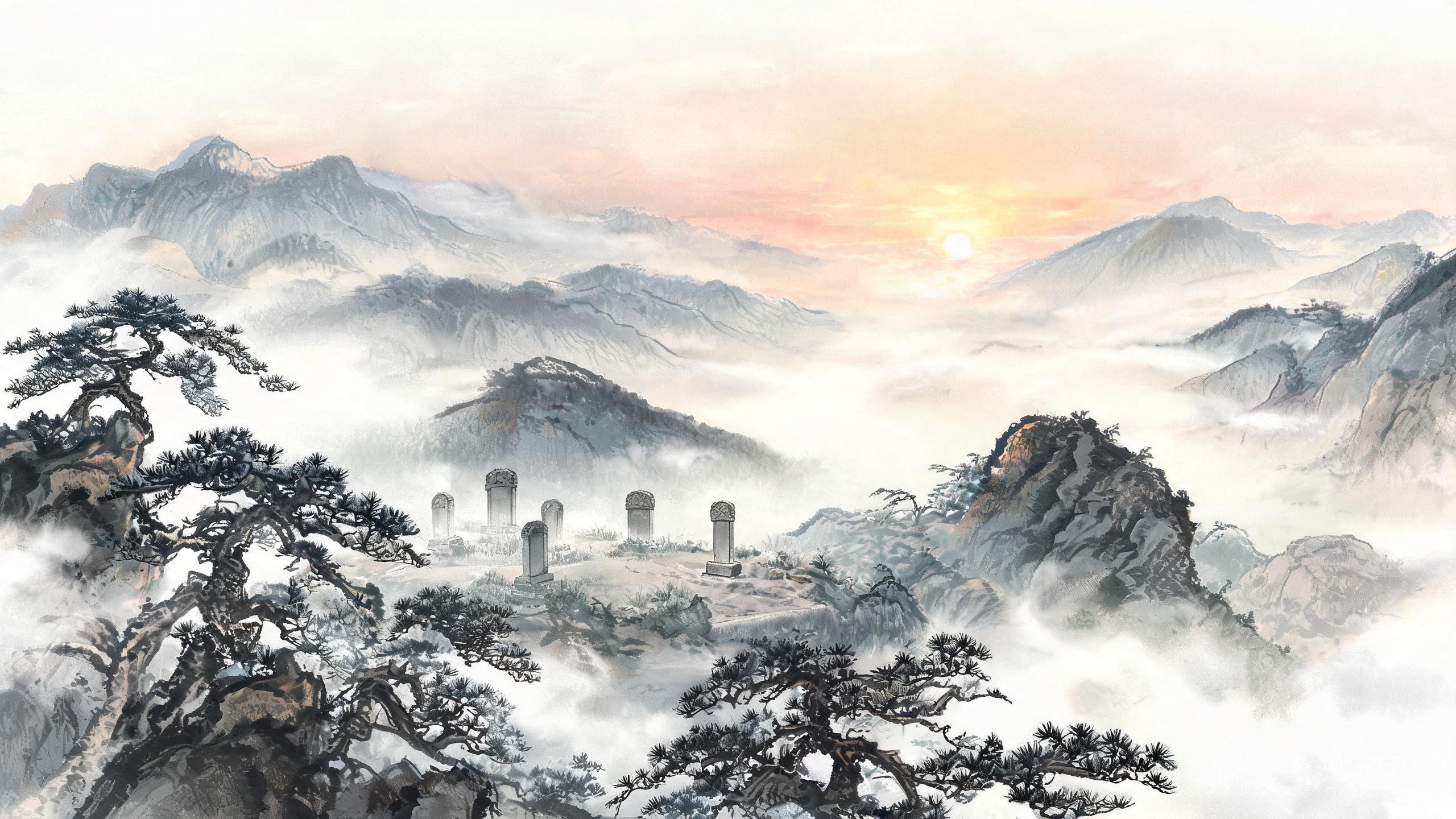
Why Learning Yin Dwelling Feng Shui Matters
Yin Dwelling Feng Shui (阴宅风水, yǐn zhái fēng shuǐ) — the practice of selecting and arranging ancestral burial sites — is a vital component of traditional Chinese culture. Studying it not only opens a window into centuries of cultural wisdom but also equips you with a practical skill set. Whether you are selecting a family burial site or simply seeking to understand this profound tradition, Yin Dwelling Feng Shui offers lasting value.
Cultural Context: "Yin Dwelling" (阴宅) refers to the homes of the departed — graves, tombs, and burial grounds — as distinct from "Yang Dwellings" (阳宅), which are the homes of the living. In traditional Chinese thought, the Feng Shui of one's ancestors' resting place directly influences the fortune and well-being of their descendants through a principle called Bloodline Resonance (血脉感应).
However, Yin Dwelling Feng Shui is a vast and profound discipline. Mastering it requires systematic study and years of practice. Below is a complete learning path to guide you from beginner to advanced practitioner.
Stage 1: Building the Foundation
Core Topics to Study
Yin-Yang and the Five Elements: Yin and Yang and the Five Elements (Wu Xing) form the theoretical backbone of all Feng Shui practice. You must deeply understand the balance of Yin and Yang and the Mutual Generation and Restriction (相生相克) cycles among the Five Elements.
Heavenly Stems and Earthly Branches: The Ten Heavenly Stems (十天干) and Twelve Earthly Branches (十二地支) are essential tools for Feng Shui analysis. Memorize their names, attributes, and interactions.
Bagua and the Nine Palaces: The Bagua (Eight Trigrams) represent eight fundamental directions and energies, while the Nine Palaces divide space into nine zones. Grasp the basic principles of how each Trigram and palace functions.
Using the Luopan (Feng Shui Compass): The Luopan (罗盘) is the Feng Shui practitioner's most important instrument. Learn its structure, layers, and practical operation.
Study Tips
This stage is theory-heavy. Read classical Feng Shui texts to build your knowledge base. Recommended reading includes the Zang Shu (Book of Burial), Qing Nang Xu (Preface to Green Satchel), and Han Long Jing (Classic of Shaking Dragon).
Quick Tips:
- Create flashcards for the Heavenly Stems, Earthly Branches, and Bagua Trigrams until they become second nature
- Draw the Five Elements cycle (generation and restriction) repeatedly until you can visualize it instantly
- Practice reading a Luopan before studying advanced techniques — familiarity with the tool builds confidence
Stage 2: Mastering Core Techniques
Core Topics to Study
Dragon Method (龙法): Learn to identify the path and form of a Dragon Vein (龙脉) — a continuous mountain range that channels Qi — and assess its quality and strength.
Acupoint Method (穴法): Learn to locate the Feng Shui Point (穴) — the precise spot on a Dragon Vein where Vital Qi (生气) gathers most powerfully.
Sand Method (砂法): Learn to analyze how surrounding hills and protective landforms — known collectively as "Sand" (砂) — embrace and shield the Acupoint.
Water Method (水法): Learn to evaluate water sources: their shape, flow direction, and quality, and how they interact with the burial site.
Direction Method (向法): Learn to determine the optimal Sitting and Facing (坐向) direction for the burial site.
Study Tips
This stage demands both theory and fieldwork. Combine your reading with extensive outdoor observation. Visit real burial sites, cemeteries, and landscapes to apply what you have learned in actual conditions.
Quick Tips:
- Bring a notebook on field trips — sketch the landscape, label Dragon, Sand, and Water features
- Compare two sites side by side to sharpen your judgment of "good" versus "poor" Feng Shui formations
- Study topographic maps to practice identifying Dragon Veins before you visit them in person
Stage 3: Exploring Different Schools
Core Topics to Study
San He School (三合派): Study the theoretical system of the San He School (Triple Harmony School), which emphasizes form analysis and the harmony of Water, Sand, and Direction.
San Yuan School (三元派): Study the San Yuan School (Three Cycles School), which emphasizes Li Qi (理气, Compass Energy) — time-based calculations using the Luopan.
Other Schools: Familiarize yourself with other traditions, such as the Eight Mansions School (八宅派) and Xuan Kong Flying Stars (玄空飞星), understanding each school's unique strengths.
Study Tips
This stage calls for breadth. Study each school's strengths before settling into a specialty. A common recommendation: begin with the San He School, then move to the San Yuan School, and finally synthesize the wisdom of multiple traditions.
Quick Tips:
- Keep a comparison chart noting each school's priorities: form vs. compass, time-based vs. timeless
- Avoid committing to one school too early — breadth of perspective is your greatest asset at this stage
- Join study groups or online forums where practitioners of different schools exchange insights
Stage 4: Practical Application
Core Topics to Study
Field Surveys: Conduct real Feng Shui assessments on actual burial sites, applying your theoretical knowledge in practice.
Case Analysis: Study classical Feng Shui case studies — learning from successful examples and absorbing lessons from failures.
Independent Practice: Once you have built sufficient experience, begin conducting independent Feng Shui analyses and assessments.
Study Tips
This stage is practice-driven. Start with simple cases and gradually increase complexity. Continuously reflect on your results to refine your skills.
Quick Tips:
- Document every case you work on: photos, measurements, reasoning, and outcome
- Seek feedback from experienced mentors — self-study alone can lead to blind spots
- Review your past cases annually; time reveals which judgments were sound and which need correction
Stage 5: Advanced Research and Mastery
Core Topics to Study
Classical Scholarship: Delve deeply into the canonical Feng Shui texts to extract their deeper meanings and subtle teachings.
Specialized Research: Choose a niche that fascinates you — a particular school, a specific technique, or a regional tradition — and pursue it intensively.
Innovation and Development: Build on the classical foundation by integrating modern scientific knowledge, contributing fresh perspectives while honoring tradition.
Study Tips
This stage demands long-term commitment and intellectual depth. Connect with fellow enthusiasts, attend professional workshops, and engage in lifelong learning to elevate your mastery.
Quick Tips:
- Teach others — explaining concepts deepens your own understanding
- Cross-reference classical claims with modern geography, geology, and ecology
- Maintain humility; even masters continue to discover new insights in the classics
Important Guidelines for Every Practitioner
Stay Humble
Feng Shui is a profound discipline. Maintain a humble attitude and commit to continuous learning.
Value Practice
Feng Shui is highly practical. Theory must be tested, refined, and deepened through hands-on experience.
Think Rationally
Approach Feng Shui with a rational mind. Avoid blind superstition. Feng Shui is part of traditional culture, but it is not the sole determinant of destiny.
Following this complete learning path gives you a systematic framework for growth. Move through each stage with patience and discipline, and you will steadily acquire the knowledge and skills needed to become a capable Yin Dwelling Feng Shui practitioner.
Practical Considerations in Real Applications
In actual Feng Shui practice, you must adapt theory to specific geographic conditions and real-world contexts. Avoid applying textbook formulas rigidly, and do not rely on any single method alone. A skilled Feng Shui practitioner combines theory with practice and tradition with modernity — becoming a well-rounded expert.
During fieldwork, keep these principles in mind:
- Respect Nature: Do not force dramatic changes to the natural environment.
- Synthesize Multiple Factors: Never judge based on a single variable; consider the full picture.
- Prioritize Practicality: What looks perfect in theory may not be feasible in reality — always weigh real-world constraints.
A Modern Scientific Perspective
From a modern scientific standpoint, many traditional Feng Shui principles reveal sound underlying logic. For example, selecting a site with a mountain behind and water in front (背山面水) uses the mountain to block cold winds and the water to moderate temperature, creating a favorable microclimate. Choosing well-drained high ground avoids dampness and standing water, which helps preserve a burial site's structural integrity.
Cultural Context: These principles reflect centuries of careful observation by ancient Chinese geomancers. What modern science now confirms — that topography affects temperature, wind, moisture, and soil stability — was encoded into Feng Shui's rules long before instruments could measure them.
These Feng Shui principles are the result of long-term observation and synthesis by the ancient Chinese, embodying a wisdom of harmony between humanity and nature. In the modern era, we should inherit and develop this traditional wisdom with a scientific and open attitude.
Preserving and Evolving Feng Shui Culture
As a significant element of traditional Chinese culture, Feng Shui retains important cultural value in contemporary society. It is both a systematic understanding of the natural environment and a crystallization of Chinese civilizational wisdom. Studying Feng Shui helps us better grasp the essence of traditional Chinese thought.
As we pass this knowledge forward, we must also keep pace with the times — combining the rational core of traditional Feng Shui with modern science, allowing this ancient culture to radiate fresh vitality in a new era.
Related Articles
- [[../01-风水入门/45-如何选择适合自己的风水流派.md|How to Choose the Right Feng Shui School for You: Personal Positioning and Learning Path]]
- [[../01-风水入门/05-天干地支与风水.md|The Relationship Between Heavenly Stems, Earthly Branches, and Feng Shui]]
- [[../03-财运风水/01-财位基础知识.md|Wealth Position Basics: A Complete Guide to Bright and Hidden Wealth Positions]]
- [[../05-命理与运势/09-面相断Yin Dwelling风水.md|Reading Yin Dwelling Feng Shui Through Face Reading: The Nose and Burial Ground Connection]]