Yin Dwelling Feng Shui: Does It Really Affect Descendants' Fortune?
In traditional Chinese culture, Yin Dwelling Feng Shui (阴宅风水, yín zhái fēng shuǐ) — the Feng Shui of ancestral burial sites — has long been believed to be closely connected to the fortune and fate of
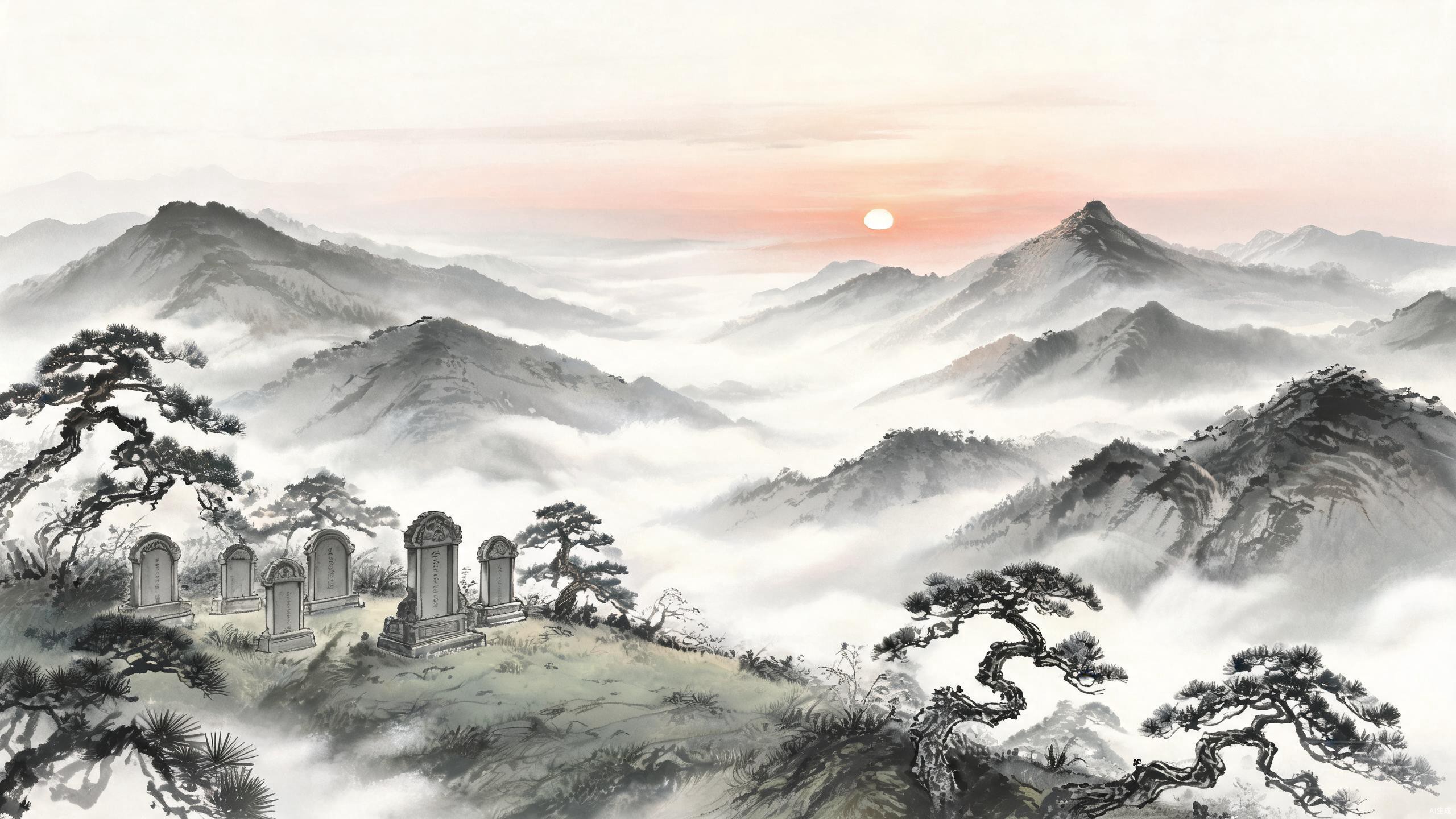
Ancestral Graves and Descendants in Traditional Belief
In traditional Chinese culture, Yin Dwelling Feng Shui (阴宅风水, yín zhái fēng shuǐ) — the Feng Shui of ancestral burial sites — has long been believed to be closely connected to the fortune and fate of descendants. This belief stretches back thousands of years and continues to shape Chinese funerary customs and site selection to this day. The ancients held that when ancestors are buried in a Feng Shui "treasure land," their auspicious Qi (气) can be transmitted to future generations, bringing prosperity to the family and producing a continuous line of talented individuals.
At the heart of this belief lies the theory of Qi transmission. Feng Shui teaches that a continuous exchange of Qi exists between human beings and the earth. When the deceased are laid to rest within the land, their remains merge with the Earth's Qi. If the burial site possesses strong Vital Qi (生气, shēng qì), this auspicious energy is believed to transfer to blood-related descendants through some unseen channel.
Theoretical Foundations Supporting the Influence Theory
The Theory of Qi Field Resonance
The theory of Qi field resonance in Feng Shui suggests that people sharing the same bloodline possess a special energetic connection. This connection is similar to the principle of resonance in physics — when one Qi field changes, related Qi fields respond accordingly. Therefore, the Feng Shui quality of an ancestral grave is believed to influence descendants through this resonant link.
An Environmental Psychology Perspective
From the viewpoint of environmental psychology, the influence of Yin Dwelling Feng Shui on descendants may operate primarily on the psychological level. When people know their ancestors rest in a beautiful, well-chosen location, they experience a sense of security and pride. This positive mindset can boost self-confidence and ambition, helping individuals achieve greater success in real life.
Family Cultural Transmission
Yin Dwelling Feng Shui activities themselves serve as a form of family cultural inheritance. Through participating in cemetery selection, tomb-sweeping, and ancestral worship, family members strengthen their emotional bonds and pass down shared values. This powerful sense of family cohesion and cultural identity can have a profoundly positive impact on descendants' development.
Cultural Context: The concept of "Bloodline Resonance" (血脉感应, xuè mài gǎn yìng) reflects a core Chinese belief that the living and the dead remain energetically connected through shared ancestry. Western readers may find this idea parallels the modern psychological understanding of generational trauma — that emotional and behavioral patterns can inherit across family lines, even if the mechanism is psychological rather than mystical.
Skepticism and Rational Analysis
From a modern scientific perspective, the claim that Yin Dwelling Feng Shui directly shapes descendants' fortune lacks direct empirical evidence. No scientific study has yet demonstrated that the location of an ancestor's burial can directly alter the genes, destiny, or fortune of subsequent generations.
However, this does not mean Yin Dwelling Feng Shui is entirely without value. From an environmental science standpoint, choosing a suitable burial site has clear practical merits. Selecting locations that avoid geological hazards, ensuring good drainage on higher ground, and considering accessibility are all sensible decisions based on real-world environmental factors.
A Balanced View of Yin Dwelling Feng Shui's Influence
Although the idea that Yin Dwelling Feng Shui directly changes fate lacks scientific backing, its indirect influence is real. This influence operates through several pathways:
- Rational considerations during site selection — A well-chosen burial site typically offers a pleasant environment, safe terrain, and convenient transportation.
- Psychological comfort — Knowing that the deceased rest peacefully in a good environment eases the grief and anxiety of the living.
- Strengthened family bonds — Participating together in Feng Shui–related activities deepens emotional connections among family members.
The question of whether Yin Dwelling Feng Shui influences descendants' fortune should be approached with reason and discernment. On one hand, we may honor tradition by choosing a good burial location when circumstances allow. On the other hand, we should not become overly superstitious or treat Feng Shui as the sole determinant of fate. A descendant's growth and success depend far more on education, environment, and personal effort.
The most reasonable approach is this: respect traditional wisdom without blind faith, value environmental selection without obsession, and trust in personal effort. Treat Feng Shui as a form of cultural inheritance and spiritual comfort — not a tool for controlling destiny. After all, a family's lasting prosperity relies on transmitted virtue, persistent effort, and sound values far more than on any burial site.
The Cultural Roots of the Influence Theory
The belief that Yin Dwelling Feng Shui shapes descendants' fortune is deeply rooted in traditional Chinese filial piety (孝道). In Confucian thought, filial piety is considered the foundation of all virtue, and "carefully attending to the end and earnestly tracing the past" (慎终追远) is a core expression of this duty. Carefully arranging the deceased's burial and selecting a Feng Shui treasure land is itself a concrete practice of filial piety. This cultural tradition gives Yin Dwelling Feng Shui its deep resonance in Chinese society.
At the same time, this belief reflects the Chinese emphasis on family continuity. In traditional Chinese culture, the individual is not seen as an isolated being but as one link in an unbroken family chain. The honor or disgrace of ancestors is closely tied to the rise and fall of descendants, so it naturally follows that the Feng Shui of an ancestor's resting place would be thought to influence the family's fate.
Reflections from a Modern Scientific Perspective
From a modern scientific viewpoint, the relationship between Yin Dwelling Feng Shui and descendants' fortune is better understood as a cultural-psychological phenomenon rather than a physical causal one. Modern genetics has confirmed that descendants' genetic traits come primarily from parental inheritance and have no direct connection to where grandparents or earlier ancestors were buried. Modern psychology likewise shows that personal destiny depends largely on individual choices and effort, not on some mysterious external force.
Still, this does not mean Yin Dwelling Feng Shui is without value. From the perspective of environmental psychology and ecology, selecting a beautifully situated burial site can indeed have a positive psychological impact on the living. A well-maintained cemetery environment also helps protect natural ecosystems and promotes harmony between humanity and nature.
A Rational Attitude in Contemporary Society
In today's world, we should adopt a more rational attitude toward the question of whether Yin Dwelling Feng Shui influences descendants' fortune. On one hand, we can honor tradition by choosing a good burial location when possible — this shows respect for the deceased and offers comfort to the living. On the other hand, we should not overestimate Feng Shui's power or treat it as the sole determinant of fate.
A descendant's growth and development depend far more on education, family environment, personal effort, and social opportunity than on the location of an ancestor's grave. Rather than spending enormous energy searching for a supposed Feng Shui treasure land, investing resources in a child's education and development is a far more effective path to long-term success.
The Modern Value of Feng Shui Culture
As a vital component of traditional Chinese culture, Feng Shui retains significant cultural value in modern society. It embodies the ancient Chinese deep observation of the natural environment and their accumulated wisdom — a treasured spiritual heritage of Chinese civilization.
In contemporary life, Feng Shui culture influences not only funerary customs but also architectural planning, environmental design, and urban development. Studying Feng Shui helps us better understand the essence of Chinese traditional culture and apply ancient wisdom to create more harmonious living environments today.
Bridging Theory and Practice
The most important step in learning Feng Shui is bridging theory with practice. Theoretical knowledge provides the framework and methods for analysis, but only through hands-on application can these principles be truly understood and mastered.
When studying Feng Shui, focus on careful observation and critical thinking. Visit real locations, conduct field studies, and accumulate practical experience. At the same time, maintain an open mind, learn humbly from experienced practitioners, and continually enrich your knowledge. Only through ongoing reflection and refinement in practice can you truly grasp the essence of Feng Shui and become a skilled practitioner.
Quick Tips:
- Honor ancestral traditions without becoming consumed by them — balance respect for the past with focus on the present
- When choosing a burial site, prioritize practical factors: environmental safety, accessibility, and long-term stability
- Invest your greatest energy in the living: education, family relationships, and personal growth are the most powerful "feng shui" for future generations
Related Articles
- [[../08-百科问答库/47-什么是Yin Dwelling风水?Yin Dwelling风水真的影响后代吗?.md|What Is Yin Dwelling Feng Shui? Does It Really Affect Descendants?]]
- [[../05-命理与运势/09-面相断Yin Dwelling风水.md|Face Reading and Yin Dwelling Feng Shui: Reading Graves Through the Nose]]
- [[../06-风水文化与历史/52-风水与非物质文化遗产.md|Feng Shui and Intangible Cultural Heritage]]
- [[../07-风水故事/58-风水与丧葬.md|Feng Shui and Funerals: The Ancient Tradition of Yin Dwelling Feng Shui]]