Yin Dwelling Feng Shui: Essential Concepts and Modern Guide to Ancestral Graves
Yin Dwelling Feng Shui (阴宅风水, yin zhai feng shui), also known as burial Feng Shui, is an important branch of traditional Chinese Feng Shui that corresponds to Yang Dwelling Feng Shui (which governs ho
The Origins and Definition of Yin Dwelling Feng Shui
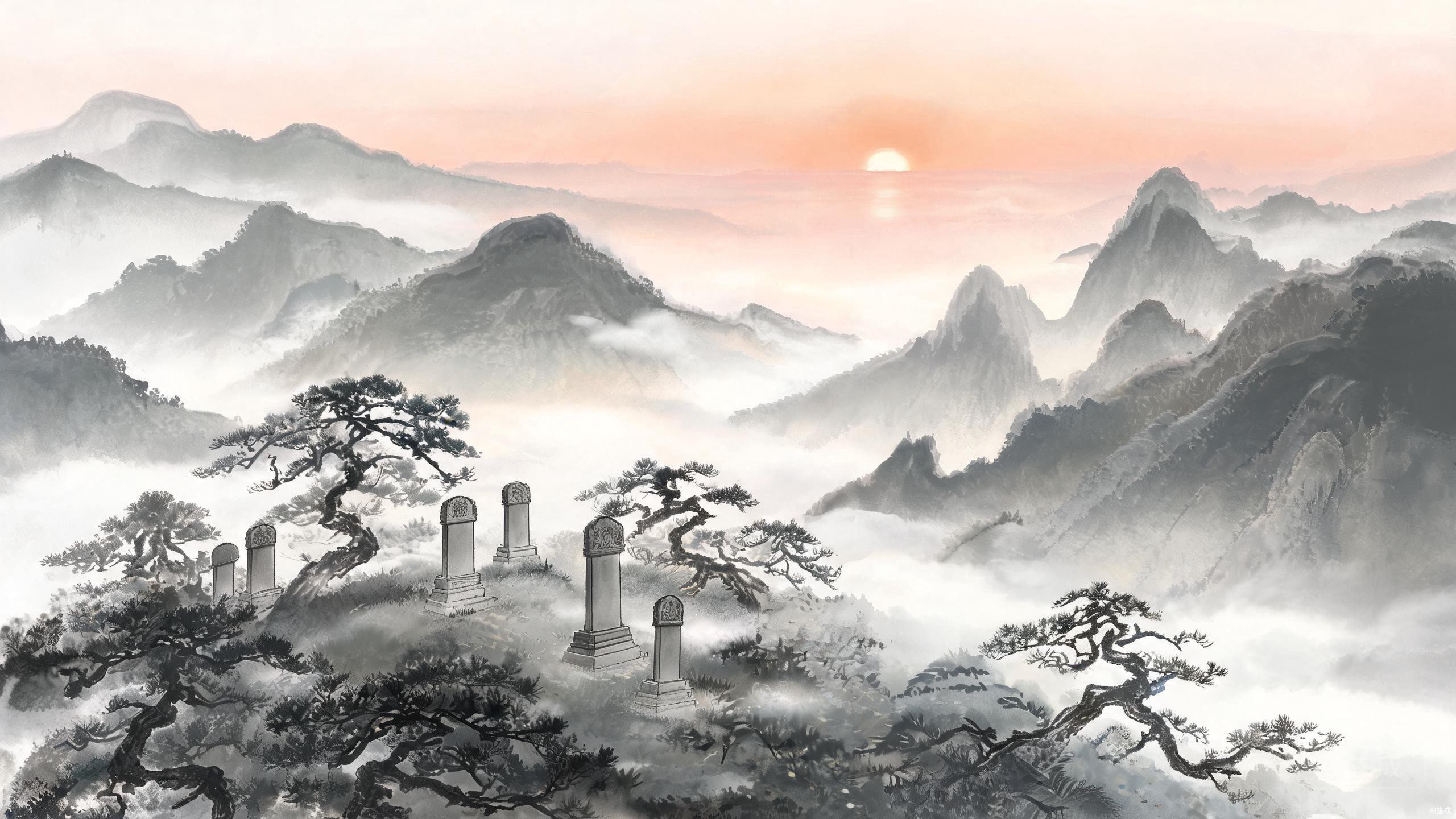
Yin Dwelling Feng Shui (阴宅风水, yin zhai feng shui), also known as burial Feng Shui, is an important branch of traditional Chinese Feng Shui that corresponds to Yang Dwelling Feng Shui (which governs homes of the living). A "Yin Dwelling" refers to the resting place of the deceased — including cemeteries, graves, and their surrounding environment. Yin Dwelling Feng Shui studies how to select and arrange burial sites to bring peace to the departed and blessings to their descendants.
The theoretical foundation of Yin Dwelling Feng Shui originates from the ancient Chinese philosophy of Unity of Heaven and Humanity (天人合一). The ancients believed that death is not a complete end, but rather a transformation into another form of existence that maintains a connection with the living. This connection is transmitted through Qi (气). Therefore, selecting a burial site with good Feng Shui not only allows the deceased to rest peacefully but also channels auspicious energy to future generations.
Core Theories of Yin Dwelling Feng Shui
The Concept of Qi
Qi (气) is the central concept of Yin Dwelling Feng Shui. In Feng Shui theory, Qi is a formless energy that exists between heaven and earth, influencing the growth and transformation of all things. Yin Dwelling Feng Shui pursues the principle of Storing Wind and Gathering Qi (藏风聚气) — finding a place that can gather and preserve auspicious energy for burial.
The flow of Qi is influenced by terrain, landforms, hydrology, wind direction, and other natural factors. An ideal Feng Shui site should effectively gather Vital Qi (生气, sheng qi) while avoiding the intrusion of Sha Qi (煞气, harmful energy). This understanding of Qi reflects the ancients' profound observation and wisdom about the natural environment.
Cultural Context: In Chinese metaphysics, Qi is the fundamental life force that animates all things. Think of it as the invisible current of energy that flows through landscapes, buildings, and people. When Qi gathers gently, it nurtures life and fortune; when it scatters or collides harshly, it creates Sha Qi that brings misfortune.
The Balance of Yin, Yang, and the Five Elements
Yin Dwelling Feng Shui also follows the theory of Yin and Yang (阴阳) and the Five Elements (五行, Wu Xing). Yin and Yang represent two opposing yet unified aspects of reality — such as heaven and earth, sun and moon, day and night, life and death. In Yin Dwelling Feng Shui, the balance of Yin and Yang at the burial site is crucial. Locations that are excessively Yin and cold, or excessively Yang and dry, are both unsuitable as graves.
The theory of Mutual Generation and Restriction (相生相克) among the Five Elements — Metal, Wood, Water, Fire, and Earth — is also applied in Yin Dwelling Feng Shui analysis. Different terrains, landforms, and directions each possess their own Five Elements attributes, requiring comprehensive analysis to determine their effects on the deceased and descendants.
Essential Elements of Yin Dwelling Feng Shui
Dragon, Acupoint, Sand, Water, and Direction
Yin Dwelling Feng Shui has five core elements, commonly called the "Five Essentials" (五诀): Dragon, Acupoint, Sand, Water, and Direction (龙、穴、砂、水、向).
Dragon (龙) refers to theflow and direction of mountain ranges — known as Dragon Veins (龙脉). A good Dragon Vein should be majestic, winding, undulating, and full of life force. Seeking the Dragon is the first and most important step in Yin Dwelling Feng Shui.
Acupoint (穴) refers to the specific burial location — the Feng Shui Point. Pointing the Acupoint is the most profound skill in Yin Dwelling Feng Shui, requiring practitioners to find the optimal position where Vital Qi converges along the Dragon Vein.
Sand (砂) refers to the protective embrace of surrounding mountains around the Acupoint. Good Sand formations resemble "stars surrounding the moon," serving to Store Wind and Gather Qi.
Water (水) refers to water flows near the Acupoint. In Feng Shui, water represents wealth. A favorable water pattern should embrace the site affectionately, flowing clearly and gently.
Direction (向) refers to the orientation of the grave. Setting the Direction must be determined by comprehensively considering the Dragon Vein'sflow and direction, water flow direction, and the deceased's BaZi (八字, Eight Characters birth chart), among other factors.
Cultural Context: The Five Essentials framework — Dragon, Acupoint, Sand, Water, Direction — is the classic analytical system of the Form School (形势派), one of the major traditions of Feng Shui. This system has guided Chinese burial site selection for over a thousand years and remains influential today.
Historical Development of Yin Dwelling Feng Shui
The development of Yin Dwelling Feng Shui spans thousands of years of evolution. As early as the pre-Qin period, records exist regarding burial site selection. By the Han Dynasty, Feng Shui theory gradually formed into a systematic framework. During the Tang and Song dynasties, Feng Shui entered its golden age of development, producing many renowned Feng Shui masters and writings.
During the Ming and Qing dynasties, Yin Dwelling Feng Shui theory became further refined and diversified into different schools. Among the most influential were the San He School (三合派, Triple Harmony School) and the San Yuan School (三元派, Three Cycles School). The San He School emphasizes form analysis, focusing on the coordination of Dragon, Acupoint, Sand, Water, and Direction. The San Yuan School places greater emphasis on Li Qi (理气, Compass Energy), stressing how time factors influence Feng Shui.
Yin Dwelling Feng Shui in Modern Society
In contemporary society, Yin Dwelling Feng Shui continues to exert wide influence. Although traditional earth burials have decreased with urbanization, the principles of Yin Dwelling Feng Shui have been applied to modern cemetery selection, ash placement, and other memorial arrangements.
It is worth noting that Yin Dwelling Feng Shui should be approached with a rational mindset. It contains both the ancients' profound observation and wisdom about the natural environment, as well as symbolic meanings drawn from traditional culture. In practical application, one should extract the essence and discard the obsolete, combining Feng Shui principles with modern science to make reasonable choices.
Scientific Interpretation of Yin Dwelling Feng Shui
From the perspective of modern environmental science, many principles within Yin Dwelling Feng Shui have legitimate scientific foundations. For example:
- Selecting elevated terrain with good drainage for burial prevents water accumulation in the grave, protecting the integrity of coffins and remains
- Choosing a position Back to Mountain Facing Water (背山面水) allows mountains to block winter's cold winds while welcoming summer's cool breezes, creating a pleasant microclimate
- Selecting locations with lush vegetation and fertile soil indicates a healthy, stable ecosystem that supports long-term preservation
These principles align closely with modern environmental science standards for site selection, reflecting the ancients' profound observation and wisdom about the natural environment.
How to Apply These Principles When Choosing a Memorial Site
- Check elevation and drainage: Visit the site after rainfall to verify that water drains away quickly and does not pool
- Assess natural shelter: Look for backing hills or structures that block prevailing cold winds while leaving the front open to gentle sunlight
- Evaluate vegetation health: Dense, thriving plant life indicates good soil quality and a stable ecosystem
- Observe water flow patterns: Nearby streams should flow gently and curving toward the site, not rushing away or stagnating
- Consider accessibility: Ensure the site can be comfortably visited by family members for maintenance and remembrance
Quick Tips:
- A memorial site on a gentle south-facing slope typically receives optimal sunlight while avoiding harsh weather exposure
- Avoid locations at the bottom of valleys or at dead-ends where water and energy accumulate without movement
- Mature trees near the site provide natural shelter — but avoid large trees directly over the grave, as their roots may disturb the site over time
Cultural Significance of Yin Dwelling Feng Shui
Beyond its practical value, Yin Dwelling Feng Shui carries important cultural meaning. It embodies the Chinese reverence for ancestors and emphasis on family continuity. Through careful selection of burial sites, descendants express respect and remembrance for the departed while寄托 their hopes for the family's future prosperity.
Yin Dwelling Feng Shui is also a vital component of traditional Chinese culture. It integrates knowledge from philosophy, geography, ecology, psychology, and other disciplines, forming a unique theoretical system. Studying and understanding Yin Dwelling Feng Shui helps us better appreciate the essence of traditional Chinese culture.
Recommendations for Learning Yin Dwelling Feng Shui
For beginners, learning Yin Dwelling Feng Shui should start with foundational theory before progressing to advanced practice. First, understand the basic theories of Yin and Yang, the Five Elements, the Heavenly Stems and Earthly Branches (天干地支), and the Bagua (八卦) and Nine Palaces (九宫). Then progress to core techniques such as the Dragon, Acupoint, Sand, Water, and Direction. During the learning process, emphasize combining theory with practice — observe more, reflect more, and summarize more.
At the same time, maintain a scientific and rational attitude toward Yin Dwelling Feng Shui. Respect traditional wisdom while avoiding blind superstition. Combining Feng Shui principles with modern science allows innovation and development built upon the foundation of tradition.
Suggested Learning Path for Beginners
- Foundation phase (3-6 months): Study Yin and Yang, the Five Elements, and the Heavenly Stems and Earthly Branches
- Theory phase (6-12 months): Learn the Five Essentials and their interrelationships
- Practice phase (ongoing): Visit historical burial sites, observe terrain, and learn from experienced practitioners
- Integration phase: Combine classical knowledge with modern environmental science and geography
Quick Tip: Keep a field journal when visiting historical cemeteries or memorial parks. Sketch the terrain, note the orientation, and observe how the surrounding mountains, water, and vegetation interact. This hands-on practice will deepen your understanding far more than reading alone.
The Modern Value of Feng Shui Culture
As an important component of traditional Chinese culture, Feng Shui retains significant cultural value in modern society. It reflects the ancients' profound observation and wisdom about the natural environment and represents a precious spiritual heritage of Chinese civilization.
In contemporary society, Feng Shui culture influences not only burial customs but also architectural planning, environmental design, and urban development. Studying Feng Shui culture helps us better understand the essence of traditional Chinese culture and apply ancient wisdom to create more harmonious living environments.
Integrating Theory with Practice
The most important aspect of learning Feng Shui is integrating theory with practice. Theoretical knowledge provides frameworks and methods for analysis, but only through practice can these principles be truly understood and mastered.
During the learning process, emphasize observation and reflection. Visit sites in person, accumulate practical experience, and maintain an open mind — humbly learn from experienced elders and continuously enrich your knowledge. Only by constantly summarizing and improving through practice can you truly grasp the essence of Feng Shui and become a qualified practitioner.
Quick Tips:
- Balance your study between classical texts and modern environmental science — both offer valuable insights
- Join local Feng Shui study groups or visit historical sites with knowledgeable guides to accelerate your learning
- Practice ethical application: Feng Shui knowledge should be used to help people, not to exploit their fears or anxieties
Related Articles
- [[../08-百科问答库/27-什么叫山管人丁水管财?.md|What Does "Mountains Govern People, Water Governs Wealth" Mean?]]
- [[../01-风水入门/18-风水中的藏风聚气.md|The Principle of "Storing Wind and Gathering Qi" in Feng Shui]]
- [[../01-风水入门/05-天干地支与风水.md|The Relationship Between Heavenly Stems, Earthly Branches, and Feng Shui]]
- [[../03-财运风水/01-财位基础知识.md|Wealth Position Fundamentals: Bright and Hidden Wealth Positions Explained]]