Yin Dwelling Feng Shui: Essential Principles and Taboos for Cemetery Site Selection
Yin Dwelling (阴宅) site selection is the most crucial aspect of Feng Shui practice, directly affecting the effectiveness of the burial and the fortune of descendants. Choosing an optimal cemetery locat
Essential Principles for Yin Dwelling Site Selection
Yin Dwelling (阴宅) site selection is the most crucial aspect of Feng Shui practice, directly affecting the effectiveness of the burial and the fortune of descendants. Choosing an optimal cemetery location requires following a series of fundamental principles — wisdom refined by the ancients through centuries of observation and practice.
Cultural Context: In Feng Shui, Yin Dwellings (burial sites) are believed to carry energetic influence across generations through a concept called Bloodline Resonance (血脉感应). The land you choose for your ancestors is thought to shape the destiny of your entire family line, making site selection a deeply considered decision.
The Principle of Storing Wind and Gathering Qi
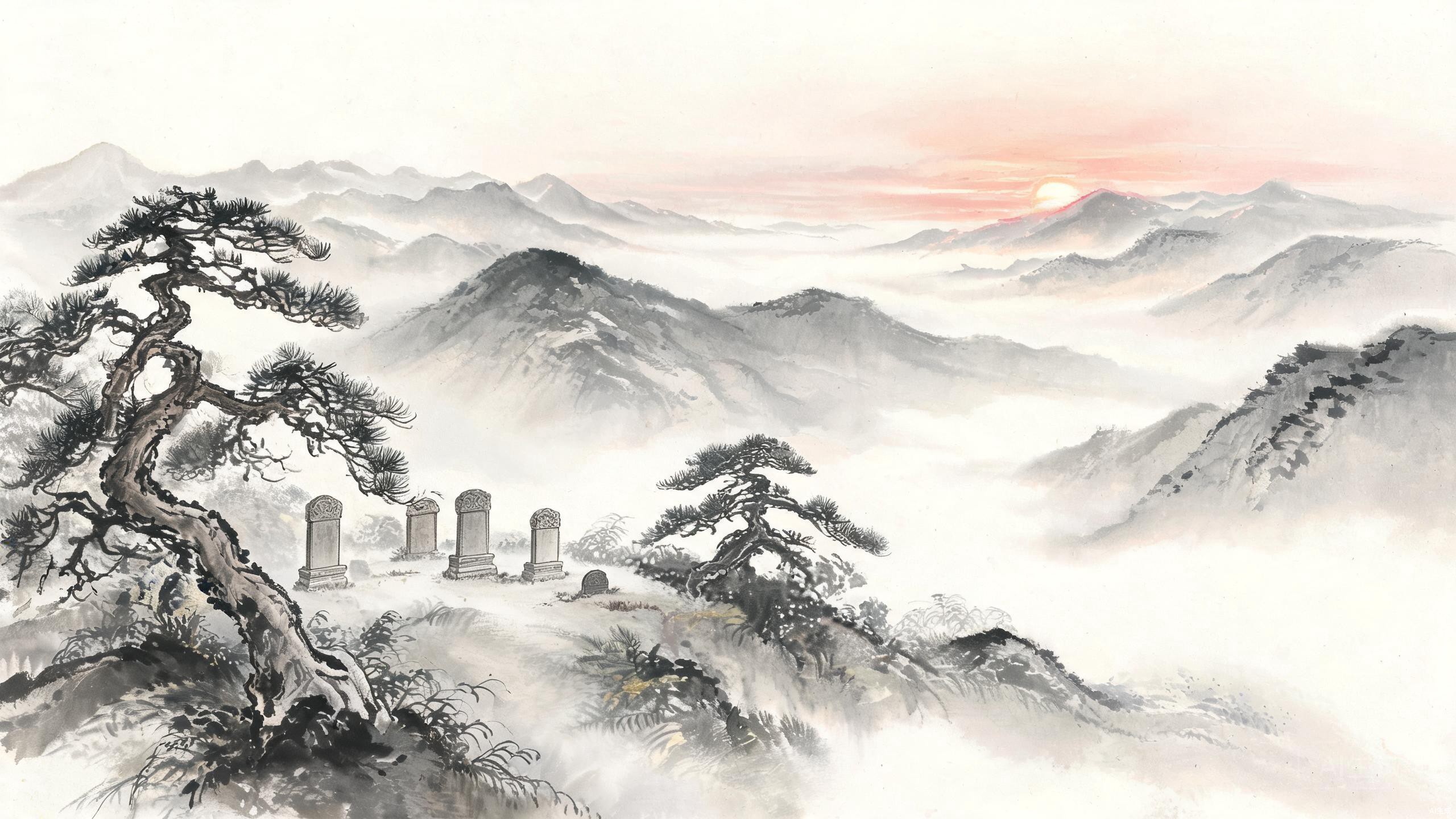
The principle of Storing Wind and Gathering Qi (藏风聚气) is the foremost consideration for Yin Dwelling site selection. "Storing Wind" means surrounding hills or elevated landforms shield the site from harsh, direct winds. "Gathering Qi" means the terrain naturally collects and retains Vital Qi (生气, sheng qi) — the auspicious, life-nurturing energy — preventing it from dispersing. When selecting a site, prioritize terrain that backs onto mountains, faces water, has protective formations on both sides, and opens expansively to the front.
The Principle: Water Is Supreme
The Feng Shui saying goes: "Obtaining water is supreme; storing wind comes second." This means water's importance can even exceed that of wind protection. When selecting a site, prioritize water source conditions. An ideal water source should be clear, gentle-flowing, and embracing (curving around the site).
Cultural Context: Water in Feng Shui represents wealth, opportunity, and the flow of fortune. Curving, gently flowing water symbolizes money circulating toward you, while rushing or receding water is associated with lost opportunities and financial leakage.
The Principle of Avoiding Sha and Seeking Auspiciousness
When selecting a site, you must avoid various Form Sha (形煞) — harmful environmental configurations. Common ones include:
- Sharp Corner Sha (尖角煞): Pointed buildings or sharp mountain peaks aimed at the site
- Reverse Bow Sha (反弓煞): Bow-shaped roads or rivers that curve away from the site instead of embracing it
- Road Rushing Sha (路冲煞): Roads that rush directly toward the cemetery
- High Voltage Sha (高压煞): High-voltage power lines and transmission towers
How to Apply These Principles
- Scout from a distance: Before approaching, observe the landform from afar. Look for continuous mountain ridges, gentle undulations, and protective formations on both flanks
- Evaluate the water: Identify nearby streams, rivers, or drainage patterns. Ideal water curves toward the site rather than rushing straight past or flowing away
- Check for Sha Qi: Note any sharp angles, aggressive straight roads, power infrastructure, or polluted areas within sight
- Feel the atmosphere: Stand quietly at the candidate site and sense the ambient energy — quality locations feel calm, warm, and protective
Yin Dwelling Site Selection Taboos
Terrain Taboos
Avoid low-lying, damp ground: Low-lying areas collect water, which not only affects the dryness of the burial site but also encourages bacteria and pests. From a Feng Shui perspective, these spots carry excessive Yin energy that prevents Vital Qi from gathering.
Avoid steep, precipitous terrain: Excessively steep sites are difficult to access for ceremonial visits and prone to landslides or collapse. From a Feng Shui perspective, steep terrain creates unstable Qi that cannot support Storing Wind and Gathering Qi.
Avoid Lonely Peak Sha (孤峰煞): An isolated peak standing alone, with no supporting formations or protective surroundings, cannot Storing Wind and Gathering Qi. Such sites are both energetically weak and pose real-world safety hazards.
Directional Taboos
Avoid facing the wrong direction (反向): The burial site's orientation must harmonize with the Dragon Vein's (龙脉) flow — it cannot turn its back against the energy current. A misaligned site fails to receive Vital Qi effectively, drastically reducing Feng Shui benefits.
Avoid Sha Qi confrontations (冲煞): The site's orientation must avoid various confrontational energies — roads rushing toward it, sharp angles aimed at it, or Reverse Bow water flowing against it. These Sha Qi create persistent negative influence.
Environmental Taboos
Avoid pollution sources: Cemetery sites should not be near pollution sources such as landfills, chemical plants, or wastewater treatment facilities. Pollution damages both environmental hygiene and Feng Shui Qi.
Avoid noise pollution: Cemetery sites should not be near continuous noise sources such as highways, railways, or airports. Noise disrupts Qi stability and disturbs the peace of the departed.
Avoid power infrastructure: High-voltage transmission towers and electrical substations generate strong electromagnetic fields that interfere with Feng Shui Qi. Cemetery sites should maintain distance from these facilities.
Quick Tips:
- Use a topographical map or online terrain tool to pre-screen candidate areas before visiting in person
- The ideal cemetery site has gentle slopes (not flat, not steep) for proper drainage
- When in doubt, consult with the cemetery management about geological surveys already completed for the area
Practical Site Assessment Techniques
When evaluating a site, first observe from afar. Stand at a distance and study whether the mountain ranges flow continuously and undulate gracefully. Then approach and examine up close: assess whether the soil quality is excellent and whether drainage flows properly.
At each candidate location, quiet your mind and sense the Qi field. A favorable Qi field feels warm, gentle, and comfortable — conveying a sense of peace and relaxation. An unfavorable Qi field may feel cold, oppressive, or unsettling.
A Three-Step Site Assessment Method
- Macro observation: Survey the broader landscape — mountain shapes, water flow patterns, and surrounding landforms
- Micro inspection: Examine soil texture, drainage, vegetation health, and ground stability at the specific site
- Energy sensing: Spend 10–15 minutes standing quietly at the candidate location, noting your physical and emotional responses
Modern Considerations for Site Selection
In contemporary society, Yin Dwelling site selection must first comply with laws and regulations. Choosing a legally designated cemetery and completing all required documentation is the prerequisite for any Feng Shui practice.
Modern Factors to Weigh
- Legal compliance: Confirm the cemetery is officially sanctioned and all permits are in order
- Accessibility: Consider transportation convenience, road conditions, and ease of visiting for family members
- Maintenance practicality: Evaluate long-term care feasibility, including groundskeeping and monument upkeep
- Environmental sustainability: Choose geologically stable locations resistant to natural disasters, ensuring long-term security
- Climate resilience: Avoid flood zones, erosion-prone slopes, and areas with extreme weather exposure
Quick Tips:
- Request the cemetery's geological survey records before finalizing your selection
- Visit the site in different weather conditions (sunny, rainy, foggy) to assess its true character
- Consider how the site will look and feel across all four seasons
The Balanced Approach: Theory Meets Practice
Yin Dwelling site selection is a comprehensive discipline that integrates natural conditions, Feng Shui principles, legal requirements, and practical needs. When selecting a site, respect traditional wisdom while incorporating modern scientific knowledge to make sound decisions.
Important Operational Notes
In actual Feng Shui practice, adapt theory to specific geographical environments and real-world conditions. Rigidly applying textbook knowledge or over-relying on any single method leads to poor outcomes. A skilled Feng Shui practitioner combines theory with practice, tradition with modernity.
During the selection process, remember three key principles:
- Respect nature: Never forcibly alter the natural environment
- Synthesize multiple factors: Never decide based on a single consideration alone
- Prioritize practical feasibility: Theoretical perfection does not always equal real-world viability
A Modern Scientific Perspective
From a modern scientific viewpoint, many traditional Feng Shui principles contain remarkably rational foundations:
- Back-to-mountain, facing-water sites use terrain to block cold winds while water bodies moderate temperature — creating favorable microclimates
- Elevated, well-drained sites prevent moisture accumulation, protecting burial integrity
- Avoiding pollution sources reduces health risks and environmental degradation
- Distance from power infrastructure minimizes electromagnetic exposure
These principles represent the ancients' systematic observation of natural environments — embodying wisdom about humanity's harmonious coexistence with nature. In modern society, we should inherit and develop this traditional wisdom with a scientific attitude.
Preserving and Evolving Feng Shui Culture
Feng Shui, as an essential component of Chinese traditional culture, retains significant cultural value in modern society. It represents not only the ancients' understanding of natural environments but also the crystallized wisdom of Chinese civilization. Studying Feng Shui helps us better grasp the essence of traditional Chinese thought.
Cultural Context: Classical Feng Shui texts like the Zang Shu (Book of Burial) by Guo Pu (郭璞) and the Han Long Jing (Classic of Shaking Dragon) by Yang Yunsong (杨筠松) have been studied for over a thousand years. Modern practitioners often blend this classical knowledge with contemporary environmental science, geology, and urban planning.
As we transmit Feng Shui culture, we must also evolve with the times — integrating the rational core of traditional Feng Shui with modern science, allowing this ancient wisdom to flourish in a new era.
Holistic Site Selection Framework
Yin Dwelling site selection is a comprehensive decision-making process requiring multi-dimensional consideration. Beyond traditional Feng Shui factors, you must evaluate transportation convenience, environmental protection requirements, legal restrictions, and other practical realities. An optimal selection represents the best integration of Feng Shui theory with real-world conditions.
A Systematic Selection Process
Follow these steps for structured decision-making:
- Regional screening: Identify several candidate regions based on geography, legality, and family preferences
- Feng Shui evaluation: Assess each region using traditional principles, eliminating locations with obvious disadvantages
- Practical assessment: Evaluate accessibility, maintenance requirements, and long-term sustainability
- Final integration: Weigh all factors together to make the optimal selection
This systematic approach significantly improves selection success rates and ensures balanced decision-making.
Related Articles
- [[../02-家居风水/57-家居风水100忌详解.md|100 Home Feng Shui Taboos Explained: Red Lines and Remedies for Residential Layout]]
- [[../02-家居风水/32-卫生间门对门化解.md|Bathroom Door-to-Door Remedies: Resolving Kitchen-Bath Conflicts and Door Sha]]
- [[../03-财运风水/28-财位风水禁忌大全.md|Complete Wealth Position Feng Shui Taboos: 30 Wealth-Draining Red Lines and Remedies]]
- [[../03-财运风水/03-财位布置十大注意事项.md|Ten Essential Tips for Arranging Your Wealth Position]]