Yin Dwelling Feng Shui: The Five Essentials of Dragon, Acupoint, Sand, Water, and Direction
In Yin Dwelling Feng Shui (阴宅风水) theory, the Five Essentials — Dragon, Acupoint, Sand, Water, and Direction (龙穴砂水向) — form the core framework for analyzing and practicing Feng Shui for ancestral grave
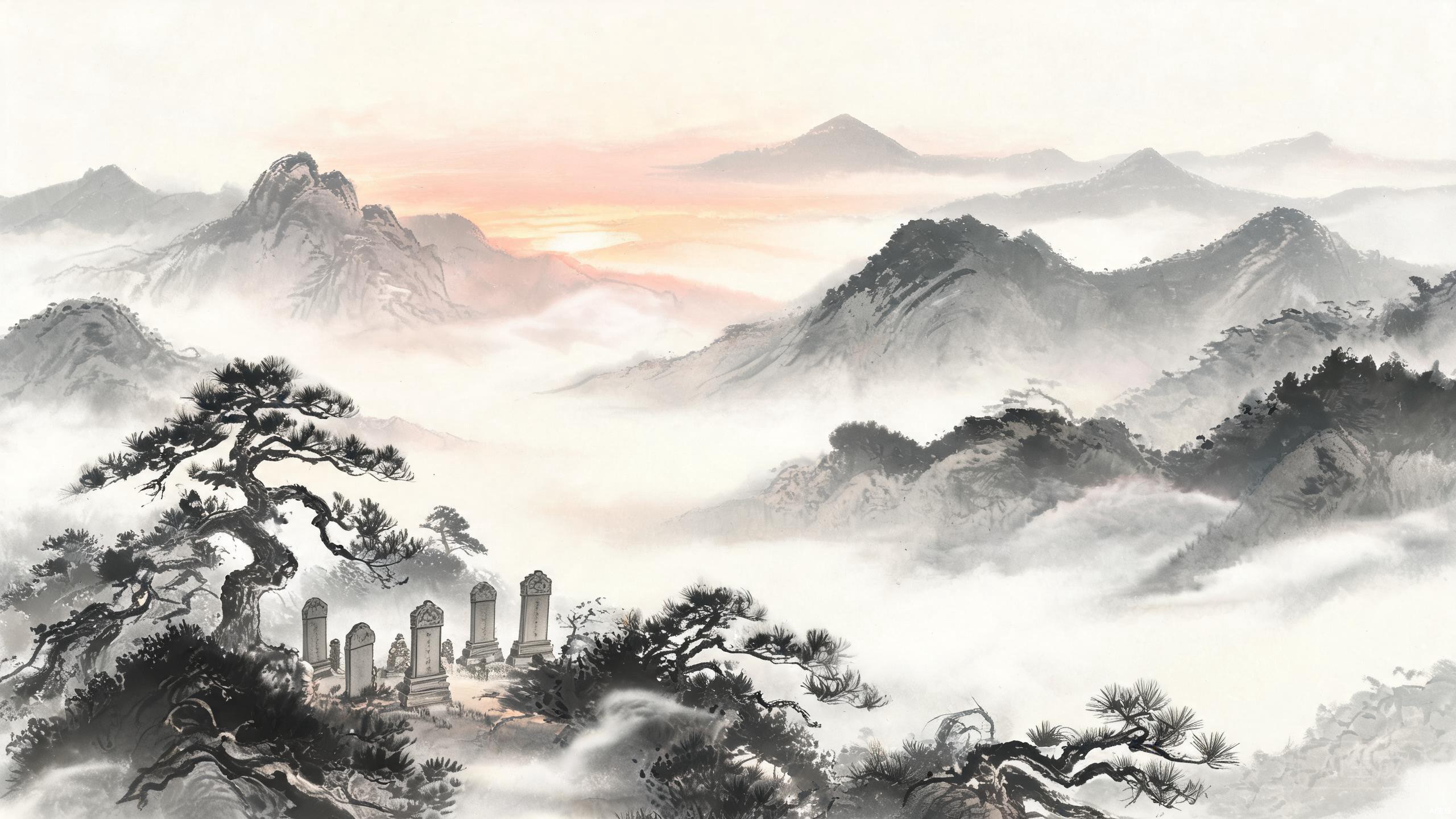
Overview of the Five Essentials
In Yin Dwelling Feng Shui (阴宅风水) theory, the Five Essentials — Dragon, Acupoint, Sand, Water, and Direction (龙穴砂水向) — form the core framework for analyzing and practicing Feng Shui for ancestral graves. These five elements are interconnected and mutually influential, together creating a complete system for evaluating Feng Shui quality. Mastering the Five Essentials is the foundation and key to learning Yin Dwelling Feng Shui.
The order of these five elements reflects the logical sequence of Yin Dwelling Feng Shui practice: first Seek the Dragon, then Point the Acupoint, observe the Sand, examine the Water, and finally Set the Direction. Each step builds upon the previous one — they are inseparable and each is essential.
Dragon: The Foundation of Feng Shui
The Dragon (龙) is the most fundamental element among the Five Essentials. Without a good Dragon Vein (龙脉), none of the other elements can be properly evaluated. A strong Dragon Vein is the prerequisite for a high-quality Feng Shui Point and forms the foundation for coordinating the Sand, Water, and Direction. Therefore, the first step in Feng Shui practice is to Seek the Dragon (寻龙).
Assessing the quality of a Dragon Vein involves examining several key factors:
- Path and continuity: Is the Dragon Vein's course clear and uninterrupted?
- Movement and vitality: Does it rise and fall with dynamic energy?
- Shape and form: Is the landform round, full, and harmonious?
- Vegetation: Is the vegetation lush and thriving?
Acupoint: The Core of Feng Shui
The Acupoint (穴) is the central element of the Five Essentials. The purpose of Seeking the Dragon is ultimately to find a superior Acupoint. A good Acupoint is the result of the combined influence of Dragon, Sand, Water, and Direction — and it is where the Feng Shui benefits of a Yin Dwelling are directly realized.
To evaluate the quality of an Acupoint, examine the following:
- Qi convergence: Is the Acupoint located where the Dragon Vein's Vital Qi (生气) gathers?
- Sand protection: Is the Acupoint embraced by surrounding Sand formations?
- Water flow: Does water flow around the Acupoint in a harmonious pattern?
- Soil and vegetation: Is the soil quality excellent and the vegetation lush?
Cultural Context: The Acupoint (穴) is the precise spot where a Dragon Vein's energy comes to rest — imagine the still point at the center of a whirlpool, where all the swirling currents converge into a pocket of calm, concentrated power. In Feng Shui, identifying this convergence point is considered the most technically demanding skill.
Sand: The Guardian of Feng Shui
Sand (砂) is the indispensable protective element among the Five Essentials. Without good Sand, the Acupoint cannot effectively Storing Wind and Gathering Qi (藏风聚气), and the Vital Qi of the Dragon Vein will dissipate. Therefore, observing the Sand is a critical step after Pointing the Acupoint.
To assess the quality of the Sand, examine the following:
- Position: Is the Sand located in the appropriate direction?
- Form: Is the Sand's shape dignified and well-proportioned?
- Vegetation: Is the vegetation on the Sand lush and healthy?
- Distance and height: Are the distance and elevation of the Sand properly balanced?
Water: The Lifeblood of Feng Shui
Water (水) is the lifeline element among the Five Essentials. Classic Feng Shui texts emphasize that "obtaining water is supreme; storing wind is secondary" (得水为上,藏风次之), underscoring the supreme importance of Water. A favorable water pattern effectively gathers wealth energy and amplifies the Feng Shui effects of the Acupoint.
To evaluate the quality of Water, examine the following:
- Clarity: Is the water clean and clear?
- Flow: Is the current gentle and unhurried?
- Shape: Does the water form an embracing curve around the site?
- Mouth: Is the Water Mouth (水口) properly sealed and controlled?
Direction: The Key to Feng Shui
Direction (向) is the decisive element among the Five Essentials. A favorable orientation maximizes the reception and utilization of auspicious Qi from nature, allowing the Feng Shui effects of Dragon, Acupoint, Sand, and Water to be fully realized.
To evaluate the quality of a Direction, examine the following:
- Dragon coordination: Does the direction align with the Dragon Vein's path?
- Water harmony: Does it face auspicious water?
- Sand avoidance: Does it avoid inauspicious Sand formations?
- Environmental harmony: Is it coordinated with the surrounding environment?
Integrated Application of the Five Essentials
The Five Essentials are not isolated — they are interconnected and mutually influential. In practical application, all five must be considered together; none can be neglected. A superior Yin Dwelling Feng Shui layout is the result of harmonious unity and mutual coordination among all five elements.
In Feng Shui practice, making a comprehensive judgment based on the Five Essentials is a complex process. It requires thorough analysis based on the specific geographic environment, the circumstances of the deceased, time factors, and many other conditions.
The application of the Five Essentials requires flexibility and adaptability — it cannot be applied rigidly. Different geographic environments and different historical conditions require corresponding adjustments to how the Five Essentials are applied. Only by continuously accumulating experience through practice can one truly master the essence of the Five Essentials.
How to Apply the Five Essentials in Modern Practice
- Start with the Dragon: Identify the dominant landform or large structure that channels energy toward your site
- Find the Acupoint: Locate the natural gathering point — often the quietest, most protected area of the site
- Assess the Sand: Map the surrounding features that provide protection and support
- Evaluate the Water: Observe how energy (literal or symbolic) flows through and around the site
- Set the Direction: Determine the orientation that best harmonizes all previous elements
Quick Tips:
- The Five Essentials work as a system — a strong Dragon cannot compensate for poor Sand or Water
- When natural features are absent, human-made structures (buildings, walls, roads) can fulfill the same roles
- Always prioritize balance over perfection in any single element
The Sequential Order of Practice
In Yin Dwelling Feng Shui practice, the Five Essentials must be applied in a specific order. This sequence reflects the inherent logic and systematic nature of Feng Shui practice and is essential for ensuring accurate judgment.
Specifically, the order is: first Seek the Dragon, then Point the Acupoint, observe the Sand, examine the Water, and finally Set the Direction. This order is not arbitrary — it is derived from natural principles and accumulated practical experience. Seeking the Dragon is the foundation; only after finding a strong Dragon Vein can one proceed to Pointing the Acupoint, observing the Sand, examining the Water, and Setting the Direction.
Mutual Influence Among the Five Essentials
The Five Essentials have a close, interdependent relationship. The quality of the Dragon Vein directly affects the quality of the Acupoint; the choice of Acupoint influences the coordination of Sand and Water; and the final Direction requires comprehensive consideration of the previous four elements.
In actual Feng Shui analysis, a deficiency in any one element can undermine the entire Feng Shui effect. For example, even with an excellent Dragon Vein, incomplete Sand embrace will fail to effectively Storing Wind and Gathering Qi. Similarly, even with perfect Sand embrace, an inauspicious Water flow will diminish the Feng Shui effect. Therefore, the Five Essentials must be considered holistically — none can be neglected.
Modern Applications of the Five Essentials
In modern society, the application of the Five Essentials must be adjusted to fit contemporary realities. For example, in urban cemeteries, the Dragon Vein may have been altered by human construction, and the Sand formations are no longer natural hills but high-rise buildings. In such cases, the principles of the Five Essentials must be applied flexibly rather than rigidly following traditional methods.
The key to applying the Five Essentials in modern contexts is to understand their core principles first, then adapt them creatively to the actual situation. Only by mastering the essence of the Five Essentials can one make accurate Feng Shui judgments in diverse environments.
Adapting the Five Essentials for Urban and Modern Settings
| Essential | Traditional Meaning | Modern Equivalent |
|---|---|---|
| Dragon | Mountain ranges and landforms | Major roads, large buildings, or elevated terrain |
| Acupoint | Natural Qi convergence point | A quiet, protected area within the cemetery or property |
| Sand | Surrounding hills | Adjacent buildings, walls, or dense vegetation |
| Water | Rivers and streams | Pathways, fountains, or symbolically flowing energy |
| Direction | Orientation of the grave | The facing direction of the headstone or memorial |
The Interrelationship of the Five Essentials
The interrelationship among the Five Essentials is the core content of Yin Dwelling Feng Shui theory. The Dragon Vein is the foundation, the Acupoint is the core, the Sand is the guardian, the Water is the lifeline, and the Direction is the key. All five work together in harmony, creating a complete Yin Dwelling Feng Shui layout.
In practical Feng Shui analysis, the relationship among all five elements must be considered comprehensively. For example, a strong Dragon Vein requires a good Acupoint to receive its Vital Qi; a good Acupoint requires good Sand for protection; good Sand requires good Water to nourish it; and all elements ultimately require a favorable Direction to realize their full value. The Five Essentials are indispensable — all must be grasped fully.
The Cultural Heritage of Feng Shui
Feng Shui culture carries the Chinese nation's profound understanding of nature and life, representing a precious cultural heritage passed down by our ancestors. In today's society, even though science and technology are highly advanced, the principles of respecting nature and pursuing harmony embedded in Feng Shui still hold important practical significance. By learning Feng Shui knowledge, we can not only better understand traditional culture but also apply the wisdom of the ancients in practice to bring peace and security to our lives and the lives of our families. When approaching Feng Shui, we should maintain a rational and scientific attitude — respecting tradition while keeping pace with the times — so that Feng Shui culture can play a positive role in modern society.
Cultural Context: Feng Shui is not merely a system of superstition — it is an ancient environmental science that combines landscape observation, astronomy, and philosophy. Its emphasis on harmony between humanity and nature resonates with many modern concepts in sustainable design, wellness, and environmental psychology.
Related Articles
- [[../01-风水入门/20-风水中的龙穴砂水向五诀.md|Feng Shui's Five Essentials: Dragon, Acupoint, Sand, Water, and Direction]]
- [[../08-百科问答库/27-什么叫山管人丁水管财?.md|What Does "Mountains Govern People, Water Governs Wealth" Mean?]]
- [[../01-风水入门/18-风水中的藏风聚气.md|The Principle of "Storing Wind and Gathering Qi" in Feng Shui]]
- [[../03-财运风水/01-财位基础知识.md|Wealth Position Basics: A Complete Guide to Bright and Hidden Wealth Positions]]